Bhanubhakta Acharya: The Grass-Cutter Who Made a Poet
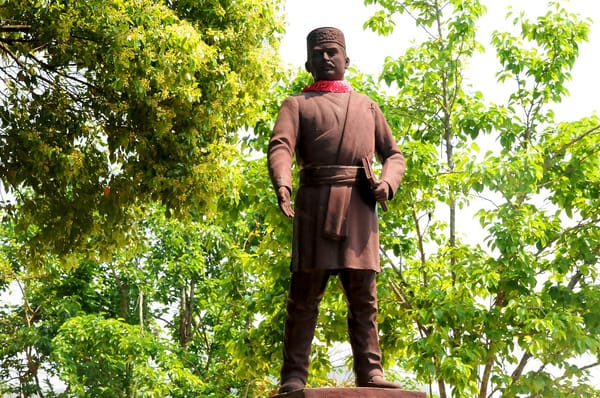
A grass-cutter's wish to leave something behind changed Nepali literature forever. The story of Bhanubhakta Acharya, the Aadikavi.
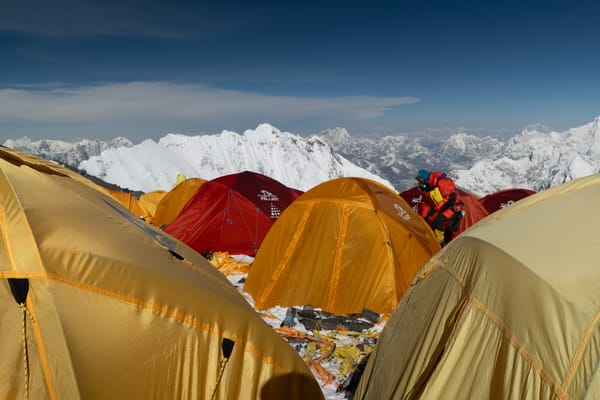
Above 8,000 metres, the human body begins to fail. No rescue comes easily. Here is what the Everest death zone actually does to you.
Swayambhunath has been called the Monkey Temple since Western visitors noticed the primates, erasing 2,000 years of Buddhist significance. What the stupa actually is and what it means to the Newari Buddhist community.
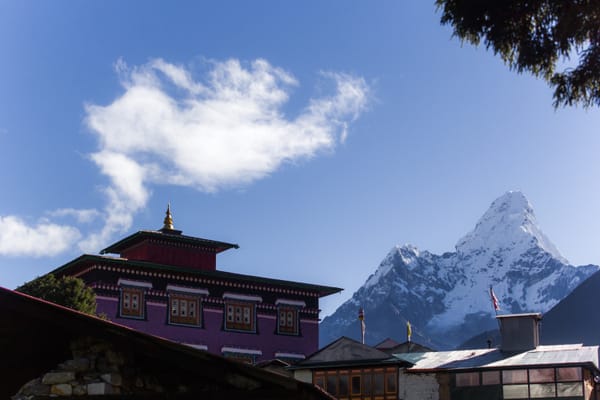
Most monasteries in Nepal have become heritage sites. A handful are still functioning communities of monks and practitioners. What distinguishes a working monastery and which ones in Nepal still qualify.
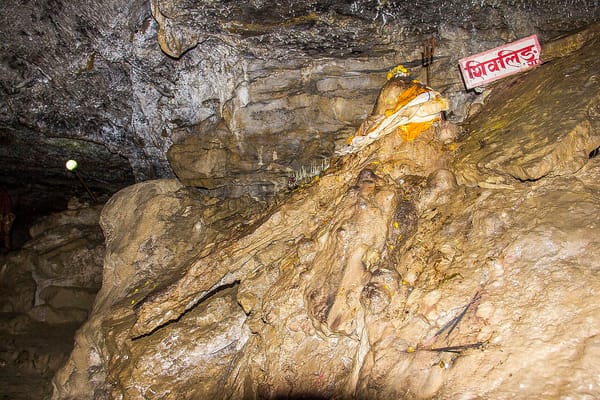
The limestone sparks when light strikes it. Not metaphorically. The rock carries a natural electrical charge, and under a headlamp the walls of Mahendra Cave scatter light back at you in a way that stone walls shouldn't. Mahendra Cave Pokhara: What's Inside Nepal's Most
At 11am the wind comes. It arrives from the south, funnelled up through the Kali Gandaki gorge, and within an hour it can reach 60 to 80 kilometres per hour. Trekkers describe it as someone opening a giant hairdryer pointed directly at your face. The people who built Marpha knew
North of Kagbeni, the road requires a permit. South of it, it does not. Two rivers meet just before the village and they do not mix easily. The Kali Gandaki runs grey-green from glacial melt. The Mustang Khola runs red-brown from the clay of the Mustang plateau. For a stretch
Dal bhat is described everywhere as Nepal's national meal but most trekkers eat a simplified tourist version. What a proper thali involves, what the refill culture means, and why it is the most calorie-sensible thing to eat on a trek.
Around 200 bodies remain on Everest, preserved by cold and impossible to reach. This is who they were, where they rest, and why no one has brought them home.
She stops at the 108th spout, tilts her head back, and lets the water hit her face. It is October. The water is glacier-fed, channelled through stone carved in the shape of a cow's head, and at 3,710 metres above sea level it is cold enough to
Machhapuchhre Nepal rises to 6,993m above Pokhara and has been closed to climbing since 1957. It is the only peak in Nepal with a permanent ban. It is sacred to the Gurung people as the home of Shiva. No permit exists. No permit will be issued. In 1957, a
"I have to push my limits to the max. Sitting tight, waiting it out and living in the past, has never been my thing. I want to be at the world's highest point again, knowing it might slip out from underneath me at any moment. Because that
Trekking
Nepal made solo trekking illegal in 2025. The Poon Hill trail was already one of the safest routes in the Annapurna region. That is not why the law changed. The ban came after a series of incidents: solo trekkers going missing in remote areas, search-and-rescue operations stretching into weeks, families
Places
The valley narrows so completely between Hiunchuli and Machhapuchhre that you stop seeing sky. Then the walls pull back, and you are inside. That threshold at the MBC narrows is a cirque the Gurung have held sacred for generations, a mountain bowl 40km north of Pokhara that most visitors look
Places
The boats at Begnas come out before the tourists do. By the time most visitors arrive from Lakeside, 45 minutes by local bus, or half that by taxi, the fishing boats are already back at shore, the morning catch already on its way to the markets in Pokhara. What you
Places
You hear the falls before you see them. Walking through the cave passages, the sound builds, low at first, then a roar filling the limestone, and then you reach the metal viewing platform and look up through a gap in the rock. The falls come through the stone above you,
Everest
She was still alive. That was what Cathy O'Dowd understood the moment she saw the figure in the purple jacket. She had assumed it was a body. Then the figure moved.
Places
The waterfall has three names. Each one arrived by a different route. The oldest is Patale Chhango. In Nepali, patale means the underworld. Patala, the realm beneath the earth in Hindu cosmology, where the waters go when they leave the living world. Chhango means waterfall. The name is not poetic.
Places
Nichidatsu Fujii was sixty years old when the first atomic bomb fell on Hiroshima. He was a Buddhist monk of the Nipponzan Myohoji order. He had spent decades walking, and chanting as he walked: Nam Myoho Renge Kyo, the title of the Lotus Sutra. What he decided after August 1945
Places
The thermal that lifts you off Sarangkot is generated by Phewa Lake. The Annapurna wall does the rest. A tandem paragliding flight in Pokhara costs approximately NPR 8,500 (around $65 USD), lasts 30 to 45 minutes, and launches from Sarangkot ridge at 1,600m before landing at Lakeside by
Places
The jeep leaves Lakeside at 4:30am. There is no good reason to be awake at this hour unless you believe the sky will do something worth seeing. Some mornings it does. The Annapurna range catches the first light at a frequency that photographs cannot hold, and then the clouds
travel-planning
About two hours into the journey, somewhere between Kurintar and Mugling, the Trishuli River appears below the road. It is turquoise in November, running fast between steep walls of green. The bus slows for a hairpin. Nobody on board is looking at the road. There are three ways to make
Trekking
It went pitch dark. The powder cloud blocked all light. Colin Haley, a climber on the trail near Langtang Valley on 25 April 2015, felt the wind blast lift him off the ground and throw him through the air. When he landed, the steel fence posts around him had been
travel-planning
In July, Devi's Falls runs at full volume. The water fills the gorge completely, loud enough to feel through the railing. No guidebook recommends July. There are almost no foreign tourists at the falls. The hills above Pokhara are the kind of green that only happens after 500mm