The Sugarmakers of Tokha: A Winter Tradition Refusing to Fade
In winter, the town of Tokha north of Kathmandu produces chaku -- molasses-based sweet made by pulling and folding hot sugar in the streets. What the tradition looks like and who still does it.

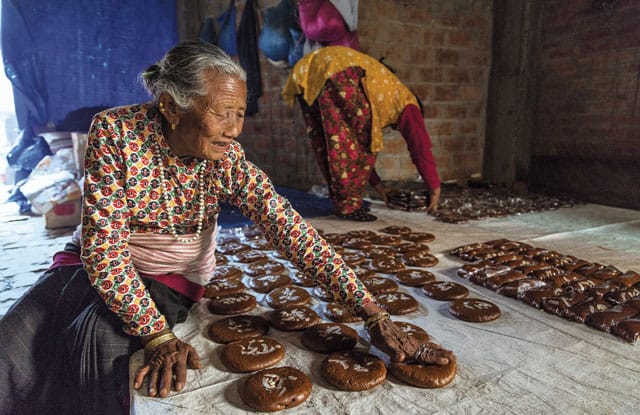
"If the temperature is not right," Thulaba says, "it will turn out bitter and fleshy. Nobody will like it." He is the eldest chaku producer in Tokha. He is talking about fire.
The molasses is boiled at high heat for about an hour, stirred constantly, then poured onto a greased flat surface to cool to the right consistency. When it reaches that point, a large mound is lifted onto a wooden board and pulled. Not pressed, not extruded: pulled, by hand, back and forth for ten to fifteen minutes, air working into the mass, the color lightening from dark brown toward amber, the texture moving from dense to silky. No chemical additives. No shortcuts. The temperature is everything.
Tokha is a Newa settlement on the northern edge of the Kathmandu Valley, about twenty minutes from Ratna Park on a good day. In winter, the smell of heating molasses arrives before you see the factories. The whole town fills with it. Between mid-November and the first week of January, eighteen traditional factories here produce roughly 700,000 kilograms of chaku, worth nearly a hundred million rupees. It goes to Kathmandu, Pokhara, Bhaktapur, Chitwan. It goes to Australia, Germany, Japan, the United States, Canada. Most of the people eating it at Maghe Sankranti do not know it came from here.
The sugarcane used to come from here too. Tokha had farms. The valley grew inward, and the farms became houses, and the sugarcane started arriving from elsewhere. Now Tokha's factories buy their molasses rather than pressing their own. The production is unchanged. The supply chain is not.
Buddha Shrestha is forty-two and he is the fourth generation of his family to run Kashilal Chaku Production. In a peak season, he uses approximately 1,000 sacks of molasses, fifty kilograms each. He cannot justify the cost of machinery for a business that runs two months. He does it by hand, the way his grandfather did.
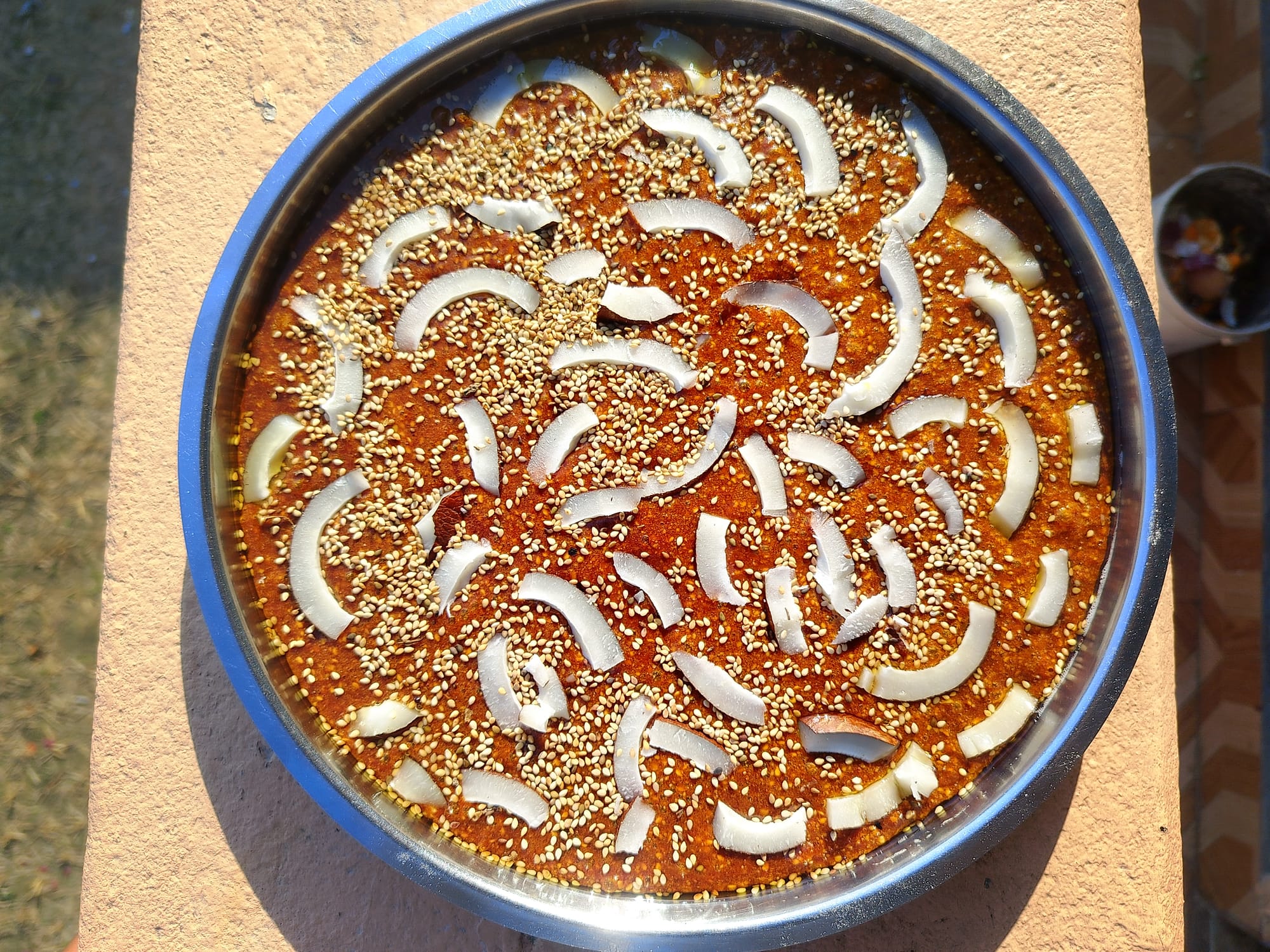
On the terrace outside one of the smaller factories, workers fold til ko laddus while folk music plays. A boy of about ten helps with packing.
Royal Shrestha is eighteen and has been learning since he was four. He talks about derivative products, candies, year-round demand, the export potential. His elders listen. They do not argue.
Hansaraj Shrestha, one of the factory owners, explains: "The reason people only eat it in winter is because it gives warmth to the body." At Maghe Sankranti, the first day of Magh and the festival that marks the shift of the sun, chaku is not optional. There is a phrase the older producers use: "Sutkeri aaimai lai ta chaku nabhai hunna." A nursing mother cannot do without chaku.
The youths of Tokha, mostly, prefer firms and companies. The seasonal nature of the work does not help. Eighteen factories remain. Nobody is opening new ones.
What keeps it going is not sentiment. The demand is high. The supply is seasonal. The skill cannot be automated and nobody in Tokha is trying. Thulaba is still the most experienced person in the room. He is still the one who knows when the temperature is right.