Bardia: Nepal's Forgotten National Park and Its Tiger Problem
Bardia is Nepal's largest national park but sees a fraction of Chitwan's visitors. What the tiger population, the safari experience, and the wildlife access look like in a park that rewards patience.

The two-year-old was taken from the courtyard of her house in February. Not from the park boundary. From her yard.
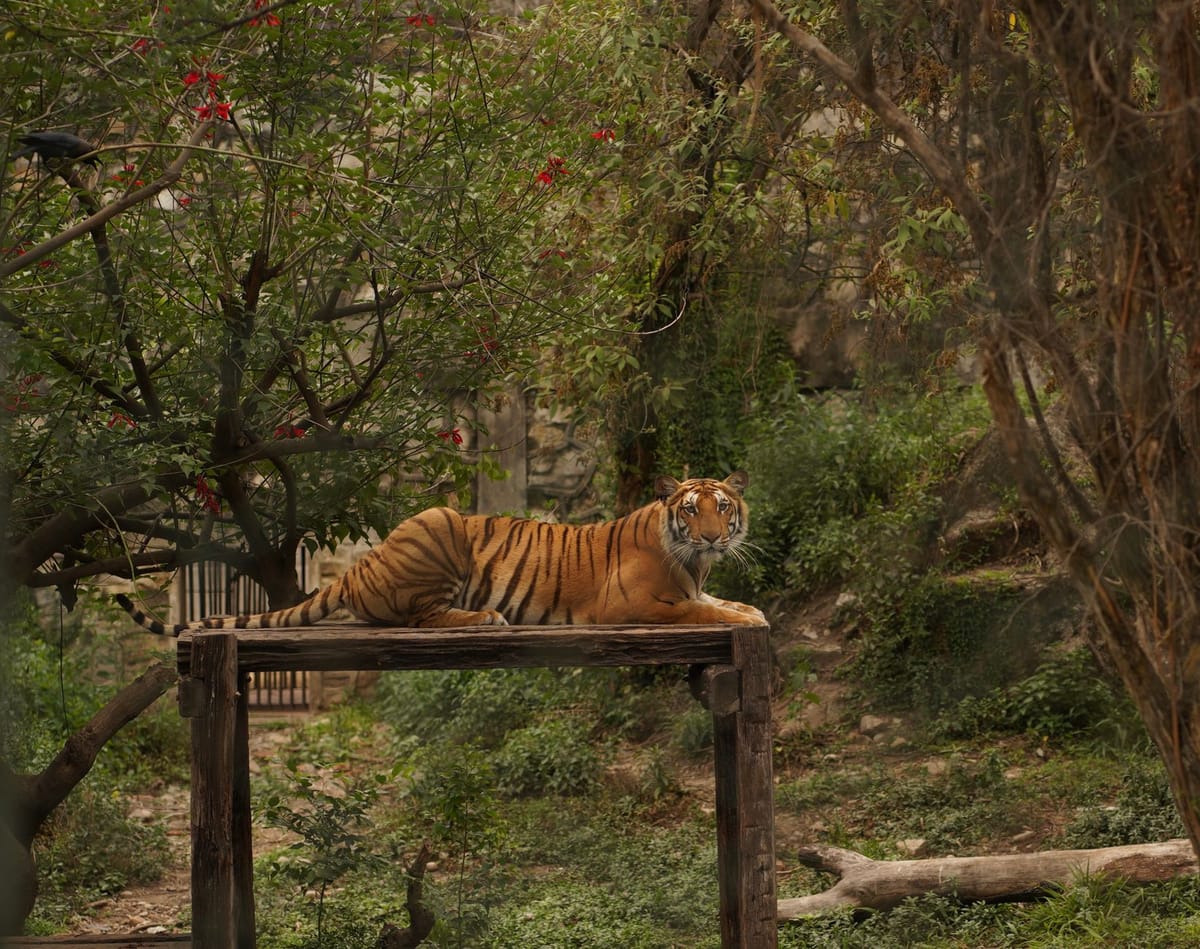
Bardiya National Park has 125 Bengal tigers. In the five years ending 2025, those tigers killed thirty-six people in the district: twelve in community forest areas, twenty-four in the national park and its buffer zones. In January 2026 alone, five people died. A fifty-one-year-old woman was killed while working in her field. A four-year-old was injured while playing at home. Ward Chairperson Rajendra Hamal described the situation in the affected municipalities plainly: "Frequent tiger and wildlife attacks on livestock and humans have left residents fearful."
This is the tiger problem. Not the shortage of them. The excess.
Bardia is Nepal's largest national park, 968 square kilometres of far-western Terai. The Babai and Karnali rivers run through it. The sal forest is dense enough that visibility drops to a few metres in the undergrowth, and the grassland along the rivers holds exactly the habitat large mammals require: tigers, elephants, rhinos, gharials, swamp deer. The 2013 tiger census counted 49. The 2022 census counted 125. That is a conservation success by any measure. It is also what Division Forest Officer Ram Kumar Chaudhary described: "The number of tigers has increased in recent years. At the same time, human settlements have expanded into forest areas, and new roads have been built through forests."
Both things are true, and they are in direct conflict.
Most visitors to Nepal's Terai go to Chitwan, roughly six hours from Kathmandu by road, which receives over two hundred thousand visitors a year. Bardia is sixteen to eighteen hours away. There is no railway connection. The lodges are fewer, the tourist infrastructure thinner. In practical terms this means that most mornings in Bardia, very few safari vehicles are in the park at all. A jeep covers a route without crossing another vehicle for hours. A walking safari in the sal forest starts before dawn, the guide reading tracks in the mud by the river: elephant, tiger, rhino, each route decided by what moved in the night. The sal trees in the old growth sections reach sixty metres. What you hear before you see anything: the alarm call of a spotted deer means a predator has been located by the forest before you located it.
People who have done both Chitwan and Bardia consistently describe the difference as the gap between seeing wildlife and being in an animal's territory. This is either what you want or it is not.
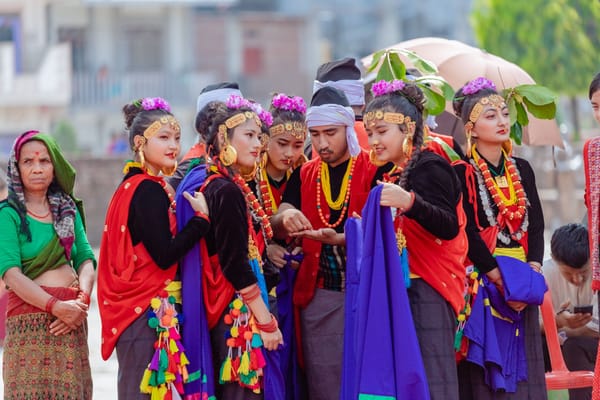
For the Dangaura Tharu, the indigenous community whose villages border the park on its eastern and southern margins, the distinction is irrelevant. They live in the tiger's territory year-round. The Tharu have farmed the Terai for centuries, in a relationship with the forest that predates the park's establishment in 1988. When the national park boundary was drawn, traditional fishing rights on the rivers inside the park were restricted. The forest that supplied firewood and construction material became a protected zone. The Tharu homestay operations that have emerged in the buffer villages give visitors access to this community that no jeep safari provides: the families navigating the daily arithmetic of what land belongs to the village, what belongs to the park, and what that line looks like at five in the morning when someone goes to collect grass for the cattle.
The tigers entering the fields are not a random occurrence. They follow prey. A decline of prey species inside the park is one driver of attacks on livestock and humans at the boundary. Tigers that have learned to take cattle are more likely to take people. The park authority has implemented nightly security patrols in the worst-affected areas. This does not change the fundamental situation: tigers need territory, settlements need land, and the buffer zone is under pressure from both directions.
The Karnali River, which forms part of the park's western boundary, is one of the longest undammed rivers in the Himalayan system. River safaris on the Karnali offer sightings of gharials, fishing eagles, and occasional tigers at the water's edge. The river runs clear in the dry season and silted in monsoon. Along the banks, the grassland is the kind of habitat that has disappeared from most of the Indian subcontinent. Bardia looks the way the Terai looked before it was mostly converted to farmland.
This is what the park is: a remnant. A very successful, very pressured remnant. The conservation metrics are excellent. The community metrics are not. The two sets of numbers will eventually have to be read together.
For the visitor who makes the journey, the sixteen to eighteen hours and the predawn alarm call and the patience required for a park that guarantees nothing, Bardia rewards differently from Chitwan. The encounter, when it comes, is not managed. The forest does not adjust to the visitor's presence. This is either a frustration or the entire point.
The people who live on the park boundary did not get to choose.