The Tharu: Nepal's Terai People and the Land That Was Taken
The Tharu lived in the Terai for millennia before the malaria eradication programme brought hill migrants. What the community's relationship with displacement, conservation, and land rights looks like today.

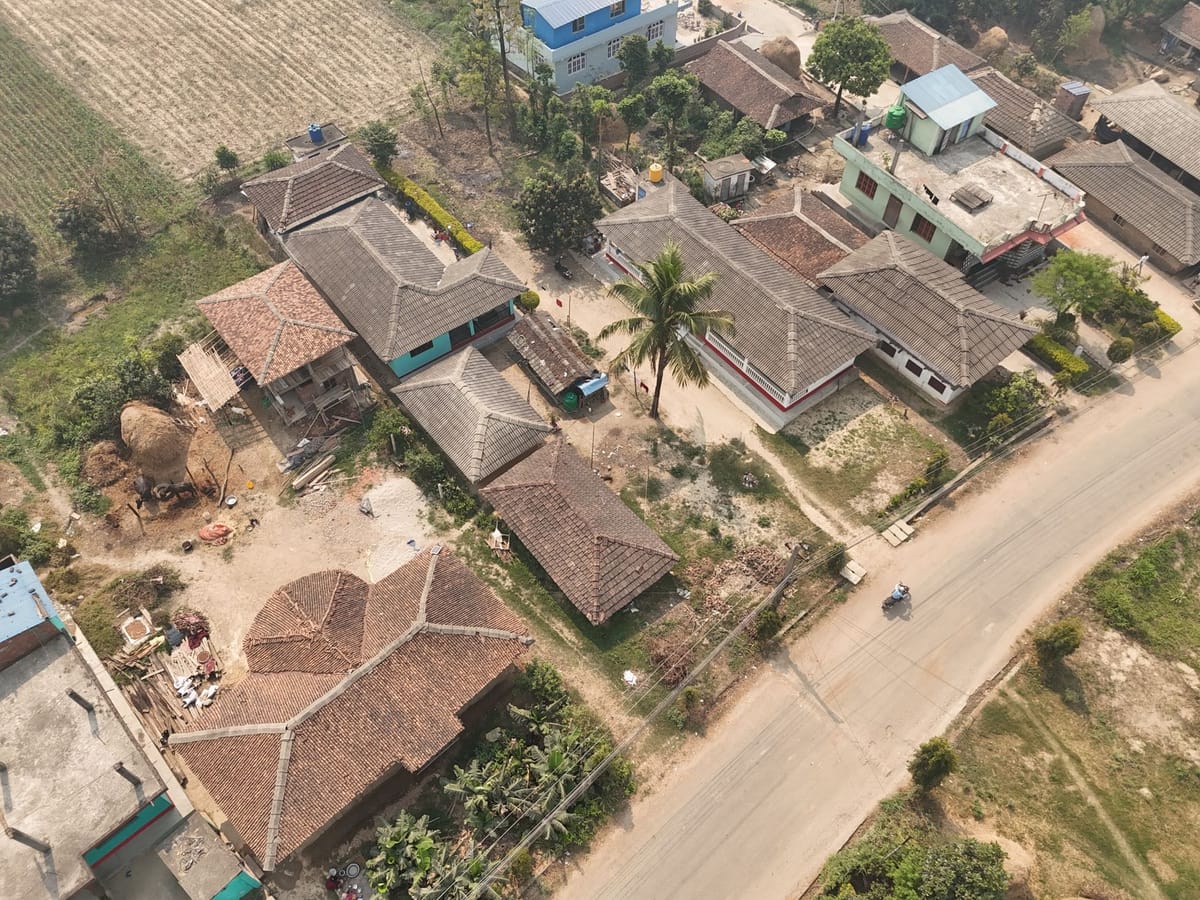
On 17 July 2000, the government of Nepal declared the Kamaiya system abolished. Landlords across the western Terai responded by evicting their former workers from the land.
The Kamaiyas were Tharu, the indigenous people of the Terai plains who had farmed and fished the river lowlands for centuries before anyone else could survive there. Many died of starvation in the weeks after liberation. Children especially. The government had freed them without providing land or income. Twenty-four years later, 2,375 families out of 27,570 freed Kamaiya households were still waiting for resettlement plots the government had promised.
This is not a story about a marginalised community looking for recognition. It is about a dispossessed one and the land registry that enabled the dispossession.
The body and the blood
The Tharu survived the Terai because their blood was different.
Contemporary medical research found that Tharu have an incidence of malaria nearly seven times lower than nearby ethnic groups. The mechanism is genetic: alpha-thalassemia alleles reach near-fixation in Chitwan Tharu samples, with up to 90% of individuals heterozygous for the deletion. The deletion reduces the survival rate of Plasmodium falciparum, the most lethal malaria parasite, inside red blood cells. The Tharu body became, over centuries, a selective pressure on the parasite itself. What reads as an inherited blood condition is, at population scale, the record of thousands of years of coexistence with a disease that killed everyone else who tried to stay.
This is where the debate about Tharu origins becomes more than academic. The Rana Tharu, concentrated in Nepal's far west, claim descent from Rajput nobles who fled to the lowlands from the Thar Desert. Some eastern Tharu communities claim descent from the Sakya and Koliya clans of Kapilvastu: the Buddha's own people, the families from whom he came. Genetic studies cut across both claims. The Tharu show dual ancestry, approximately half East Asian (Tibeto-Burman lineages from Himalayan migrations) and half South Asian. Neither origin narrative is entirely wrong. Neither is sufficient. The Tharu are a Terai people: formed in the lowlands, shaped by them.
The thumbprint on the blank document
The malaria eradication campaign of the 1950s changed this.
DDT was deployed across the Terai beginning in the mid-1950s. By the early 1960s, the lowlands were no longer reliably fatal for newcomers. Hill migrants from Nepal's middle hills began moving down. They understood the land reform policies the government was simultaneously introducing. The Tharu did not, or did not have access to people who could explain them.
Hill migrants registered land that Tharu farmers had cultivated for generations. The documented method, in case after case, was a blank document and a thumbprint. An illiterate Tharu farmer pressed a thumb to paper. The document transferred ownership to someone who could read what it said.
909,743 Tharu lived across six western districts: Dang, Banke, Bardiya, Surkhet, Kailali, and Kanchanpur. They were the majority population of a region that had been, effectively, their own. Within a generation, they were tenants, and then debtors, and then Kamaiyas.
How the debt closed
The Kamaiya system was bonded agricultural labour. A Tharu family unable to pay a debt would offer their labour as repayment. The debt was calculated by the landlord. The repayment was calculated by the landlord. The labour was valued by the landlord.
The debt never cleared, because the system was not designed to clear.
It reproduced itself across generations: children inherited their parents' bonded status along with debts that had no legal mechanism for resolution. When the 2000 abolition cancelled all Kamaiya debts, the announcement came before any plan for what would follow. Landlords, uncertain of their legal exposure, immediately evicted former workers. Freed Kamaiyas left with their families and nothing else: no land, no income, no savings.
The girls were not freed in the same announcement. Kamlari, the practice of placing Tharu girls in domestic service to landlord households, was not covered by the 2000 ban. It was separately prohibited in 2008, under sustained pressure from advocacy organisations. By then the girls who had been sent into service in the early 1990s were adults, returning to families who had been evicted eight years earlier.
Two communities, one political name
There is no single Tharu culture. The Chitwan Tharu, in the eastern Terai near the national park, dress differently, speak a different dialect, and mark their festivals differently from the Dangaura Tharu of the western districts. The Tharu Welfare Society, which became central to the push for Kamaiya abolition, had to build a political identity across these differences.
It built one on a shared injury rather than a shared culture. Tharu communities in Chitwan and Tharu communities in Kailali lost land through different mechanisms and across different decades, but the trajectory was the same. The category 'Tharu' became politically meaningful because it named a common dispossession.
In Chitwan, Tharu cultural performance has become a tourist product. Lathi Nach, the stick dance performed during Dashain and at major festivals, is staged for guests at safari camps on designated evenings. The dance began as a demonstration of the physical skill required to defend crops from wildlife in the lowlands. The sticks were tools before they were performance. In Chitwan now, they are both. The Tharu who perform it know the difference. The income from the tourist shows is also real.
The rivers and what they held
The Tharu economy was built as much on rivers as on land. Traditional fishing with bamboo traps and hand-woven grass baskets, low-intensity and seasonal, provided protein and supplementary income across the wetland systems of the plains. Tharu communities organised parts of their calendar around the river and the fish it held.
Ghodaghodi Lake, in the far western Terai, recorded 27 fish species in 1998. A 2017 survey found 13. A 50% loss in species diversity in under twenty years, driven by drainage for agriculture, urban expansion, and sedimentation from upstream deforestation. The wetlands are classified as nationally important. The decline has continued regardless.
For Tharu communities in the western districts, the fishing economy is not a tradition being lost. It is an income stream being eliminated. The communities most dependent on the rivers have the least access to decisions about them.
What the constitution says
Nepal's 2015 constitution recognises the Tharu as one of the country's indigenous peoples and grants specific protections for indigenous land rights. The formal framework exists.
The implementation runs up against a land registry that reflects sixty years of hill migration. A Tharu claim on ancestral land, in most cases, encounters a title held by a Pahari family that has been there since the 1960s. The title is legal. The migration was encouraged by government policy. The dispossession that preceded it was real. None of this is simple to correct through a constitutional clause.
The 2,375 families still waiting for resettlement plots are the visible edge of a larger question: who bears the cost of what the 1950s malaria eradication made possible, and who is still paying for it. It is not a historical question. The families are alive. Some have been waiting for more than two decades. The children who were small in 2000 are adults now.