Green Boots Everest: The Story of the Unknown Climber Who Became a Landmark
Green Boots is the name given to an unidentified climber whose body has marked the northeast ridge of Everest since 1996. This is his story.

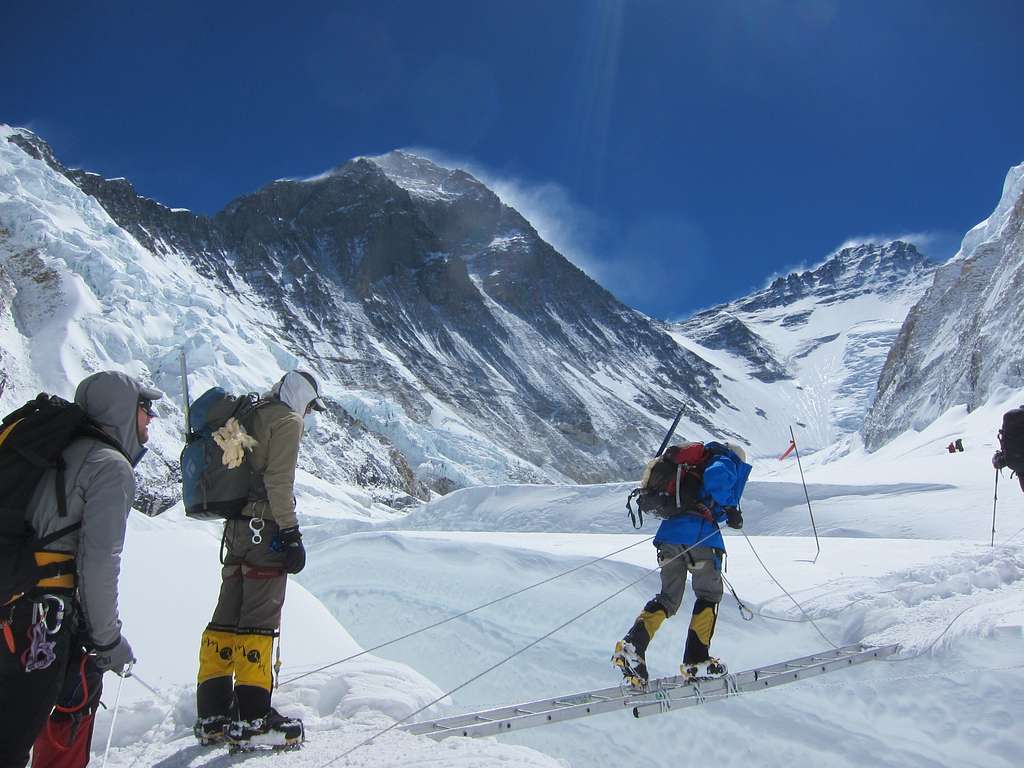
The first thing you see, coming toward the cave on the northeast ridge at 8,500 metres, is the boots. Bright green, Koflach-made, an Austrian brand popular with technical climbers in the 1990s. The feet inside them belong to a man who died in a blizzard on May 10, 1996, on a mountain that does not return its dead. For thirty years, most of the world called him Tsewang Paljor. His name was Dorje Morup.
In 2026, the Indo-Tibetan Border Police conducted DNA testing on the remains. The result confirmed what a researcher named P.M. Das had argued in a Himalayan Journal paper in 1997, and which almost no one had read: the body in the cave was not Tsewang Paljor. It was Lance Naik Dorje Morup. The error had stood for three decades. Two families had lived with it. One had their son associated with a body that was not his. The other had their son's body called by someone else's name. Corrections are difficult to make at 8,500 metres.
The cave and the name
The limestone alcove sits below the First Step on Everest's northeast ridge. On the north-side route - the route climbers take from Tibet - you pass directly in front of the opening. The cave is scattered with oxygen bottles left by previous expeditions, the accumulation of decades of ascent in an alcove that no one cleans. The body was curled inside it, in a position that looked, from a distance, like a resting climber.
The green boots were visible first. Koflach's plastic outer shell, in that specific colour, was identifiable from the moment you approached the cave opening. Someone - it is not entirely clear who, or when - started calling the body Green Boots. The name spread through the climbing community the way practical information spreads: as a waypoint. Green Boots Cave became shorthand for altitude and position on the northeast ridge. The body was navigation.
Everest accumulates named landmarks the way old cities accumulate monuments - slowly, without ceremony, because they become useful. The Hillary Step, the Balcony, the Yellow Band: features named for what they are, or for who first crossed them. Green Boots belongs to a different category. These are names given to the dead when the living need to refer to them without stopping to think about who they were. The name worked precisely because it was impersonal. It described something visible from a distance.
Matt Dickinson, a British filmmaker, shot footage of the body in May 1996 for Brian Blessed's documentary Summit Fever. The narration described the unidentified climber as being 'from India.' This was the first recorded documentation. The cave had been occupied for days, perhaps weeks, before the camera found it.
May 10, 1996
The Indo-Tibetan Border Police expedition that year was a six-person team led by Commandant Mohinder Singh. Three of them - Subedar Tsewang Smanla, Lance Naik Dorje Morup, and Head Constable Tsewang Paljor - pushed for the summit on May 10 despite a developing blizzard. They reached it at approximately 15:45 Nepal Time, where they left prayer flags, khatas, and pitons. Smanla performed religious ceremonies and then instructed Morup and Paljor to descend. There was no radio contact after that point. None of the three returned to high camp.
There is a complication, raised by Jon Krakauer in his reporting for Outside Magazine and expanded in Into Thin Air. The ITBP team were at approximately 8,700 metres - roughly 150 metres short of the 8,849-metre summit - when they radioed that they had reached the top. A late-afternoon summit claim, in a developing blizzard, from a position below the true peak: implausible, in Krakauer's assessment. Prayer flags were found on the route. Not at the summit.
The summit claim has never been resolved. Three men died on the descent. What they were descending from is one of the things the mountain did not give back.
The landmark
Between 1996 and 2014, the cave became what few graves become: a fixed point on a navigational map. Climbers ascending the northeast ridge learned to look for the green boots. In the dark, on supplemental oxygen, with the cognitive impairment that 8,500 metres produces in every climber regardless of experience - the body in the alcove was confirmation that you were on route. Below the cave: the First Step. Above it: the Second Step. The body oriented you.
Climbers who have written about passing the cave describe a particular kind of recognition. The first time, you do not know what you are looking at until you do. Then you keep moving, because that is what the route requires. In expedition reports from the 2000s, the cave appears as a waypoint the way a fixed rope anchor appears - noted, passed, left behind. The body had been absorbed into the infrastructure of the route.
The commercial expansion of Everest climbing through the 2000s meant that by the mid-2000s, hundreds of climbers were attempting the peak each season. The northeast ridge in summit season could have queues at the fixed ropes. In this context, the cave became an orientation point for people who had read about it before they arrived - who knew, in the abstract, what they would find there, and for whom the reality of passing it was simultaneously more and less than they had expected.
No one who knew him was there. His family did not know where he was or what his body had become.
The paper that was right
In 1997, P.M. Das published a paper in the Himalayan Journal arguing that the body was not Tsewang Paljor. It was Dorje Morup. Das had studied the expedition accounts carefully: Morup had developed severe frostbite to his hands during the descent, affecting his ability to handle safety equipment. The location where the body was found was consistent with where Morup was last seen on the mountain. Das cited specific physical details that pointed to Morup, and away from Paljor.
The paper received almost no attention. The Paljor identification was already embedded in the climbing community's record - in the coverage, in the documentary narration, in the oral transmission that happens across expeditions. Das was working from evidence. The consensus was working from repetition. The research existed, in a specialist journal, and was not read.
Twenty-nine years later, DNA testing confirmed Das was right.
David Sharp died in the same cave
In May 2006, a British climber named David Sharp sheltered in the cave at 8,500 metres and did not leave it.
Sharp was a mathematics teacher from Harpenden, England, with a Mechanical Engineering degree from the University of Nottingham. He had attempted Everest three times before 2006. On his 2003 attempt, he had turned back only after stopping to help an injured Spanish climber. He climbed without supplemental oxygen and without Sherpa support, on a minimal commercial package, because he believed that was the right way to do it. This was not a tourist who had overestimated himself.
Sharp descended to the cave after reaching or approaching the summit. He was already hypothermic. Mark Inglis - who became the first double amputee to summit Everest on that same expedition - found him at approximately 01:00 during his own descent and radioed expedition manager Russell Brice for guidance. What was said in that radio exchange became disputed: Inglis would claim Brice told him Sharp was effectively dead. Brice's logs suggested he did not learn of Sharp's emergency until hours later. In 2006, Inglis retracted his account of the call, attributing it to altitude-induced confusion.
Approximately thirty to forty climbers passed Sharp through the night and into the morning. The explanation that has endured: some mistook him for Green Boots, saw a body in the alcove, and kept moving. Sharp died in the same cave where Dorje Morup had died ten years before him.
A Turkish team was among the groups that encountered him. The first Turkish climbers passed around midnight, assuming he was resting. A second Turkish group, descending at approximately 07:00, realised he was alive and critically frostbitten. They attempted to help, alongside Sherpa climbers who gave him oxygen. He could not be moved.
Sir Edmund Hillary spoke about the case publicly. His words: 'I think the whole attitude towards climbing Mount Everest has become rather horrifying. The people just want to get to the top.' He said it was callous to pass a dying man 'huddled under a rock, just to lift your hat, say good morning and pass on by.' He added: 'They don't give a damn for anybody else who may be in distress.'
Sharp's mother, Linda, offered a direct rebuttal: 'Your responsibility is to save yourself - not to try to save anybody else.' Her son had understood the risks and would not have wanted anyone endangered for him. Sharp's friend Jamie McGuinness made the same argument. The two positions - Hillary's moral demand, Linda Sharp's acceptance - have not been reconciled, because they cannot be settled from sea level, by people who were not there.
Sharp's body was removed from the cave in 2007.
The cave goes empty
In 2014, the China Tibet Mountaineering Association moved the remains to what they described as 'a less conspicuous location.' No public statement was made about where. Climbers who arrived in 2014 found the cave empty for the first time in eighteen years. The landmark was gone. Those who had used the cave as a waypoint for years arrived to find it simply a cave.
The ITBP initiated the process that led to the 2026 DNA testing. The October 2026 deadline for full body retrieval was announced alongside the DNA result. Dorje Morup may leave the mountain entirely.
The wrong name for thirty years
The DNA confirmation answers one question and leaves another open. Dorje Morup is Green Boots. His family has a confirmed death, a confirmed location, after three decades during which the wrong man's name was attached to the body.
Tsewang Paljor's body is somewhere on Everest. Not in the cave. Somewhere higher, or somewhere the mountain has taken it. He died on the same descent, on the same night, in the same storm. The mountain kept both of them. It is returning one, with the wrong name attached, thirty years late. The other it has not returned at all.
P.M. Das got it right in 1997. His paper, in a journal that few people read, correctly identified the man in the cave twenty-nine years before a DNA test confirmed it. He used expedition records, physical evidence, and the discipline to read carefully what others had read without seeing. The mountain did not cooperate with his argument. The evidence did.
The green boots are still green. The man inside them had a name all along.