Annapurna: The Mountain With the World's Highest Death Rate and Why Climbers Still Go
Annapurna I has killed roughly one in five climbers who have attempted it. Here is why it is more deadly than Everest and what that number actually means.

On June 3, 1950, Maurice Herzog dropped his gloves near the summit of Annapurna I. He knew what that meant. He summited anyway. The descent cost him every finger and every toe. His partner Louis Lachenal lost all his toes. They wore leather boots. They were the first humans to stand on an 8,000-metre peak. They came back in pieces.
That expedition established the template for everything that followed on Annapurna: the summit reached, the cost extracted, the climber changed permanently. No other 8,000-metre peak has maintained this record as consistently.
The Number Everyone Gets Wrong
Every article about Annapurna quotes a death rate. The numbers vary: 32%, 38%, 44%. They are all real. They are all describing the same mountain at different moments in its history.
The Himalayan Database current figures put the rate at 13.42%: 75 deaths against 559 ascents. This is the Guinness World Record figure for the deadliest 8,000-metre peak. The older figures, 32-38%, reflect the pre-2012 record when the summit count was much lower and every additional death moved the percentage significantly.
Both are accurate. What changed is not the mountain but the number of successful commercial summits since the early 2010s. More climbers reaching the top has diluted the historical death rate statistically. The mountain itself is the same. The Sickle serac zone is the same. The avalanche exposure on the Northwest Ridge is the same.
The number that actually matters is not a percentage. It is this: Annapurna has killed Anatoli Boukreev, widely considered the strongest high-altitude climber of his generation. It has killed Alex MacIntyre, the man who pioneered modern lightweight alpine-style climbing on 8,000-metre peaks. It has killed Ian Clough, on what should have been a triumphant descent after the greatest achievement of his career. It does not discriminate by reputation.
What Makes Annapurna Structurally Different
Annapurna I is the tenth-highest mountain in the world at 8,091 metres. That number does not explain why it kills more consistently than K2 or Kangchenjunga or Makalu, all of which are higher and technically comparable.
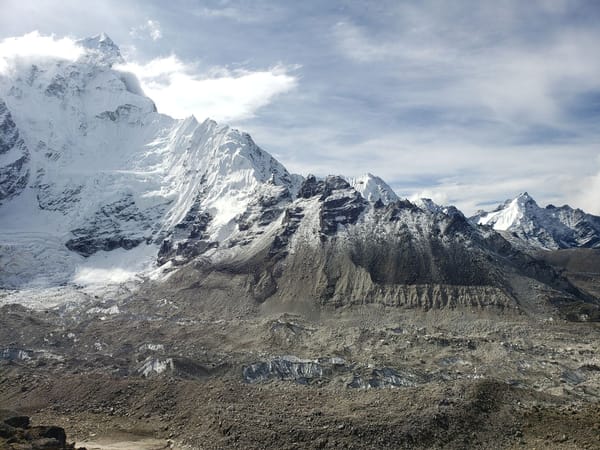
The structure of the mountain does. The standard Northwest Ridge route passes through the Sickle serac zone, a field of hanging ice formations between approximately 5,600 metres and 6,600 metres, between Camp 2 and Camp 3. Seracs release without warning. They do not release according to time of day or weather conditions in the way that some avalanche risk can be managed. Every expedition to Annapurna accepts that a portion of its route cannot be made safe, only crossed as quickly as possible.
The South Face is different in character but no less dangerous. It rises 3,000 metres and is considered by mountaineers one of the most technically difficult faces on any 8,000-metre peak. It was not climbed until 1970. Only a handful of teams have repeated it.
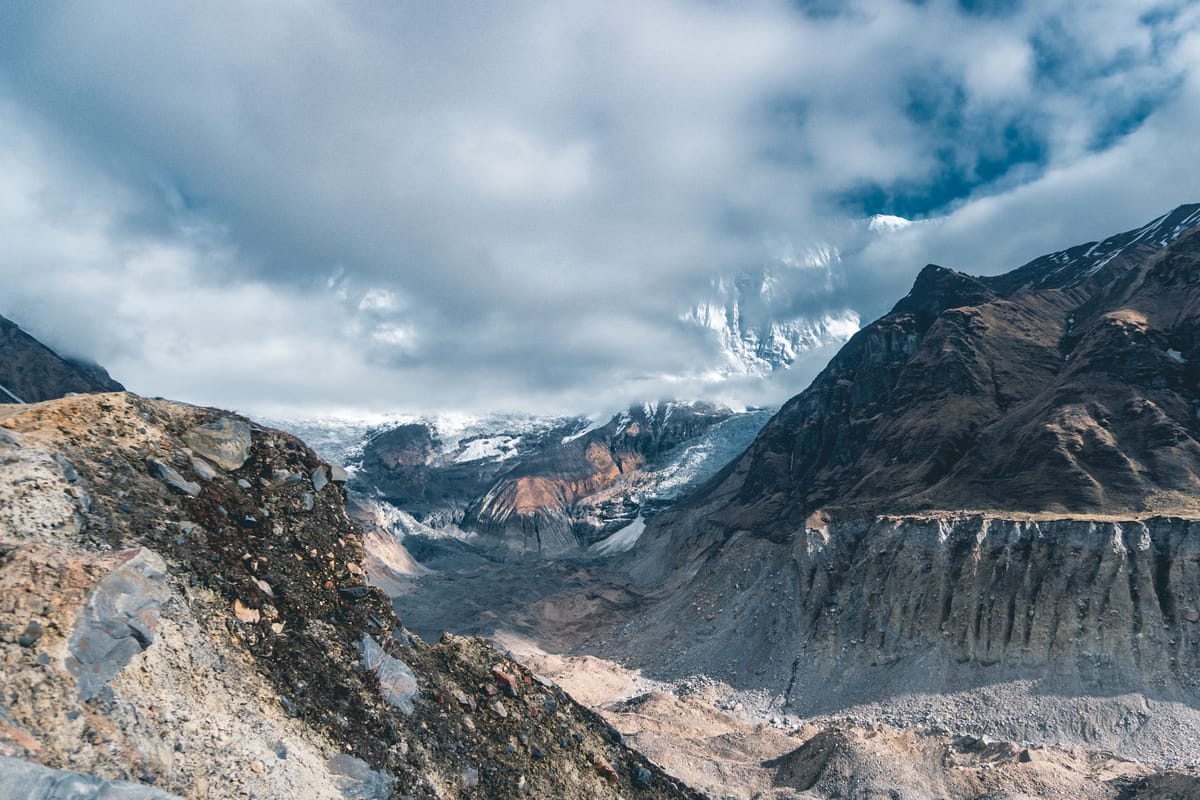
Annapurna I sits along a 55-kilometre ridge east of the Gandaki River. Its neighbour Dhaulagiri, seventh-highest in the world, is separated from it by the Kali Gandaki Gorge, which drops over 5,000 metres from adjacent peaks. This is one of the deepest river gorges on Earth. The geography concentrates weather in ways that produce sudden, violent conditions. There is no gentle approach to Annapurna.
The Deaths That Defined It
Anatoli Boukreev died in an avalanche on Annapurna on December 25, 1997. He had survived K2 in a storm. He had guided Everest without supplemental oxygen while foreign clients used bottled air. He had gone back into the 1996 Everest storm three times to pull climbers to safety. Annapurna killed him anyway. He was 39.
Alex MacIntyre was killed by a single rockfall on Annapurna's South Face in October 1982. Not an avalanche. Not an exhaustion-driven error. A single rock, falling from above. He was 28. He had pioneered the modern lightweight approach to 8,000-metre peaks, the philosophy that speed and self-reliance offered better odds than heavy fixed-camp sieges. His death did not invalidate the approach. It illustrated the variable that no approach can manage.
Ian Clough died on the descent from the first ascent of the South Face in 1970. Chris Bonington's team had just completed one of the greatest achievements in Himalayan climbing history. Clough, a strong and experienced climber, was killed by a falling serac near Camp 2 during what should have been a triumphant return to Base Camp. The summit was already in the past.
In April 2023, Noel Hanna, one of Ireland's most experienced high-altitude climbers, died on Annapurna. An Indian climber went missing on the same expedition. Two elite climbers in a single season. The mountain has not softened.
The 1950 First Ascent: A Victory Measured in Digits
The first ascent of any 8,000-metre peak belongs to Herzog and Lachenal on June 3, 1950. Before that date, no human had stood above 8,000 metres. Annapurna was the mountain where the threshold was crossed.
The expedition doctor Jacques Oudot performed surgery on the men's feet and hands at Base Camp and during the evacuation, without adequate anaesthesia for the procedures. Herzog lost all ten fingers and all ten toes. Lachenal lost all his toes. The leather boots they wore provided no protection against the frostbite that followed the dropped gloves and the wet descent.
Herzog wrote the account, Annapurna, which became one of the bestselling mountaineering books of the twentieth century. The victory is real. The cost was structural: they summited Annapurna in 1950 the way Annapurna lets you summit it.
Why Climbers Still Go
As of 2012, only 191 people had successfully summited Annapurna I. By comparison, Everest had been summited over 6,000 times by the same year. Annapurna's exclusivity is not aspirational; it is structural. The mountain simply does not allow the volume of traffic that Everest or even K2 can sustain.
For elite mountaineers, this is precisely the appeal. The 14 eight-thousanders are the measure of mastery in high-altitude climbing. Of the fourteen, Annapurna is considered among the three hardest, alongside K2 and Kangchenjunga. To have summited Everest is to have crossed a famous threshold. To have summited Annapurna is something else.
The psychological pull is not recklessness. It is the same thing that drove Herzog to summit without his gloves: the conviction that the mountain is worth the risk. That judgment is not available for others to make.
Annapurna Circuit vs Annapurna Summit: Two Completely Different Risks
The Annapurna Circuit, one of Nepal's most popular trekking routes, passes through the Annapurna Conservation Area and crosses Thorong La pass at 5,416 metres. Hundreds of thousands of trekkers walk it each year. The risk profile is not comparable to the summit.
The 2014 Thorong La storm is the Circuit's worst incident: a sudden snowstorm in October killed 43 trekkers and climbers. It is the deadliest event on the Annapurna region trekking routes, and it happened on the pass, not the summit, in conditions that were anomalous even by Himalayan standards. For trekkers on the Circuit under normal autumn conditions, the statistical risk is below 0.1%.
The mountain that killed Boukreev and MacIntyre and Clough is not the same experience as the Annapurna Circuit. The name is the same. The terrain is not.
Frequently Asked Questions
What is the death rate of Annapurna? The current Himalayan Database figure is 13.42% (75 deaths from 559 ascents). Historical figures, often quoted as 32-38%, reflect earlier periods when the summit count was much lower. Both numbers are accurate; they describe the same mountain at different points in its climbing history.
Is Annapurna more dangerous than K2? By current death rate statistics, yes. Annapurna holds the Guinness World Record as the deadliest 8,000-metre peak by death-to-summit ratio. K2 is widely considered the more technically demanding climb, but Annapurna's structural hazards, particularly the Sickle serac zone, make the statistical comparison complex.
Why is Annapurna so deadly? The Sickle serac zone on the standard Northwest Ridge route cannot be made safe, only crossed quickly. The South Face is one of the most technically difficult in the Himalayas. The mountain's position along the Kali Gandaki corridor produces rapid and violent weather changes.
Who was the first person to climb Annapurna? Maurice Herzog and Louis Lachenal of France, on June 3, 1950. It was the first 8,000-metre peak ever summited. Both men suffered severe frostbite during the descent.