
The 1996 Everest Disaster: What Actually Happened on May 10
Eight climbers died on Everest on May 10-11, 1996. Here is what happened, what went wrong, and what the Sherpa guides saw that Western accounts missed.

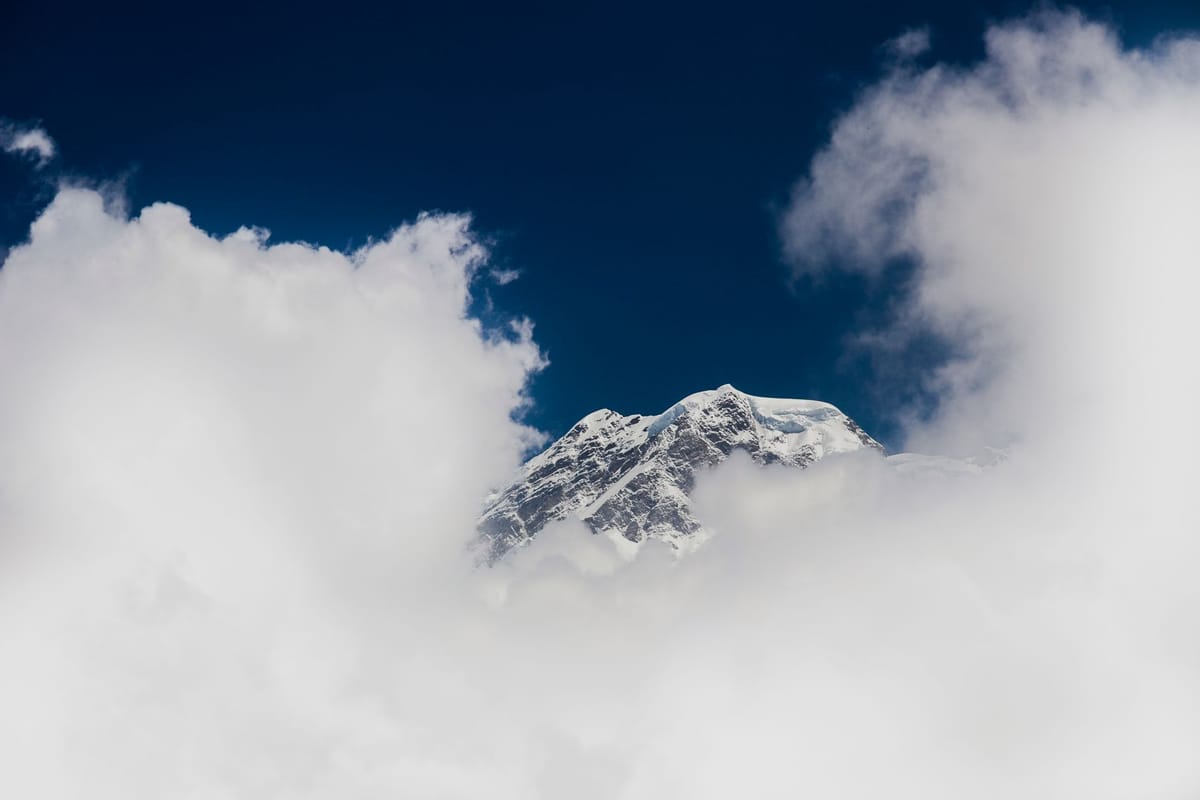
On the morning of May 11, 1996, Rob Hall was alive at 8,700 metres on the southeast ridge of Everest, unable to move. Base camp had patched him through by satellite phone to his wife, Jan Arnold, in New Zealand. She was seven months pregnant. He told her: I love you. Sleep well, my sweetheart. Please don't worry too much. Those were the last words she heard from him. He died on the mountain that night, alone in the wind.
The 1996 Everest disaster killed eight people in a single storm on May 10-11. It was not the worst death toll in Everest's history, but it became the most written-about. Jon Krakauer, a journalist and climber with Adventure Consultants, published Into Thin Air in 1997 and gave the disaster its definitive Western narrative. That account is compelling and mostly accurate. It is also told almost entirely from one vantage point, at one altitude, filtered through one man's exhaustion and hypoxia. The story of May 10, 1996 is larger than what he could see.
May 10, 1996: What Summit Day Looked Like
On the morning of May 10, four expeditions were attempting the summit simultaneously: Adventure Consultants (led by Rob Hall, New Zealand), Mountain Madness (led by Scott Fischer, USA), the Indo-Tibetan Border Police, and a Taiwanese team. More than thirty climbers were on the summit route. The mountain had not seen this kind of traffic before.
Hall had a rule: 2pm turnaround. If you have not summited by 2pm, you turn around regardless of how close you are. He had imposed this rule before, had turned clients back at the Hillary Step within touching distance of the summit. On May 10, he did not turn back. The last Adventure Consultants climbers did not summit until after 4pm. Hall was with them, still on the descent, when the storm arrived.
The turnaround rule is where most accounts begin the analysis, and they are right to. But the crowding mattered too. Fixed ropes above the Balcony had not been placed in time. Groups queued at bottlenecks. What should have been a four-hour summit window became six hours. Every delay compressed the margin for error, and Everest's margins are already thin.
The Storm
No one who has described the 1996 storm makes it sound ordinary. It arrived from the southwest in the late afternoon of May 10, moving faster than the forecasts had suggested. By nightfall, wind speeds above 8,000 metres had reached hurricane force. Visibility dropped to near zero. Climbers were still descending.
The Death Zone above 8,000 metres is called that for a reason. The human body cannot acclimatise at that altitude; it can only deteriorate. Every hour above 8,000 metres costs something that cannot be replaced. Add hurricane winds, zero visibility, and temperatures that drop to minus 40 Celsius, and a mountain that is difficult on a calm day becomes something else entirely.
The Eight Who Died
Rob Hall, 35, New Zealand. He stayed with client Doug Hansen, who had summited years earlier on a previous Hall expedition and had returned for a second attempt. Hansen was struggling. Hall would not leave him. Both died on the southeast ridge near the South Summit.
Doug Hansen, 46, USA. A postal worker from Washington state, he had saved for years to climb with Hall. He died not far from where Hall was found.
Scott Fischer, 40, USA. The Mountain Madness guide, experienced and well-regarded, was found near the summit on May 11. He had been seen struggling earlier in the day. Whether the cause was illness, altitude sickness, or exhaustion was never fully established. His body remains on the mountain.
Yasuko Namba, 47, Japan. One of the most experienced Japanese high-altitude climbers of her generation, she was found in the snow near Camp 4. She was alive when found but died before help arrived.
Andy Harris, 31, New Zealand. One of Hall's guides. He went back up from near Camp 4 into the storm to help stranded climbers and was never seen again. His body was not recovered.
Lopsang Tsering Bhutia, Dorje Morup, and Nima Sering: three Indian climbers from the ITBP expedition, killed in the same storm. They are rarely named in Western accounts of the disaster. They died on the same mountain, in the same night.
The Survivors
Beck Weathers, a Dallas pathologist, was found face-down in the snow, stripped of gloves, with severe frostbite across both hands. He was assessed by the rescue team as non-viable: too far gone to save, not worth risking additional lives to carry. He was left twice. He stood up on his own and walked into Camp 4. He lost his nose, both hands to the wrist, and part of his right arm. He survived.
Jon Krakauer made it down. Anatoli Boukreev, the Russian guide with Mountain Madness, went back into the storm three times and pulled three climbers to safety: Sandy Pittman, Charlotte Fox, and Tim Madsen. Krakauer later criticised Boukreev in Into Thin Air for climbing without supplemental oxygen. Boukreev co-wrote a response. The dispute ran for years.
The Sherpa Side: What Western Accounts Missed
Ang Dorje Sherpa was Rob Hall's head Sirdar and one of the most experienced high-altitude climbers on the mountain. Lopsang Jangbu Sherpa was Scott Fischer's most trusted guide. In the Western accounts, they are present largely as supporting characters: they appear when needed and recede when the narrative's attention moves to the foreign climbers.
What they saw on May 10 was different from what Krakauer saw. They were higher, in some cases earlier, and working under different pressures. Lopsang had spent part of the ascent short-roping client Sandy Pittman, carrying her on a tether because she was struggling. This slowed his progress and may have delayed the fixed rope placement above the Balcony. Whether this contributed to the tragedy is debated. What is not debated is that it was Lopsang who found Fischer, dying, above Camp 4. He was the one who had to make the call to leave him.
Ang Dorje waited at the South Summit for hours, holding fixed ropes, waiting for Hall and Hansen to descend. He could not reach them. He waited until his own survival was at risk, then came down.
These are not the decisions of supporting characters. They are the decisions of the men who knew the mountain best, working under conditions that required judgment no amount of money or training could guarantee.
The Commercial Question
The clients on the 1996 expedition had paid $65,000 each to Adventure Consultants for the chance to summit Everest. That fact sits beneath every analysis of what went wrong. Hall had turned clients back before. He had not always been able to explain that decision to people who had saved for years and crossed the world for a single morning. On May 10, with Doug Hansen in sight of the summit he had missed once before, Hall did not call a turnaround.
This is not a simple failure of judgment. It is the structural tension of commercial guiding on extreme terrain: the guide's responsibility to the client's safety against the client's own urgency and desire. There is no protocol that resolves it cleanly. Hall knew the rule. He had written it himself.
What Changed After 1996
After 1996, Nepal tightened permit requirements. Commercial operators adopted stricter turnaround protocols, though enforcement remained uneven. Satellite weather forecasting became standard practice: Everest expeditions now receive twice-daily professional weather windows from services that did not exist in 1996. The Icefall Doctors, the team that fixes ropes through the Khumbu Icefall each season, were formally organised.
The mountain became more crowded, not less. By the 2010s, the permit queue on summit day had become its own hazard.
Frequently Asked Questions
What caused the 1996 Everest disaster? A combination of factors: four expeditions attempting the summit simultaneously, delayed summit times that pushed climbers past the 2pm turnaround rule, and an unusually fast and severe storm that caught climbers still on the descent above Camp 4.
Who died in the 1996 Everest disaster? Rob Hall, Doug Hansen, Scott Fischer, Yasuko Namba, Andy Harris (New Zealand), and three Indian climbers: Lopsang Tsering Bhutia, Dorje Morup, and Nima Sering.
Did Beck Weathers survive? Yes. He was left for dead twice and walked into Camp 4 on his own. He lost both hands to the wrist, his nose, and part of his right arm.
Is Into Thin Air accurate? Largely, yes. Krakauer has acknowledged factual errors in early editions, particularly regarding Andy Harris. The book's larger critique of commercial Everest guiding remains contested, particularly by Boukreev, whose account in The Climb presents the same events differently.
What is the 2pm turnaround rule? A turnaround deadline implemented by some Everest guides: if you have not summited by 2pm, you descend regardless of position. The rule exists because the descent from summit to Camp 4 takes at minimum four to five hours; arriving above 8,000 metres after dark dramatically increases the risk of death. On May 10, 1996, it was not followed.


