The Seti Runs Twenty Metres Below the City. Almost Nobody Goes.


At K.I. Singh Bridge, near Prithvi Chowk in the north of the city, you can look straight down into a forested slot in the earth and watch the Seti River move fast through a gap no wider than a corridor, twenty metres below. No entry fee. No sign pointing you here from Lakeside. The gorge is one of the stranger things in any Nepali city, and almost no foreign visitor ever sees it.
Pokhara has a standard itinerary. It has been the same itinerary for thirty years: boat on Phewa, sunrise on Sarangkot, paraglide, Devi's Falls, cave. Those stops are real, and most of them are worth doing. But they account for perhaps half of what the city actually contains. This guide covers both halves.
The Lakeside Loop (What Everyone Does and Why You Should Still Do It)
Phewa Lake is the centre of the tourist version of Pokhara, and the tourist version exists for a reason. The lake is genuinely beautiful. Hire a wooden rowboat, not a swan-shaped paddle boat. The paddle boats photograph well from the shore; after twenty minutes on the water you will understand why most of them come back early. The wooden rowboats are steadier, quieter, and proportioned correctly for actual rowing.
Go in the morning. Before 10am, the surface is calm enough to reflect the Annapurna range cleanly. Row out to Barahi Temple, the small island shrine in the middle of the lake. This is a working pilgrimage site, not a tourist installation. Nepali families arrive by boat in numbers on Saturday, the main puja day. The smell of incense reaches the water.
The World Peace Pagoda sits on a ridge south of the lake. The monks are still resident. Reach it by boat across the lake followed by a 45-minute uphill walk, or by road from the south side. The boat-and-hike approach gives you the better arrival.
Sarangkot at Sunrise (The Version That Actually Works)
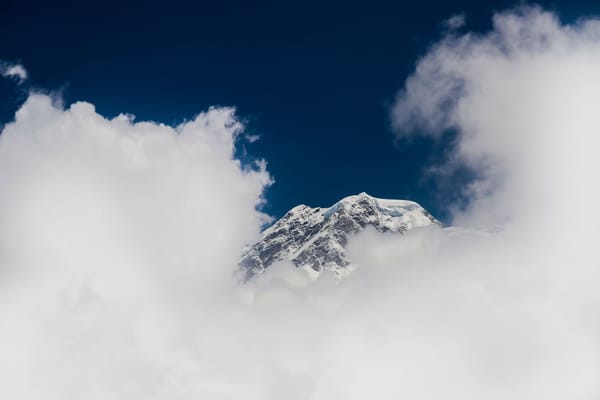
Sarangkot is worth waking at 4am for exactly once, and only if the weather cooperates. The Annapurna range, Machhapuchhre (Fishtail), Dhaulagiri to the west. On a clear October morning, the sun's first light gives the snow-covered peaks a deep gold that fades within twenty minutes. On a cloudy morning, you are standing in a crowd in the cold watching white air.
Check the sky the evening before: if you can see stars clearly from Lakeside, the morning will almost certainly deliver. If cloud is sitting on the hills, sleep in.
The road up from Lakeside by taxi takes about 20 minutes. Dress warmly. At 1,600 metres in October, before sunrise, the temperature is nothing like the valley at noon. The viewpoint gets crowded in peak season. Tripadvisor reviewers consistently note that arriving by 5am or earlier is the difference between a good position and watching other people photograph mountains.
Paragliding: What It's Actually Like
The launch is from just below the Sarangkot viewpoint. You take three running steps off the hill, and then you are in the air. The first moments are disorienting, the ground drops away faster than the brain is ready for, and then the thermal catches you and the sensation becomes something closer to stillness. The wind comes in at your face. Below, Phewa Lake is a flat mirror. If the conditions are right, you share the sky with eagles riding the same thermal current.
Tandem flights run 25 to 30 minutes. The lift that makes Pokhara reliable for paragliding, warm air rising off the lake valley, is most consistent from October through April. Monsoon flights run but conditions vary more. Book in advance in October and November when demand is high. You land in a field near the lakeside strip, close to food and transport.
Combine the sunrise and the flight into one morning: watch the mountains from Sarangkot, walk down to the launch site, fly back to the lake. Done correctly, you are eating breakfast on the lakeside strip by 9am.
Devi's Falls and Gupteshwor Cave (One Visit, Not Two Checkboxes)
These two sit across the road from each other, about 2km south of Lakeside, and they belong in sequence. Do Devi's Falls first.
The waterfall drops into a narrow channel cut into the rock, then disappears underground. In monsoon, the volume of water is extraordinary, the sound reaches you before you see anything, and the mist from the falls gets you wet even behind the viewing fence. In dry season, the flow drops but the channel walls become visible, and the karst geology is easier to read.
Then cross to Gupteshwor Cave . The cave is a Hindu pilgrimage site built around a Shiva lingam, dark and humid inside, lit in parts by small bulbs that colour the walls. It extends about 300 metres, with some sections requiring a crouch. Walk far enough through and you reach a metal viewing platform. Look up through an opening in the limestone and the base of Devi's Falls comes through the rock above you, roaring, from below.
That is the connection most visitors miss. They are not two tourist stops. They are one geological system with two entry points. Budget 90 minutes to two hours for both.
What Most Visitors Skip: Seti River Gorge, Old Bazaar, Kahun Danda
The Seti River runs beneath Pokhara for much of its length, carved into the limestone in a channel barely two metres wide in places and twenty metres deep. At K.I. Singh Bridge the gorge is visible from the railing: in dry season, a thread of milky turquoise at the bottom; in monsoon, a white current filling the slot entirely. There is an entry fee of around NPR 60. No queue. It takes fifteen minutes out of any morning.
Old Bazaar, in the Bagar area, is the part of Pokhara that predates Lakeside by generations. The streets are quieter, narrower, built in Newari red brick. Residents sit in front of houses. Most of the commercial sector moved south decades ago, and the atmosphere is one of a city that has not tried to become a resort. The Bindyabasini Temple is here, a pagoda-form shrine dedicated to Durga, one of western Nepal's principal Shaktipiths, and a working pilgrimage site for Nepali families who are not visiting Pokhara for trekking.
Kahun Danda (sometimes called Gharmi Viewpoint) sits at 1,444 metres on the eastern hills, northeast of the city. The view takes in the full Pokhara valley and the Annapurna range. Less infrastructure, no organised sunrise tour network, no crowds. Take a local bus from the tourist bus park toward Kahun, then walk 15 to 20 minutes uphill. Alternatively, drive to Fulbari barrack and hike an hour to the summit. For anyone who finds Sarangkot in October feels like a stadium, this is where to go instead.
Begnas Lake (If You Have an Extra Half-Day)
Eleven kilometres east of Lakeside, Begnas Lake is the second largest of Pokhara's eight lakes. No bars on its shore, no touts, no tourist menu restaurants. The lake sits in a bowl of farmland with a handful of small guesthouses and a boating operation.
For Nepali families visiting Pokhara, Begnas is often the preferred destination over Phewa. Quieter, greener, with better fishing and no soundtrack of paragliding promotional videos from lakeside cafes. A half-day is enough: take a taxi from Lakeside, hire a boat, eat dal bhat at one of the local restaurants, return in the afternoon.
Pokhara After Dark
Lakeside has a concentrated strip of rooftop bars and restaurants that do well in the early evening. Nepali food, Indian, Western, Italian, Japanese, the range is good. Most places are busy until around 10pm, then the strip quiets. This is a city that wakes early for trekking and sunrises.
This is not Thamel. No club-district blocks, no 2am street noise. A few bars run later, but the character of the place is lakeside-quiet rather than city-loud. That is not a failure. Pokhara is better experienced in the morning.
Day Trips: Poon Hill and Australian Camp
Poon Hill is the most accessible Himalayan trekking from Pokhara: a four-day round trip starting from Nayapul, reached by bus or jeep from the city. The route passes through Ghorepani and offers one of the classic ridge walks in the Annapurna region. No technical mountaineering required. This is where most first-time trekkers in Nepal go.
Australian Camp is a day hike. Take a taxi from Lakeside to Phedi (about 30 minutes), then hike up to the camp at around 2,100 metres. The mountain views are comparable to Sarangkot and the trail is clear. Back in Lakeside by early afternoon. For anyone who wants altitude and quiet without a multi-day commitment, this is the right option.