Inside Gupteshwor Cave, the Sound Arrives Before the Light

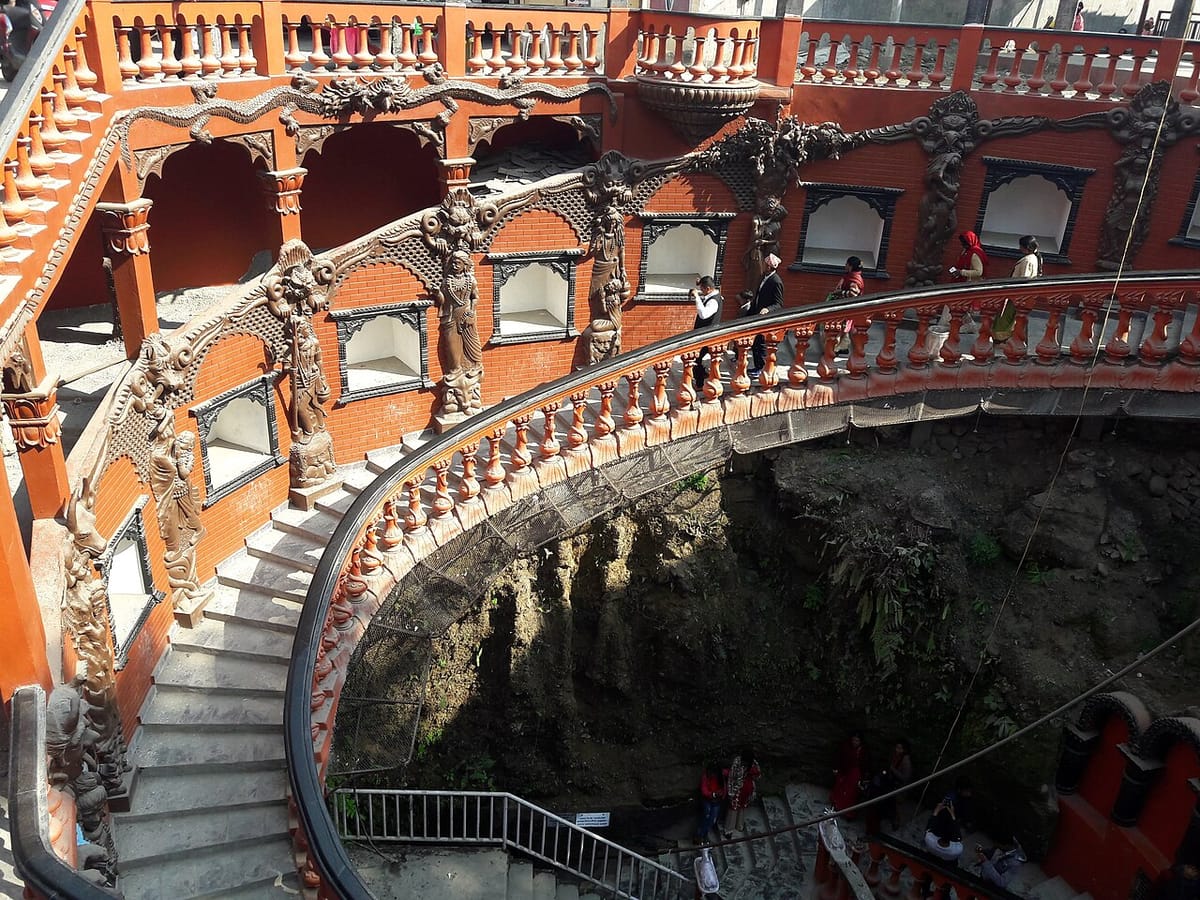
You hear the falls before you see them. Walking through the cave passages, the sound builds, low at first, then a roar filling the limestone, and then you reach the metal viewing platform and look up through a gap in the rock. The falls come through the stone above you, white, loud, close enough to feel the cold air off the water. From the surface, fifty metres north, this is where the water vanishes. From inside the cave, it is where it arrives.
Gupteshwor Cave sits on the Siddhartha Highway, fifty metres north of Devi's Falls. Most Pokhara itineraries list both and treat them as two stops. They are one system. The cave is the underside of the falls, and the experience of walking through it is not a supplement to visiting Devi's Falls. It is the second half of the same story.
The cave is also, before anything else, a Hindu pilgrimage site. It has been one for much longer than Pokhara has been a tourist destination. The worship was already there when the tourists arrived.
What Gupteshwor Cave Actually Is
The name is Sanskrit. Gupta means hidden. Ishwor, a variant of Ishwar, means lord, here, Shiva. Hidden Lord Shiva: a deity concealed inside rock, accessible only by going underground. The name describes the theology as precisely as it describes the geography.
The cave system is one of the longest in Nepal, extending over three kilometres in total, though the accessible visitor section runs approximately 300 metres and takes thirty to forty-five minutes to walk through at a comfortable pace, longer if you stop at the shrine. The cave is lit in parts, small bulbs that colour the walls in sections, and dark in others. The floor is mostly walkable with uneven sections toward the back. Some passages require a crouch.
The cave is within the same karst limestone system as Devi's Falls. The Pokhara Valley sits on soluble bedrock, and water has been carving channels through it for millennia. The cave and the falls are connected passages in the same dissolved rock.
The Underground View of Devi's Falls
This is the part that no travel article on either site has written properly.
At Devi's Falls, the water drops into a narrow channel and disappears. Visitors watch it from a fenced platform above, then move on. What they are not told: the water continues underground, travels through the limestone, and emerges inside Gupteshwor Cave. From a metal viewing platform inside the cave, you look up through an opening in the rock and see the underside of the falls, the same water, from below, coming through the stone. The roar in the cave is significant. In monsoon, it is audible well before you reach the platform.
In dry season, the water level inside the cave is lower and the viewing platform is easier to reach. In monsoon, the flow through the underground channel increases and the viewing area closes due to water hazard. Plan accordingly: the monsoon visit for the falls above, the dry season visit for the full cave experience including the underground view.
The correct visiting order is Devi's Falls first, then the cave. Watch the water vanish from above. Go find it below.
The Shiva Shrine Inside
Before you reach the waterfall viewing platform, there is a shrine. A Shiva lingam sits in the rock, the aniconic form through which Shiva is most commonly worshipped in Nepal and India. The cave holds multiple dedicated spaces: Shiva, Parvati, Nageswor, Saraswati. Pilgrims bring flowers, oil for lamps, incense. The smoke hangs in the cave air. There is a strict rule against photography at the shrine, enforced.
On significant dates in the Hindu calendar, particularly Shivaratri, the number of pilgrims increases substantially. This is not a museum exhibit of religious practice. Worship continues here regardless of tourist season. Visitors and pilgrims occupy the same cave at the same time, following different routes through it.
Foreign travel writing on the cave treats the shrine as a minor detail and focuses on the geological connection to Devi's Falls. For Nepali visitors, the relationship is usually reversed: the cave is first a sacred site, the waterfall view a striking secondary feature. What you are doing when you visit depends considerably on which of those you are.
Visiting Gupteshwor and Devi's Falls Together
The two sites take ninety minutes to two hours combined. The walk between them is fifty metres on the main road: exit Devi's Falls, turn left, enter the cave. Separate entry fees apply.
Start at Devi's Falls. Stand at the viewing fence. Watch the water enter the rock. The sound continues below after the visible water disappears. Then walk to the cave. Walk through to the viewing platform. Look up.
The two sites are designed for each other, even if neither presents them that way.
Practical Info
The cave entrance is on the Siddhartha Highway, approximately two kilometres from Pokhara airport and about three kilometres from Lakeside. Taxis from Lakeside take ten to fifteen minutes. There is a separate entry fee from Devi's Falls. The cave is open daily.
Bring a light layer: the interior is cooler than the valley air, noticeably so in winter months. Footwear with grip is recommended. The floor near the waterfall viewing platform is permanently damp and slippery. In monsoon, the cave is significantly more humid throughout.
Photography is possible in the lit sections. At the Shiva shrine, behave as you would in any active place of worship: quietly, without intruding on active puja.