Most Travel Articles About Pokhara Were Written in October


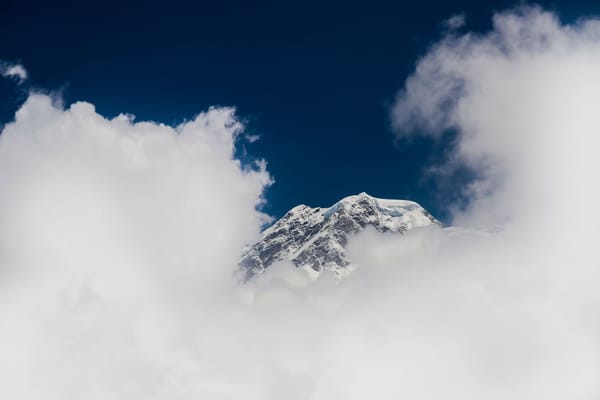
In July, Devi's Falls runs at full volume. The water fills the gorge completely, loud enough to feel through the railing. No guidebook recommends July. There are almost no foreign tourists at the falls. The hills above Pokhara are the kind of green that only happens after 500mm of rainfall, and clouds move through the valley after each downpour and soften the ridgelines into white. This is a version of the city that most travel articles do not describe, because most travel articles were written in October.
October and November are the best months. March and April are strong seconds. But that answer misses three months of monsoon with its own logic, and a winter that most visitors skip for the wrong reasons.
Quick answer
Best weather and mountain views: October, November, March, April. January can be exceptional for mountain clarity. Monsoon (June-August): wet, green, uncrowded, waterfalls at their best. Winter (December-February): cold, clear, quiet. No month makes Pokhara not worth visiting. Some months are different rather than worse.
Autumn (September-November): the classic season
October is the benchmark. The monsoon has cleared. The air is washed clean. The Annapurna range is visible most mornings from Sarangkot. The trekking trails to Poon Hill, Annapurna Base Camp, and the Circuit are dry and accessible. This is when Pokhara fills, and it fills fast.
Book accommodation in advance for October, particularly anywhere with a mountain view. The Lakeside strip runs at capacity. Dashain falls in October, a major Hindu festival that pulls Nepali domestic visitors home to family: marigold garlands on doorways, Tika on foreheads, kites rising above Phewa Lake in the afternoons. Tihar follows Dashain by roughly two weeks. Deusi-Bhailo singing groups move door to door; the lakeside strip is strung with lights that reflect on the water after dark. If the timing works, it is worth being here for both.
November is cooler than October and the crowds thin toward the end of the month. Still excellent. September is transitional: the monsoon is ending, some rain still comes through, but clear days happen and the green from the season is still at its peak. Underrated for those who want good weather at lower prices.
One caveat for trekkers heading to Annapurna Base Camp in late October: in October 2025, heavy snowfall at altitude led authorities to temporarily halt treks on the ABC route. Late October is not simply a transition window from rain to clear. Sudden snowfall can arrive at elevation with little warning. Check trail conditions through TIMS and ACAP advisories before departure and build flexibility into any itinerary above 3,000 metres in the final week of October.
Spring (March-May): the second best
March and April are the second peak. Warmer than autumn. The rhododendrons are in bloom on the higher trekking routes, which matters on the way toward Ghorepani or above. The mountain air is slightly more hazy than October-November but clear enough for views.
Holi falls in March, date varying by the Nepali lunar calendar. Colour powder covers the streets, the lake promenade, everything and everyone. Either you plan for it or you don't. April remains good. May starts to shift: pre-monsoon thunderstorms build through the afternoons, humidity climbs, and by late May the transition into monsoon is already underway. Early May is still a reasonable time. Late May is its own gamble.
Monsoon (June-August): what everyone gets wrong
Pokhara receives over 500mm of rainfall in June alone. It is one of the rainiest cities in Nepal. What travel writing consistently skips is what the rain produces.
The hills go a shade of green with no equivalent in the dry months. Phewa Lake fills higher. Devi's Falls runs at its most powerful. Waterfalls appear on hillsides that are invisible in October, visible from the road. Streets can flood during heavy rain, water moving in currents along the gutters, locals ducking under awnings to wait it out. Then the rain stops. The light changes. The hills steam. The evenings are often clear.
Guesthouses drop prices. Good restaurants have tables. The city is almost empty of foreign tourists.
What you cannot do in monsoon: trek the Annapurna routes. The trails are muddy, leeches are active above 1,500 metres, and visibility from the high points is limited. Paragliding runs on available days but is less predictable. Mountain views from Sarangkot are mostly absent.
What you can do: everything in the city. The lake. Old Bazaar. The museum. Devi's Falls in July. If your Nepal trip includes Kathmandu and Pokhara but no trekking, monsoon is a legitimate time to come.
Winter (December-February): cold, clear, almost empty
December and January in Pokhara run 8-12C in the daytime, colder at night. You need layers. Evenings require something over a t-shirt.
The mountain views in winter can be exceptional. Dry air, no haze, no humidity. A January morning at Sarangkot with clear conditions shows the Annapurna range in full relief. Due to climate change, snowfall has been shifting to February and March, making January increasingly dry and clear. Some regular visitors say January is the best month for the mountain view, better than October, precisely because of the drier air. The viewpoint is not crowded. The chai stalls are open.
Some guesthouses close or run reduced service. Some restaurants close for the season. The core of the Lakeside strip stays open, and the places that stay open tend to be the more established ones. February is warmer and starts to feel like the approach of spring. If you are coming to see the city and the lake rather than to trek, winter is underrated and cheap.
Higher-altitude trekking is possible with cold-weather equipment. ABC has snow above 3,000 metres in January. Poon Hill is doable. Australian Camp is fine.
Month by month at a glance
January: 8-12C, dry, mountain views excellent, low crowds, some services closed. February: warming, still clear, rhododendrons beginning at altitude. March: warm, Holi, rhododendrons lower, busy. April: warm, rhododendrons at peak on trekking routes, pre-monsoon cloud building. May: hot, humid, thunderstorms, transitional. June: monsoon begins, 500mm+ rainfall, waterfalls spectacular, very low tourist numbers. July: peak monsoon, wet, Devi's Falls at full volume, city fine, trekking difficult. August: monsoon continuing, beginning to ease late in the month. September: monsoon easing, clear days appearing, underrated, cheaper than October. October: peak season, post-monsoon clarity, Dashain, book in advance. November: peak season, clear, cooling toward month end. December: winter begins, cold, dry, mountain views good, quiet.
Pokhara has no genuinely bad month. It has months that reward different things. October rewards trekking and mountain views. July rewards not competing for a table at a good restaurant while a waterfall runs at full volume 2km away. January rewards showing up early to an empty viewpoint and finding the mountains clear. Most people visit in October. The other months are real.