Monsoon Season in Nepal: What the Rain Changes
Nepal monsoon runs from June to September. Here is what the season actually does to the country, where to go, what to expect, and the case for going anyway.

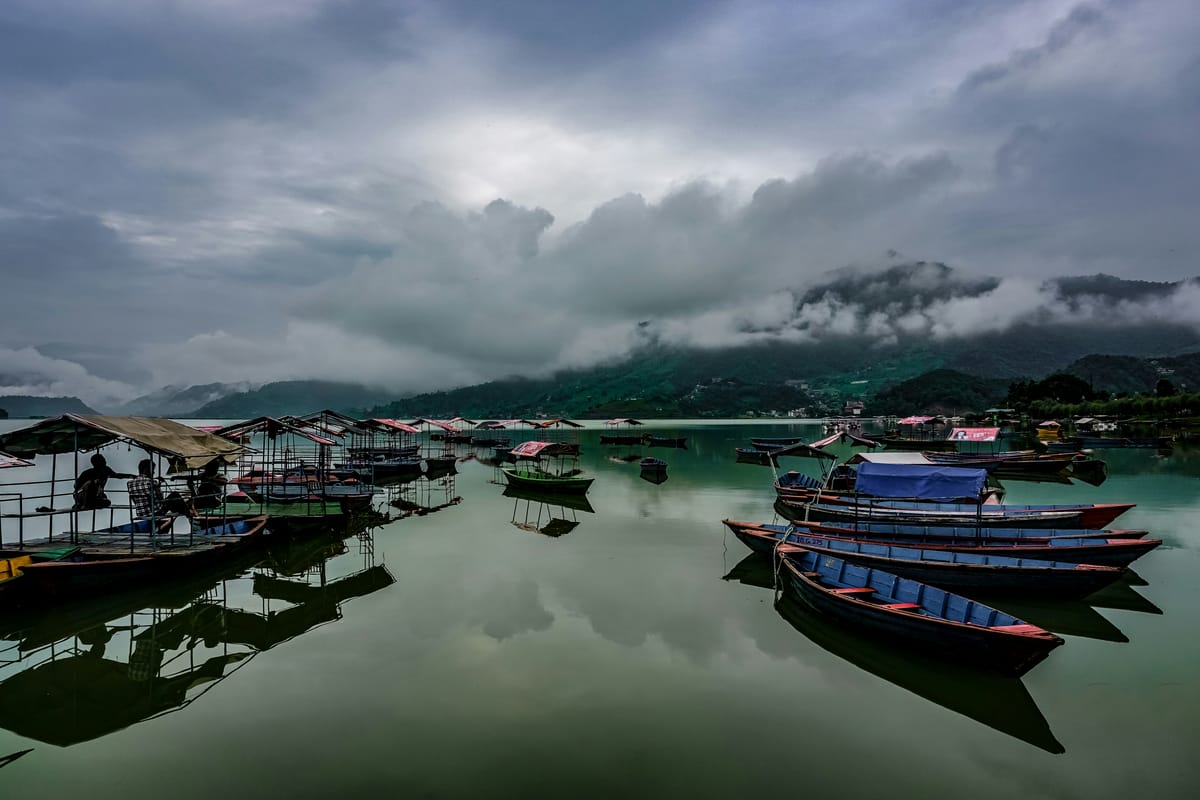
The travel advice is always the same: avoid Nepal in monsoon. June through September, the argument goes, is lost season. Clouds block the mountains, trails turn to mud, leeches find you before you find them. Most tour operators frame the season as something to wait out.
This is partly true and mostly incomplete.
The monsoon brings 80 percent of Nepal's annual rainfall in three months. It brings landslides, flight delays, leeches on forested trails, and a humidity that makes October trekkers forget they were ever warm. It also brings empty trails, cheap guesthouses, rice paddies that turn into mirrors, and the version of the country that exists when the tourist circuit is not running at full capacity.
Nepal's monsoon is not a pause between the real seasons. It is its own distinct state of the country, with its own rules, its own landscape, and its own reasons to be there.
When the Monsoon Arrives
The monsoon enters Nepal from the east, typically around the first week of June. By mid-June it has reached Kathmandu. It builds through July, peaks in August, and withdraws from the hills by mid-September. The Terai holds heat and humidity for a few weeks longer.
It does not rain continuously. Mornings are often clear. Cloud cover builds through the afternoon, and heavy rain typically arrives in the evening. The pattern is reliable enough to plan around: start early, be inside by four.
About 80 percent of Nepal's annual rainfall falls in these three months. That number describes agriculture, hydrology, and landslide risk. It does not describe what a single day on the ground actually looks like.
What the Country Looks Like
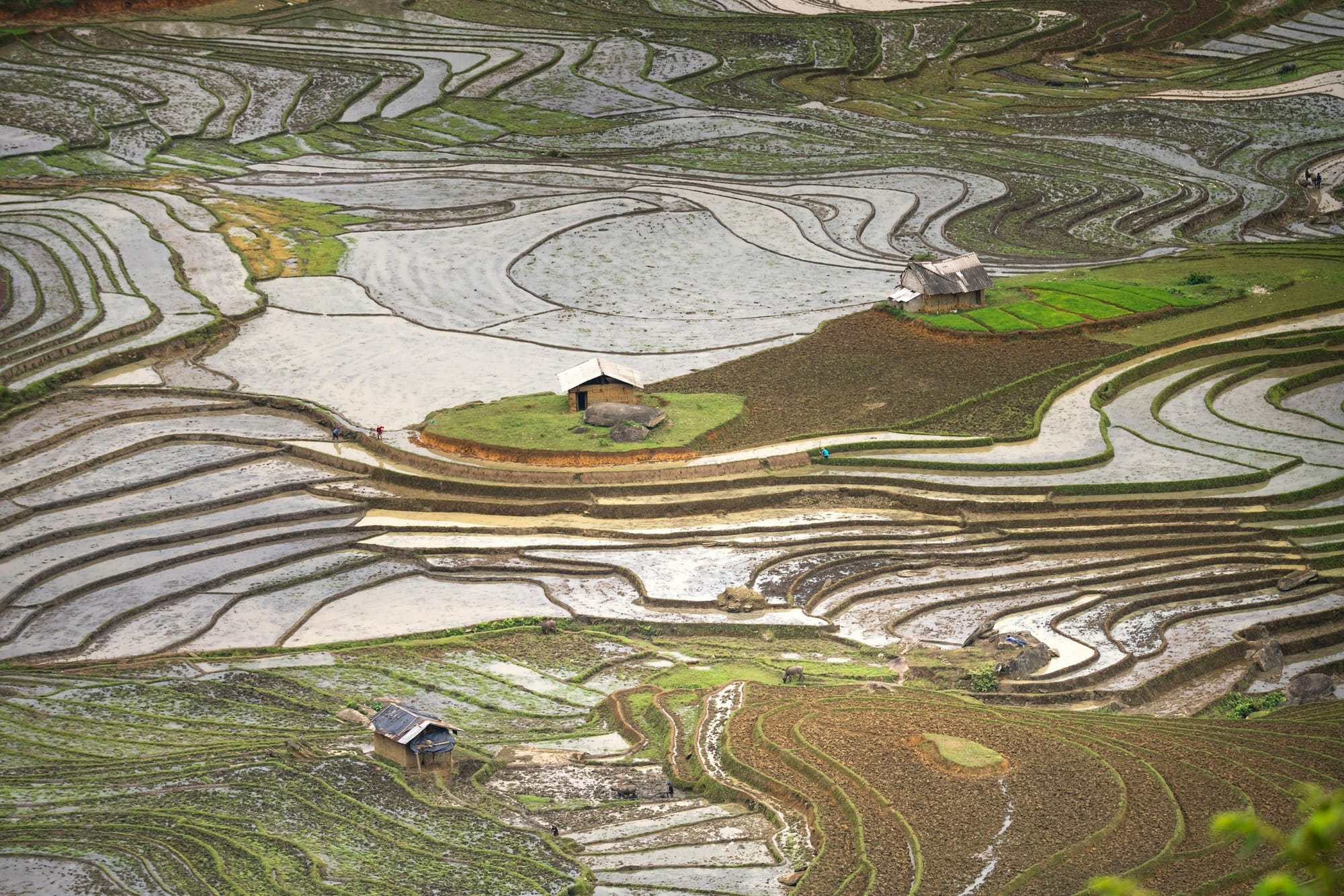
The terraced rice fields of the middle hills fill with standing water in June. Photographed from above, they become a series of mirrors stacked up the hillside, each one holding a different piece of sky. By July, the paddies are a deep specific green that does not exist in any other season.
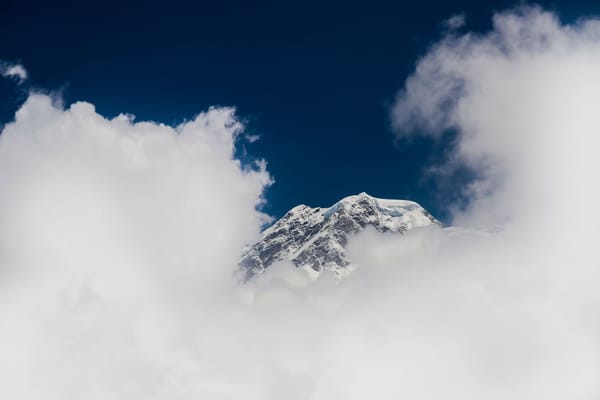
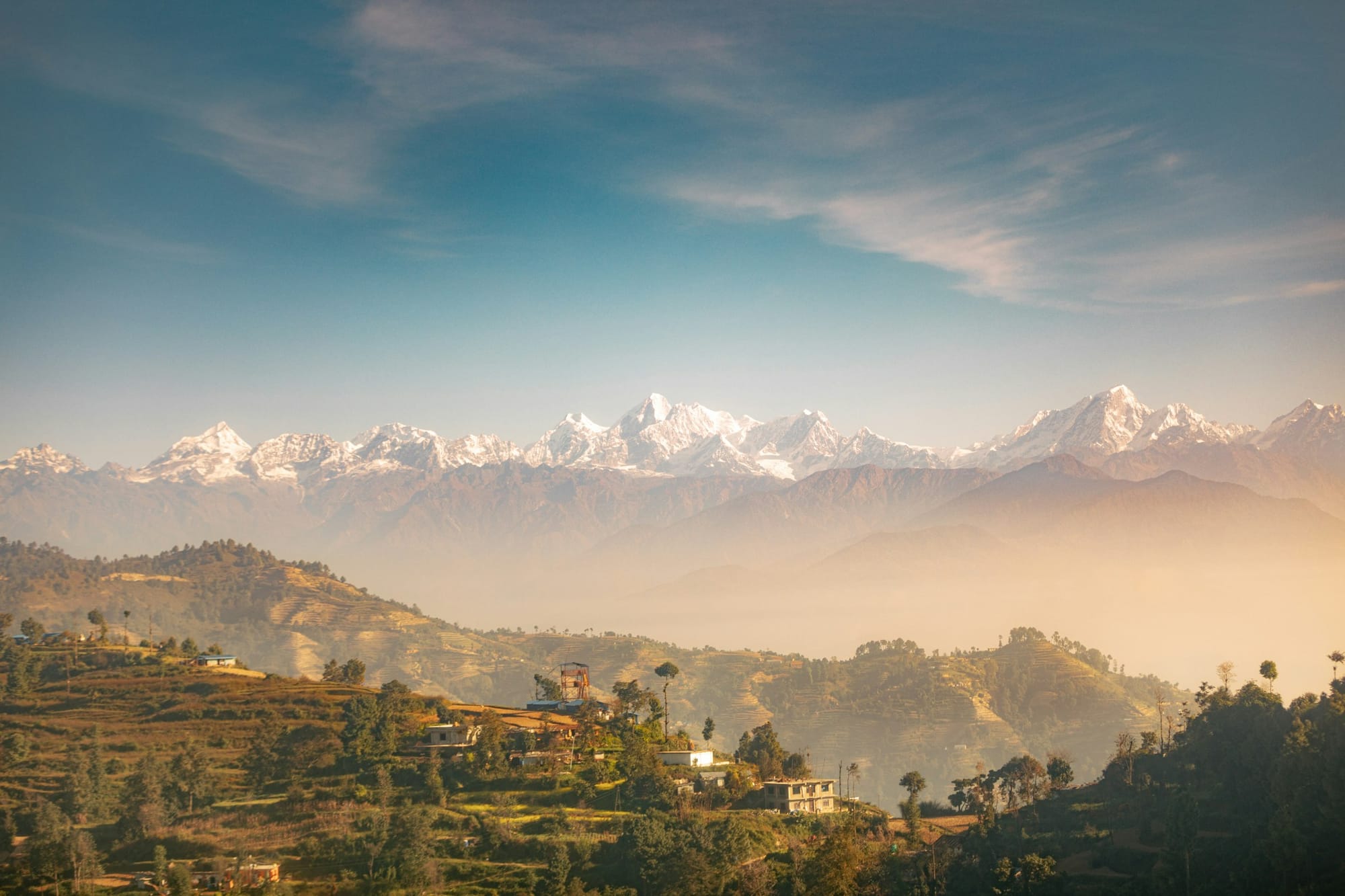
Waterfalls appear on cliff faces that look completely dry in October. The Annapurna range, when visible, sits behind a haze of green that changes the scale of everything. The forests between Pokhara and the hill towns above it are thick with moisture and quieter than at any other time of year.
Kathmandu gets rain in the evening and smells of wet stone in the morning. The Durbar Squares of Bhaktapur and Patan, full of tour groups in October, become functional parts of the city again. People use them. Vendors set up early, before the rain. The temples are easier to move through. Pashupatinath holds its evening aarti with the same attendance it always does, but without the lines of foreign visitors arranged at a respectful distance.
Several of Nepal's major festivals fall within or adjacent to monsoon. Rato Machhendranath, the chariot festival of Patan, runs through much of June. Indra Jatra, which reorganises Kathmandu for eight days, falls in September when the rains are beginning to ease. These happen on the city's schedule, not the tourist one.
Where the Rain Does Not Reach
The Himalayas do not just block the rain. They create their own climate on the other side.
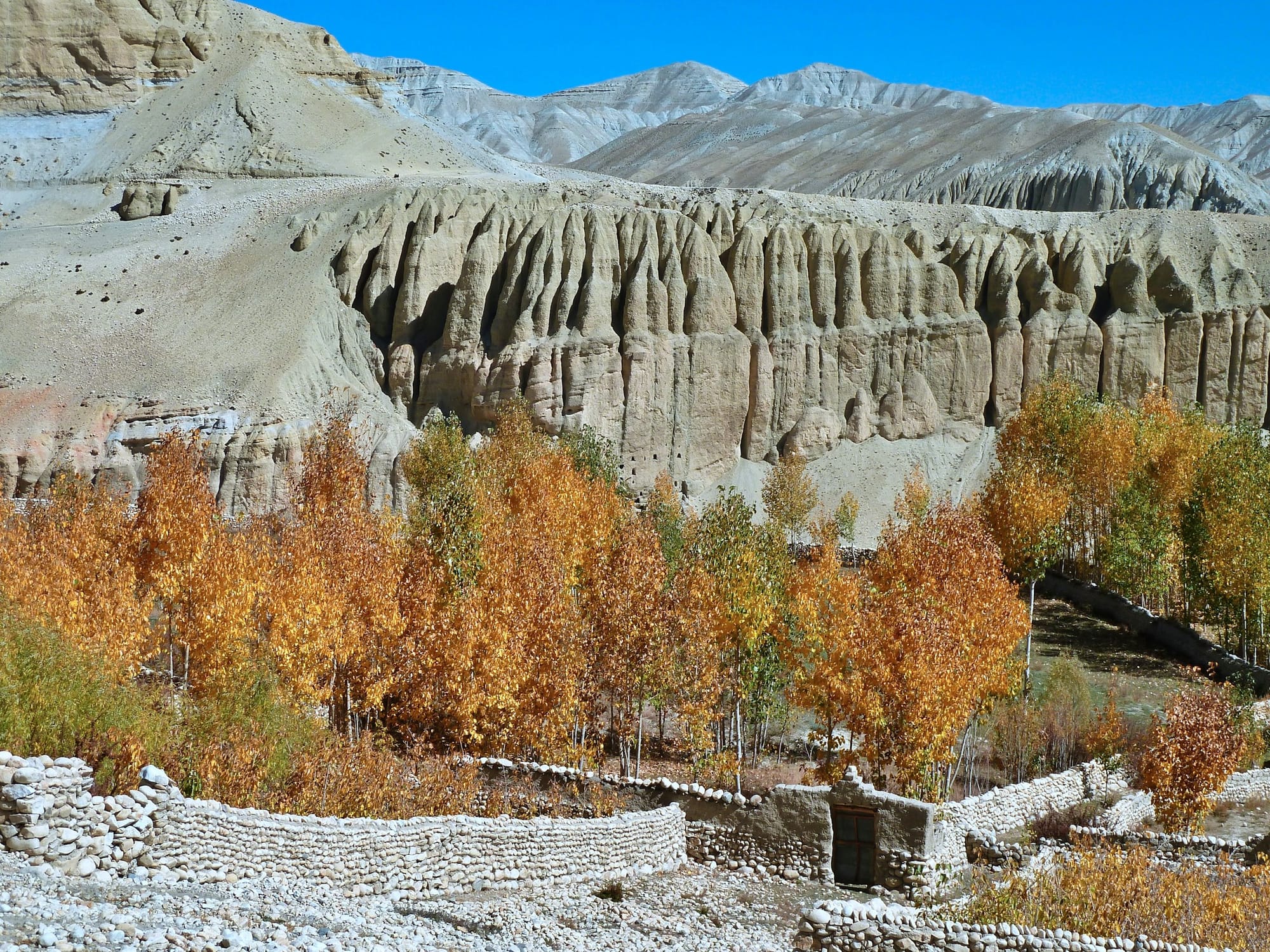
Upper Mustang sits north of the Annapurna and Dhaulagiri massifs. When moisture-heavy monsoon air arrives from the Bay of Bengal and meets those ranges, it rises and empties itself on the south-facing slopes. By the time the air continues north, it has nothing left to give. Pokhara receives around 300mm of rain in July. Mustang receives around 30mm.
This is why trekkers who know Nepal go to Upper Mustang in monsoon. Trail conditions are good. The cave monasteries at Chhoser, the walled city at Lo Manthang, the carved cliffs above Ghami, all of it sits in an arid landscape that turns briefly green from what little moisture does arrive. The permit costs the same year-round. The guesthouses have space. The roads between Lo Manthang and Kagbeni, normally busy with jeeps, run quiet.
Travellers who discover Upper Mustang in July typically come back with a different understanding of what Nepal trekking can be. You expected rain and found dry cliffs. You expected mud and found wildflowers. You expected to share it and found you did not have to.
Our guide to Upper Mustang covers the permit logistics and what the restricted area access involves.
Dolpo operates on the same principle, though the access is more committed. Manang, at the higher end of the Annapurna Circuit, is semi-rain-shadow and remains a functional trekking destination through the season.
The Lowlands in Monsoon
Chitwan National Park deserves a separate assessment.
The conventional advice about avoiding the Terai in monsoon is correct for the open plains, which flood and become genuinely uncomfortable. Inside the park's sal forest, the situation is different. Wildlife does not stop moving because it rains. Tiger sightings continue through July and August. The greater one-horned rhino population, which lives partly in the grassland buffer zones, pulls deeper into the forest during heavy rain, concentrating in locations that experienced guides know.
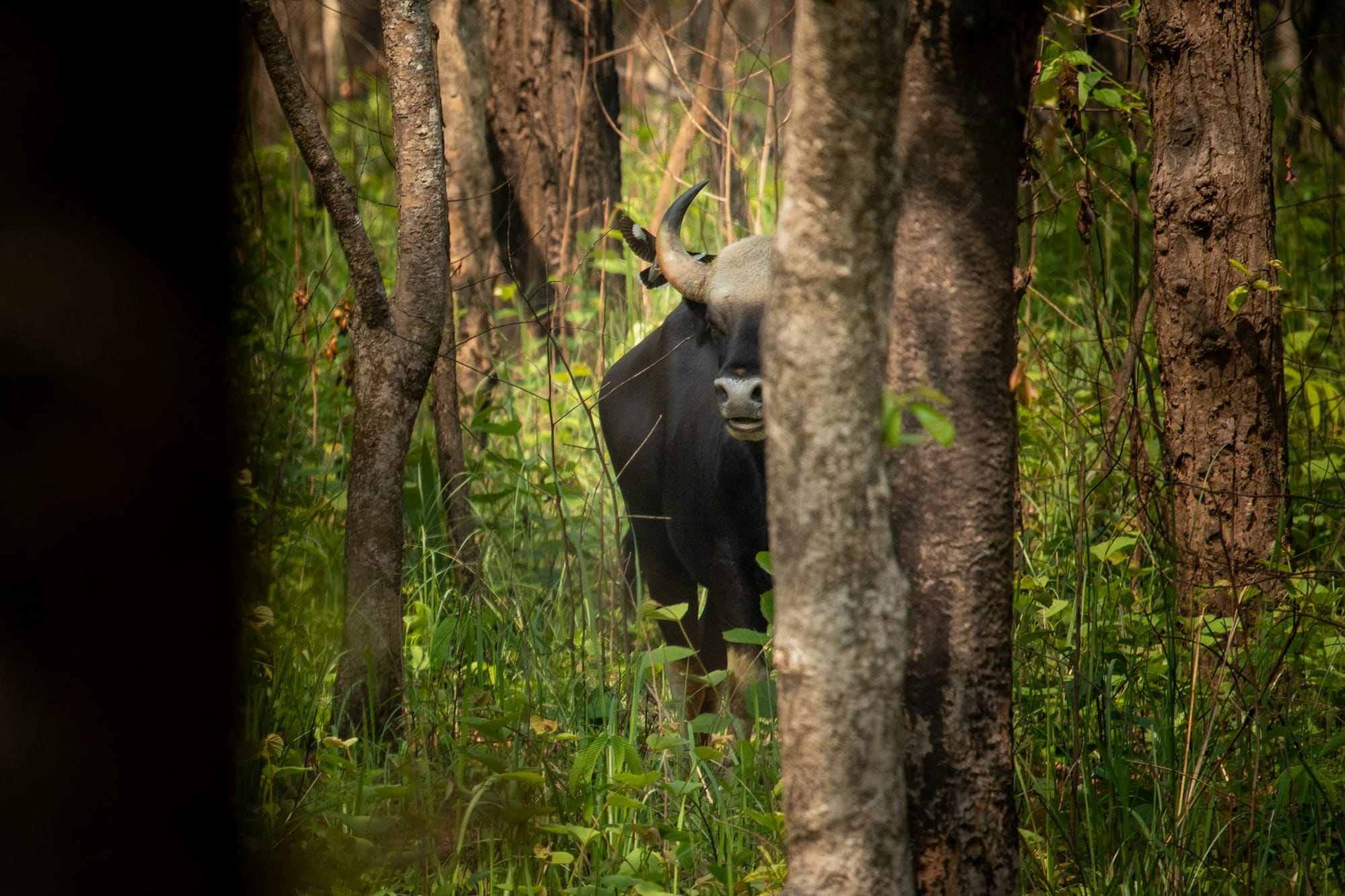
Accommodation prices in Sauraha drop from peak-season rates. The park is quiet. The forest smells of wet soil and sal bark. Birds that are difficult to spot in October, when the canopy is thick with visitor movement, become visible from well-positioned hides.
Shuklaphanta Wildlife Reserve in the far west follows similar logic. The swamp deer herds there are the largest such population in the world. In monsoon, they move into predictable patterns.
What Trekkers Deal With
The leech question deserves a direct answer.
Below 3,000 metres, on forested trails, leeches are active from the first rains through September. They move toward warmth and find the gap between sock and boot with consistent efficiency. They are painless when they attach. You will not feel the bite. They do not transmit disease. Salt makes them release immediately. Leech socks, if you want to skip the manual process, are more useful than most people expect.
Experienced guides who run monsoon treks say the same thing: trekkers worry about leeches for weeks before they arrive. By day three, they have stopped thinking about them.
The actual hazards are more practical. Mountain airstrip flights, Lukla and Jomsom particularly, are frequently cancelled when visibility drops. Build at least one buffer day into any fly-in trek. Roads in the middle hills can be blocked by landslide debris after sustained rain. This is usually a matter of hours, not days, but it adds uncertainty to road-based itineraries.
Pack accordingly. A waterproof outer layer, gaiters for leech country, dry bags for electronics. Trekking poles help significantly on wet descent.
What the Season Costs
Accommodation and trek packages cost less in monsoon. Teahouses that are fully booked in October have beds available, and often better food. Kitchen staff are less stretched. Trekking agencies negotiate in June and July. International flights to Kathmandu run at off-season prices.
Budget travellers see the most meaningful savings. Rooms at good teahouses that charge 2,500 rupees in October are available for under 1,000 in July. The quality does not change. The price does.
The trade-off is mountain visibility. The high Himalaya will be cloud-covered most mornings and most afternoons. Clear views happen but cannot be relied on. If the summit panorama is what you came for, monsoon is the wrong season.
For a full comparison of all four seasons, see our guide to the best time to visit Nepal.
The Season on Its Own Terms
Nepal's monsoon is not weather that gets in the way. It is the season that makes everything else possible.
The farmers are working. The rivers are running at their full width. The forests are at their heaviest and most alive. The people who live in Nepal year-round are going about the business that requires water, soil, and rain. They are not waiting for the tourists to return.
Coming to Nepal in monsoon means being present for that. The mountains will be behind clouds. The trails will be quieter. The country will be more itself than it is in October, when the infrastructure built for visitors shapes what you see and where you can go.
That is, for some people, exactly the point.