Best Time to Visit Nepal: What Each Season Does to the Experience
October and November are Nepal's peak months. What nobody mentions is that pre-monsoon March to May is equally good for trekking and significantly less crowded. What each season actually changes about a trip.

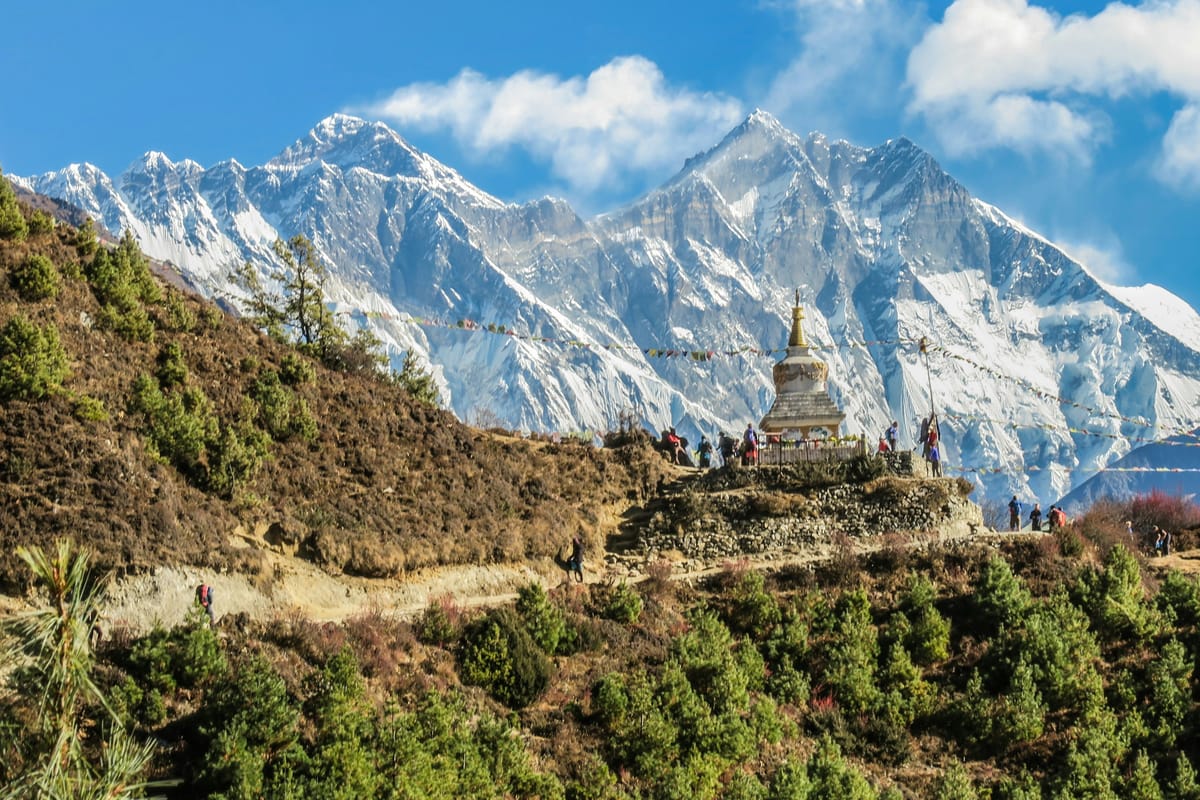
The best time to visit Nepal, according to every guidebook in print, is October to November and March to May. This used to be true. The answer is increasingly wrong. The months are the same. The atmosphere is not. Climate change has redrawn the trekking calendar faster than the guidebooks have been reprinted, and the March-to-May window in particular has become a lottery that looks clear on the label and hazy on the ground.
The specifics matter. A trek in April that once produced clean views of the Annapurna massif now frequently produces smog. A week in September that used to be written off as monsoon sometimes delivers clearer air than November. A week in January, which the guidebooks call off-season, delivers the same mountains at a fraction of the price to anyone who can carry the cold. The 2025 answer to when you should go is no longer seasonal. It is conditional, altitude-specific, and politically readable from the Gangetic plain as much as from the Himalaya.
The spring window that used to work
March to May is the traditional pre-monsoon season: rhododendron in bloom on the mid-elevation forests, days long enough to walk, nights above freezing down to 3,500 metres. It was the reliable half of the year for a decade. It is no longer reliable.
What has changed is the air itself. Agricultural burning in the Gangetic plain, combined with forest fires that now start earlier each year, produces a smog layer that moves north and settles into Nepal's lower valleys. One redditor who trekked in April put it without decoration: Climate change has affected the hiking seasons pretty adversely... March-April is historically fine, but the last few years have been really bad with burning seasons, causing anything below 4000m to be covered up by haze and smog.
The geography makes it worse. The Himalaya does not let the smog pass. A trekking guide writing about the same phenomenon described it plainly: This mass accumulation of smog, blocked by the geographical barriers of the Himalayas, lingers on the basins... it effectively acts as a sinking bowl. For any trek topping out below 4,000 metres, that is the view. The passes may be clear. The valleys will not be.
Anyone who has lived in the Terai knows what the burning season is before they hear a forecast. A Nepali commenter named it exactly: it's an annual thing this time of the year. forest fires and wind from india with their fodder burnings. Spring in Nepal is now a question of altitude. If your trek stays below 4,000 metres, budget for haze. If it goes higher, the upper pass days are still what they were.
What November actually delivers
November is the month that still works. Colder nights than October, drier air, the fewest storm systems of the year, and the clearest views on the historical record. It is also, because of this, the busiest month of the trekking year. Every popular trail operates at capacity, teahouse rooms are at their most expensive, and flights to Lukla and Pokhara sell out weeks in advance. The advantage is the weather. The cost is the crowd.
A traveller who had surveyed the problem recently was blunt: I think the only 'safe' month with guaranteed good views and clear weather nowadays is November. Anything else is up to luck. That is close to true, but incomplete. November is not the only month that works - it is the month whose odds are best, which is a different claim. Any other month has to be read as a probability, not a promise.
The practical implication is that November now concentrates what used to spread across two months. If your trek can be moved to the first week of December, when the crowds have thinned and the weather is often still clear, do so. If it can be moved to late October, when the monsoon has cleared but the pressure has not yet built up, do so. The first and last days of the November window are often better than the middle.
The monsoon fringe and the late-September argument
The monsoon runs from June through mid-September. The guidebooks close the season here. The trekkers who know the country do not. A trekker who walked it offered the counter-argument: last year in the end of September there was the heaviest rainfall in 50 years, middle of September was lovely and we had better mountain views then in the Everest region than some days in October. The late-monsoon window is volatile. It is also, when it works, the cleanest air of the year. The rain has scrubbed the atmosphere. The smog of the previous season is gone. The new season has not yet begun.
The tradeoff is below 2,500 metres. Another guide wrote it plainly: it is almost guaranteed that on the lower trails below 2500 you will encounter leeches... Usually once you are in the higher elevation, you would not have torrential downpour but rather a drizzle or mostly fog/mist. The takeaway is altitude-specific. If your trek spends days in the lower forests, the monsoon fringe is a wet one. If your trek climbs above 2,500 metres within the first day or two, the rain becomes mist and the mountains become visible.
September is the fringe. Late August is more of a gamble. Mid-July is the monsoon without any ambiguity. There is no shortcut through the rainy season. There is a narrow window at its end where the calculus shifts, and the people who trek it know what they are buying.
The winter case for the best time to visit nepal
January is cold. It is also solitary. The teahouses are almost empty, the trails have no queue, and the mountains look the same as they do in November. The case for winter is simple for anyone who can carry the weight. A traveller who went in December or January said it accurately: I booked my trip during the school holidays, which happened to be during Nepalese winter... climbing with a ton of gear makes you hot and sweaty, so the cold barely bothered me. I never used my winter jacket. The cold is real. It is mostly at night and mostly in the lodges, where the common room has a stove and the bedrooms do not.
The warning is infrastructural. One winter trekker added: There were barely any trekkers in the tea houses and on the paths. If you travel during winter, prices were higher and rescue options are scarcer. The rescue argument is the important one. With fewer trekkers on the trail, there are fewer people to notice when something goes wrong. A guide, or at minimum a satellite communicator, is the honest winter setup.
The high passes close in winter. Thorung La on the Annapurna Circuit is not reliably crossable after early December. The Everest Three Passes are winter-expedition territory, not teahouse trekking. What remains possible is almost everything else: ABC, EBC to Gorak Shep, Langtang, Mardi Himal, the lower reaches of the Annapurna Circuit. For anyone who wants the mountains without the November traffic, winter is the answer the guidebooks forgot.
The rain-shadow exception: Mustang and Dolpo
North of the main Himalayan ridge, the monsoon does not arrive. Upper Mustang and Dolpo sit in rain shadow. Their climate is closer to the Tibetan plateau than to the rest of Nepal. What this means practically is that the best-time question for these districts has a different answer than for the rest of the country.

Mustang is open from March through early November. June to August, which closes most other Nepali trekking, is peak season there. The landscape is arid, the light is hard, the passes are dry, and the monsoon clouds visible below the ridge make a dramatic horizon without wetting the trail. The same is true for Dolpo, though Dolpo's access window is slightly narrower because of the altitude of its passes.
Winter closes both. The wind becomes impassable, the border villages empty, and the trail returns to the people who live there year-round. If your trip is fixed to June, July, or August, Mustang and Dolpo are the honest answer. The rest of Nepal is saying no in those months for a reason.
What each season does to Kathmandu
Kathmandu's calendar is not the same as the trekking calendar. The city sits in a bowl at 1,400 metres. It traps air. The smog that troubles spring trekking is worse in the city itself, not better.
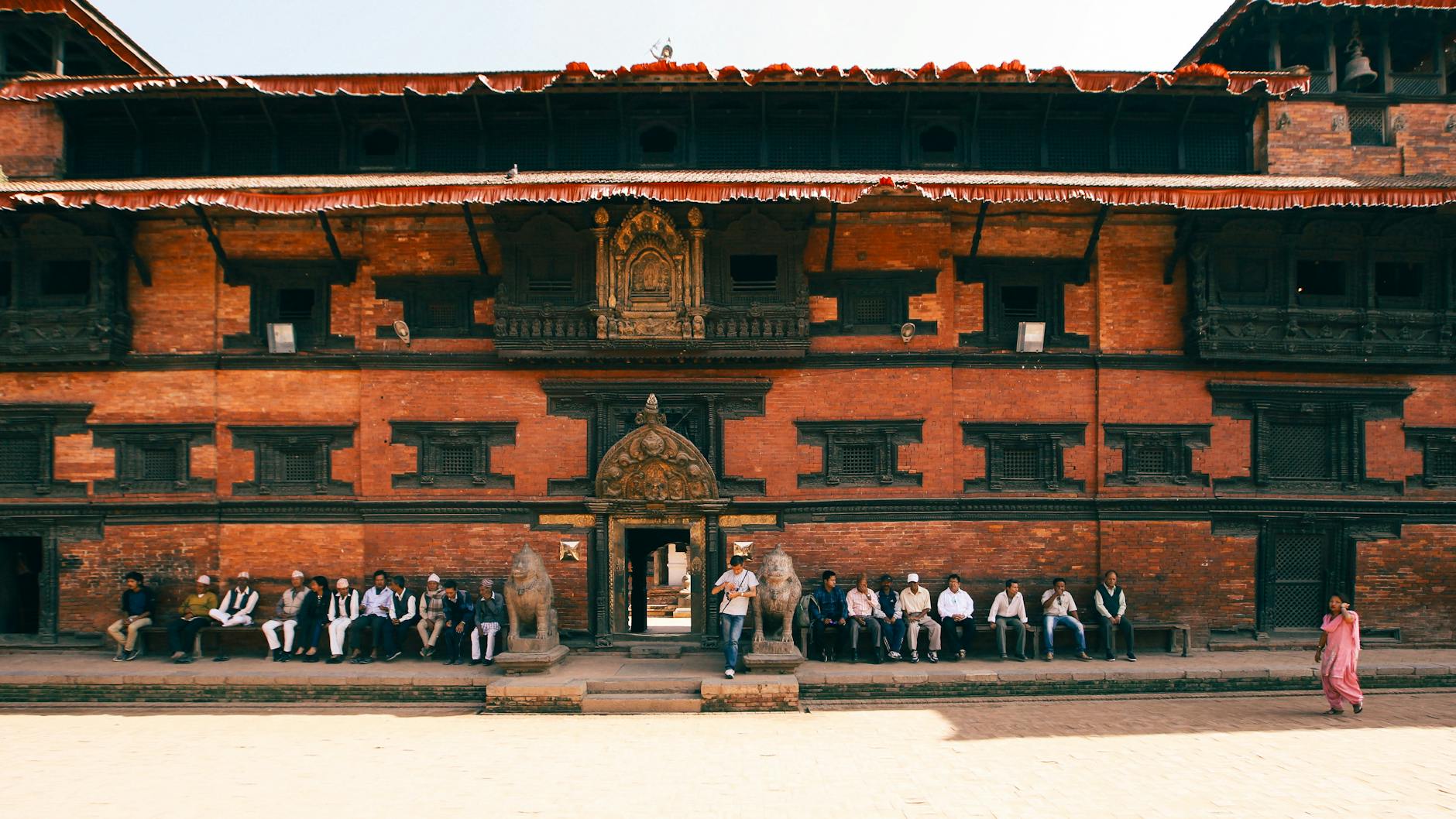
Spring in Kathmandu is the worst air of the year. The agricultural burning season compounds traffic emissions and brick-kiln smoke, and by April the AQI regularly exceeds 200. March and April are when the pre-monsoon temple cycles are at their most active, which means the city is at its most interesting exactly when the air is at its worst.
Autumn is the city's clearest season. Post-monsoon, pre-burning, the rain has rinsed the valley, and the festivals of Dashain and Tihar fall in October and November. This is when Kathmandu looks the way it does in the photographs: gilt temple roofs, marigold garlands, streets smelling of fried sel roti. The trekking calendar and the festival calendar align here, which is part of why November is so crowded.
Winter in the city is cold and dry and clearer than spring. Monsoon is grey and humid and brings the one month of the year when Kathmandu smells like rain instead of exhaust.
The honest answer
The best time to visit Nepal depends entirely on what you are coming for, and the answers are genuinely different depending on the question. For a reliable trek with clear views: November, no question. For an empty trail at lower cost, the same mountains with fewer people on them: January, with layers. For the rain-shadow districts - Upper Mustang, Dolpo, Mustang - June through August is the opening, while the rest of the country closes. For Kathmandu as a festival city: October and November. For Kathmandu as a living city with better air quality and quieter streets: December and January.
What no longer works is March to May as a blanket answer. Spring is altitude-conditional now. If the trek is below 4,000 metres, the views are a gamble. If it climbs higher, the pass days are still the pass days. The calendar is not what it was a decade ago, and planning a trip 6 to 12 months out means choosing a weather bet rather than a safe season. The months have not moved. The air has.