Upper Mustang: Why the Permit Costs What It Does and What You Get
Upper Mustang requires a restricted area permit that costs USD 500 for 10 days - one of the most expensive trekking permits in the world. What the restriction is for, where the fee goes, and what you actually get.

The first thing people learn about Upper Mustang Nepal is the number.
$500 for ten days. Then $50 per day after that. The figure sits in the mind like a toll, and it immediately divides travellers into two camps: those who call it a scam and those who treat it as a luxury badge. Both reactions miss what the permit is trying to be.
The Restricted Area Permit is not a trekking fee. It is a border instrument that has been repurposed, over and over, to answer questions the state does not want to speak out loud: who gets to enter, who gets to profit, what a frontier is for when the frontier is no longer sealed.
Why the region was sealed until 1992
Upper Mustang’s “restriction” is often explained as if it were a romantic attempt to preserve culture. It was never that simple.
The region sits against the Tibetan plateau. For decades, it was treated as politically sensitive terrain, a place where movement was not only travel but a question of sovereignty. Being sealed was about control: of trade routes, of cross-border contact, of the state’s anxiety about a border that cannot be made neat on a map.
When Upper Mustang opened in 1992, it did not open as a normal district. It opened as a controlled exception.
The permit price is a remnant of that exception, a way of keeping entry rare enough to feel governable.
The permit is priced like a filter
A trekking permit is priced like administration. A restricted permit is priced like deterrence.
The stated logic is often dressed up as “conservation” or “community benefit.” The functional logic is simpler: the price filters who can come, and therefore how many people have to be managed. It also guarantees a revenue stream big enough to attract intermediaries.
One trekking guide blog noted that “The government's shift to a flat $50 USD per person per day for the Restricted Area Permit replaces a long-standing system... affecting everyone from budget travelers to high-end tour operators.” That sentence matters because it shows the permit is not fixed tradition. It is policy, and policy changes when money is at stake.
If the permit were only about preserving culture, the structure would be stable. It is not.
Where the money is supposed to go, and where it actually goes
Every restricted permit carries an implied promise: you are paying for something beyond your own access. Preservation. Local development. Controlled impact.
In practice, the money is hard to track at the level travellers imagine. It moves upward through the state, and it moves outward through the private industry that has grown around the restriction. Much of what visitors experience as “Mustang infrastructure” is built not by the permit fee but by the separate economies of tourism, aid projects, and cross-border road building.
The Mustang Ecology and Culture Project is often mentioned as a beneficiary - and it is a genuine attempt to direct resources toward cultural and ecological stewardship, run by people with real stakes in the outcome. But the permit system is larger than any single project, and the revenues it generates pass through more hands than the project documentation accounts for. It is a pipeline, and pipelines leak.
This is why people get angry. Not because they hate paying. Because they cannot see what they paid for.
The guide requirement: controlled access disguised as safety
The restriction is enforced not only through price but through compulsory mediation.
A recent comment put it bluntly: “Independent travelers are not accepted on a walk-in basis... A licensed guide is compulsory (solo trekking is forbidden).” The official justification is safety and accountability. The practical effect is control and capture. It ensures that entry passes through licensed hands, and that money circulates through a regulated layer of the tourism economy.
It also changes what Upper Mustang becomes. When every visitor must be guided, the region is protected from certain kinds of impact, but it is also prevented from developing a more ordinary, local, low-friction travel economy.
Upper Mustang is kept exceptional.
The road from Tibet and the end of the old frontier economy
Upper Mustang’s restriction was designed for a world in which the border was a hard edge.
That world is ending.
A road now comes down from Tibet into Mustang. The political meaning of that road is heavy, but its economic meaning may be heavier. It rewires the old trade logic that once sustained the salt routes and the Thakali networks that moved goods through high country. A family history like mine remembers when salt trade was not nostalgia but livelihood. When the road arrives, the old routes do not simply disappear. They become secondary.
Travellers argue online about whether the road “ruins” the trek. One hiker wrote that “even though the road is finished, apparently the Nepali government didn't give the necessary permits yet so nobody is using the road. Also the guides found/made new trails so you're mostly not hiking on that road.” That comment captures the transition: control is being maintained, but the ground truth is shifting.
Guides are already adapting, rerouting, making new paths to preserve the feeling of remoteness. The permit is doing something similar: preserving a frontier identity in a region where the frontier is being paved.
What you are buying when you pay
Many people pay the permit and still come away describing Mustang as if it were a time machine.
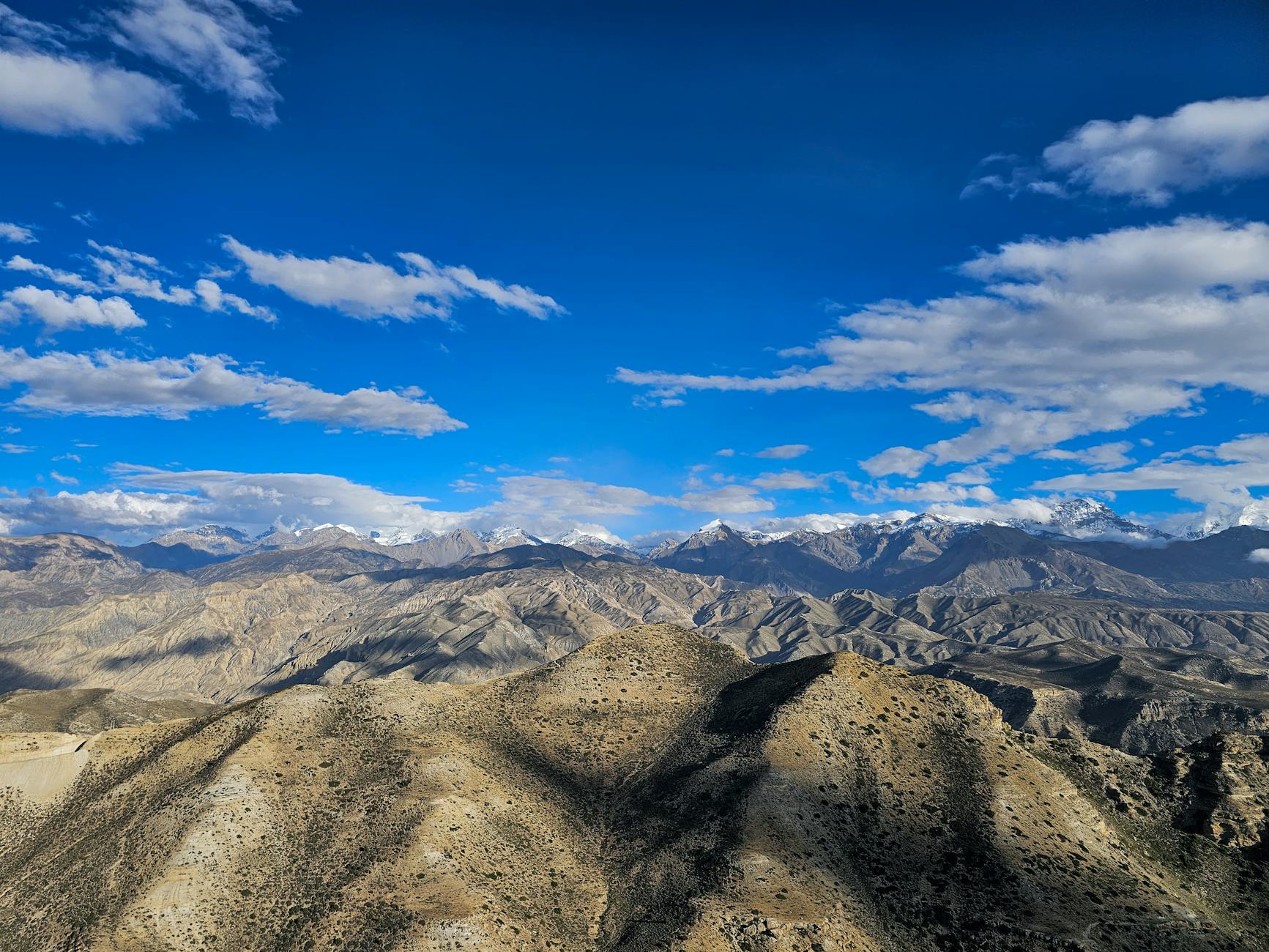
One traveller wrote: “To me, it felt like the Nepal of the 1990's. Raw, undiscovered and less luxurious. Just yellow and orange mountains everywhere, Neolithic dwellings, ancient stupas and pretty wild.” The description is vivid, and it is also a warning. Mustang cannot remain a “1990s Nepal” indefinitely, not with roads, migration, and new economies pulling at it.
What the permit buys, at best, is a slower rate of transformation. A delay.
The landscape itself teaches you this. In October, the wind has a different authority. In May, the air and light behave differently. One comment about timing said, “Perfect timing a month later [October] it becomes really cold and things begin to freeze.” These are not poetic details. They are the region’s rhythm, and they are what every policy tries to manage without ever fully controlling.
The young Lobas leaving, and the question the permit cannot answer
Upper Mustang’s restriction is sold as protection of culture. Meanwhile, the culture is changing from the inside because people move.
Young Lobas leave for Kathmandu and Pokhara. Some return, some do not. The permit does not address that migration. It cannot.
A restricted region can still empty.
This is the deeper contradiction of the policy. The state can price access for outsiders, but it cannot price a reason for young residents to stay.
Does the restriction still serve its purpose?
If the purpose was to keep Upper Mustang politically controlled and economically rare, the permit still serves.
If the purpose was to preserve an older way of life, it serves less and less, and sometimes it only preserves the appearance: a curated remoteness maintained by fees and guides while roads and migration do the real reshaping.
The permit is not a trekking fee. It is a question the state keeps asking with money: what is a border worth, and who should be allowed to cross it?
In Upper Mustang Nepal, that question has never been fully settled. The $500 is just the number you see on the surface.