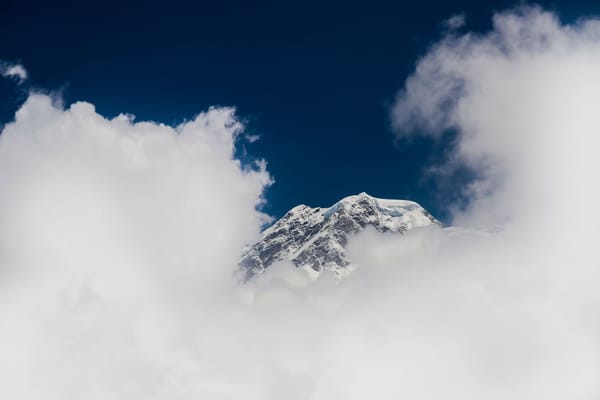
Mustang's Cave Monasteries: The Paintings Nobody Has Seen
The cave monasteries above Mustang hold 55,000 square feet of painted murals dated to the 12th century. Getting inside requires a restricted area permit and some careful climbing.

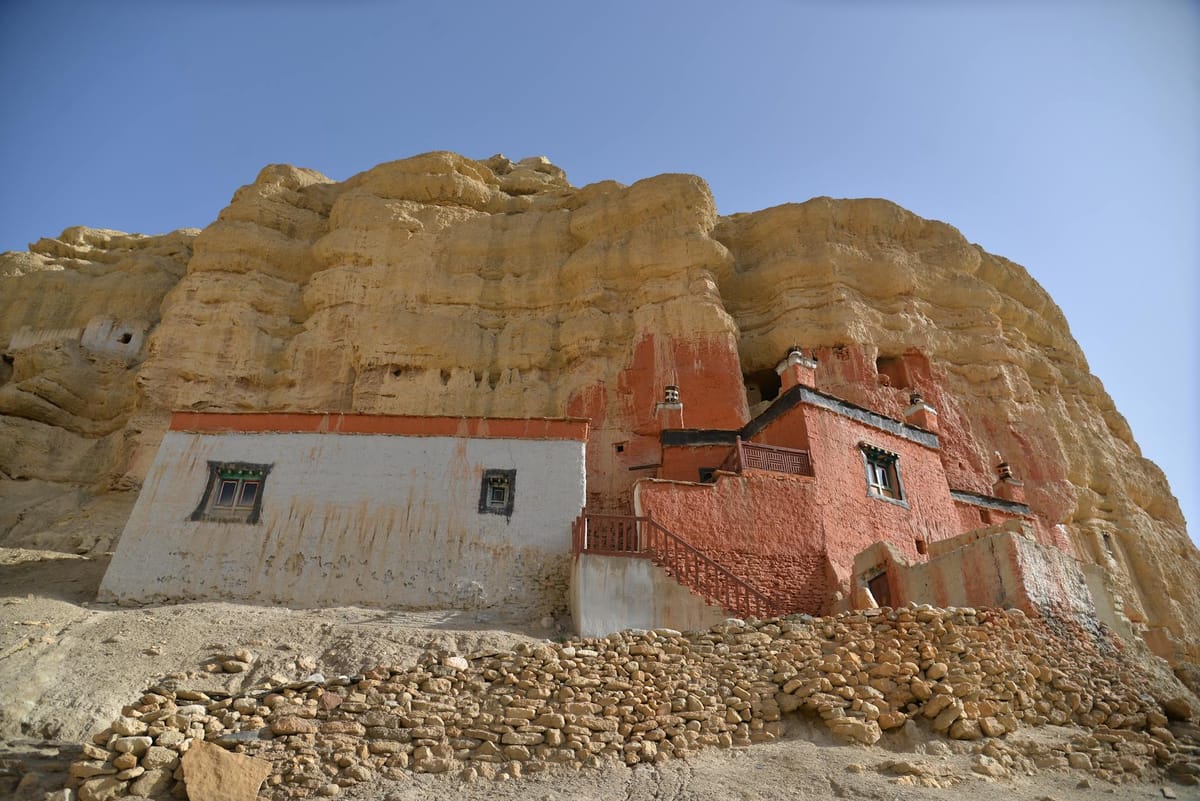
The paintings were made by people who knew they would not be found for centuries. That is one way to read them. Another is that the painters never thought about being found at all, only about making the work correctly.
The cave monasteries of Upper Mustang contain some of the best-preserved Tibetan Buddhist paintings in existence. The kingdom of Lo, as Mustang was known before the borders that made it Nepali, was isolated enough that the iconoclasm that damaged so much religious art elsewhere in the Tibetan Buddhist world did not reach it. The paintings survived because the kingdom was inaccessible enough that no one bothered to destroy them.
What is above Kagbeni
The Mustang restriction area begins above Kagbeni, where the Kali Gandaki gorge narrows and the landscape shifts abruptly from the Annapurna foothills into something that more closely resembles the Tibetan plateau. The permit for the restricted area costs USD 500 per person for ten days. This is not a trekking fee in the usual sense. It is an access fee to a kingdom.
The cave monasteries are distributed across the upper valleys, concentrated in the areas around Chhoser and Lo Gekar and in the cliffs above Ghami. They are not on a single route. Reaching the less-visited sites requires time and, ideally, a guide from within Mustang itself rather than an agency in Kathmandu. The difference matters. A Kathmandu guide can tell you the route. A guide from Mustang can tell you what you are looking at when you get there.
Lo Gekar
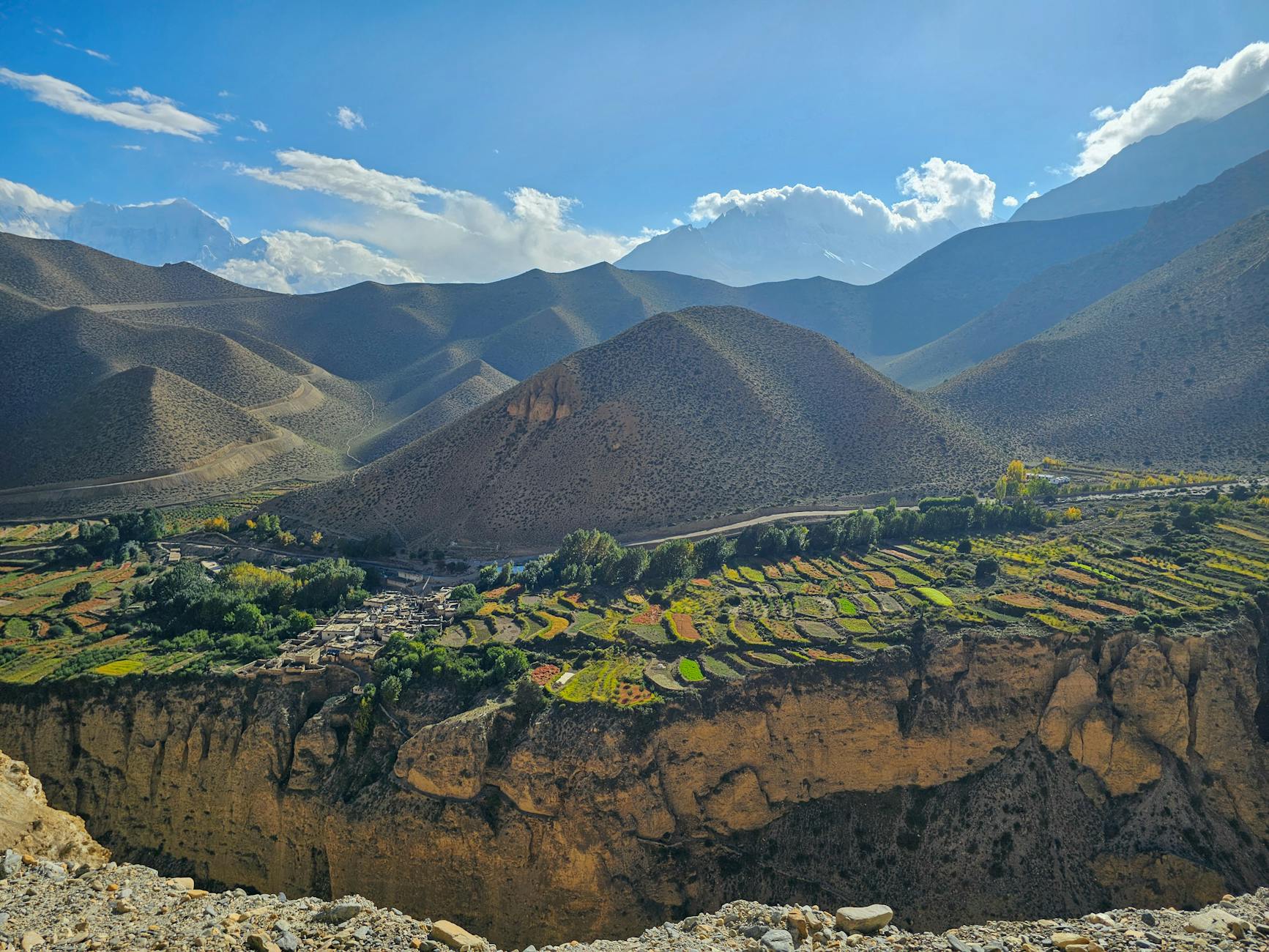
Lo Gekar is one of the oldest monasteries in Nepal, constructed in the eighth century and associated with Guru Rinpoche, the figure who carried Buddhist teaching from India into the Himalayan world. The monastery sits at around 4,150 metres above sea level. The walk to it is not marked with the signage of the main Mustang circuit. The signage in the caves and at the monastery approaches is in Tibetan script, and the paintings themselves require context to read.
This is not a criticism. It is a description of what you arrive into. The painting tradition at Lo Gekar and at the similar sites in the Mustang caves follows iconographic conventions that are systematic and precise. The position of a deity's hands means something specific. The colour of a deity's body means something specific. Without that system, the paintings are beautiful. Within it, they are a compressed form of teaching.
The Chhoser caves
The cave complex near Chhoser, in Lo district, contains hundreds of chambers carved from the eroding cliff face over many centuries. Some chambers have paintings. Many do not. The ones that do range from small niches with a single figure to larger chambers with complex narrative sequences on three or four walls.
The cliffs are unstable. Erosion is ongoing. Some chambers are already inaccessible. Some that were accessible ten years ago are now blocked by rockfall. The question of which paintings will survive the next century is one that conservators from several countries are working on without adequate resources and against a timeline set by the cliff itself.
I have been in the Chhoser caves twice. Both times the silence inside the chambers was total except for the wind in the cliff face outside. That wind has been wearing the cliff for several thousand years. The painters worked inside it.
What the paintings show
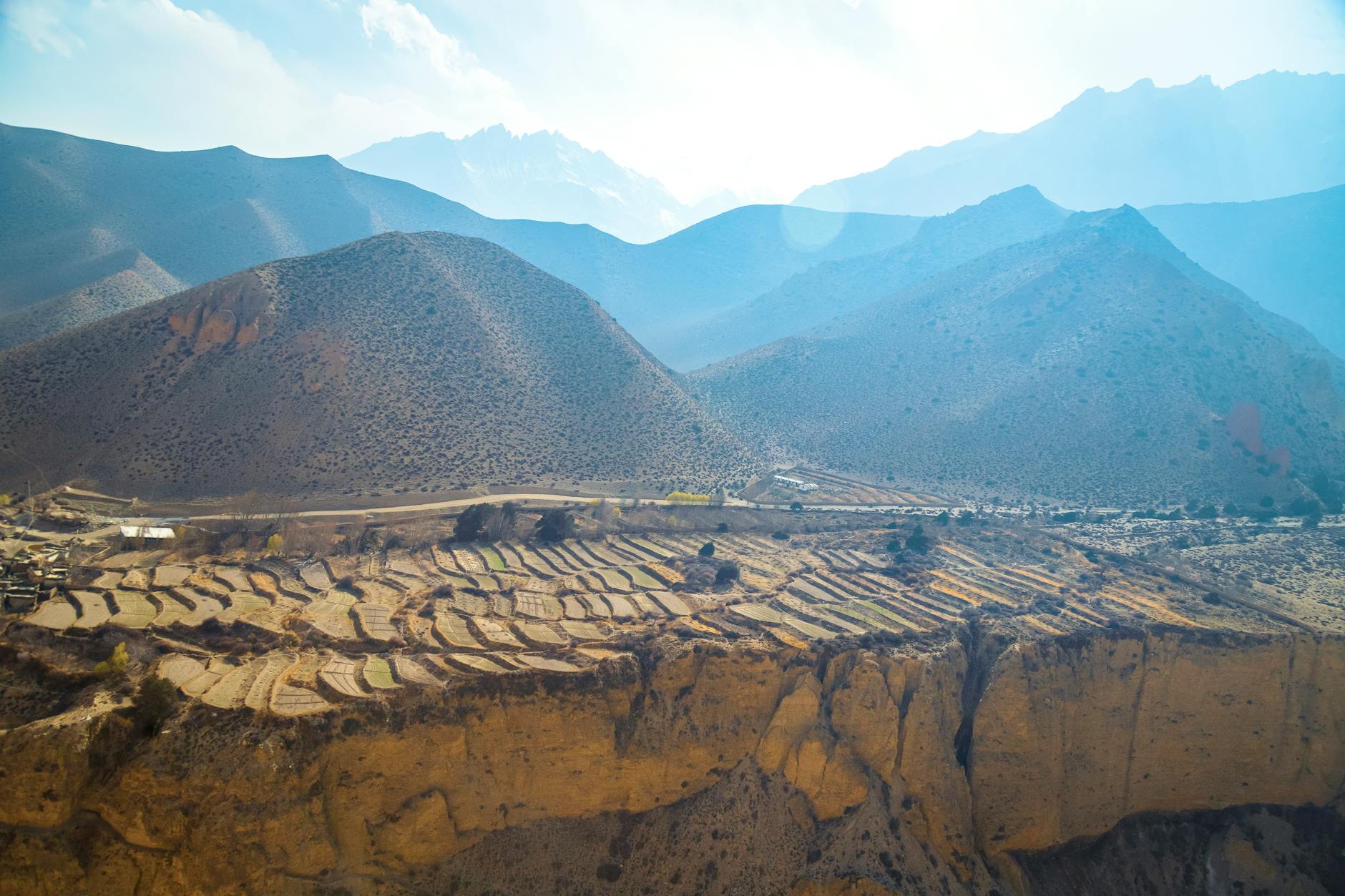
The iconographic programme of a fully painted cave or monastery room in Mustang follows a hierarchy that was established in the Tibetan Buddhist painting tradition before most of these caves were decorated. The central deity of the main wall is typically the most important figure in the practice associated with that particular chamber. The surrounding figures relate to the central one in ways that are doctrinally specific. The borders carry additional deities and sometimes narrative sequences from the life of the Buddha or the Jataka tales.
The pigments used in the surviving Mustang paintings include mineral blues and greens that have held colour for six hundred years. The preparation of these pigments was itself a complex process. The painters were not artists in the sense that word implies individual expression. They were craftspeople executing a received tradition with precision. The paintings that have survived are the ones where the execution was most precise.
Going without a guide
Since 2023, the requirement for a licensed guide in the restricted area has been removed. You can now enter Upper Mustang with the permit and without a guide.
What you lose without a guide from Mustang is not access to the sites. It is access to the sites with adequate understanding of what you are looking at. The Tibetan-script signage at Lo Gekar tells you things about the monastery's history and its current ritual use. The path to the cave complex at Ghami departs from the main trail at a point that is not marked in the standard trekking maps. Without someone who knows the path, you will walk past it.
I am not arguing that everyone needs a guide. I am saying what you give up. For some people, wandering without explanation is the correct approach to a place like Mustang. For others, arriving at a sixth-century painting with no framework for reading it is a disappointment that could have been prevented.
The paintings were made to be read. They still can be, if you arrive with the means to read them.