
Inside the Ilam Tea Gardens in March
In March, the Ilam tea gardens are at first flush. The estate rows sit at 1,600 metres above sea level, the mist comes in from the east, and the picking season has just begun.

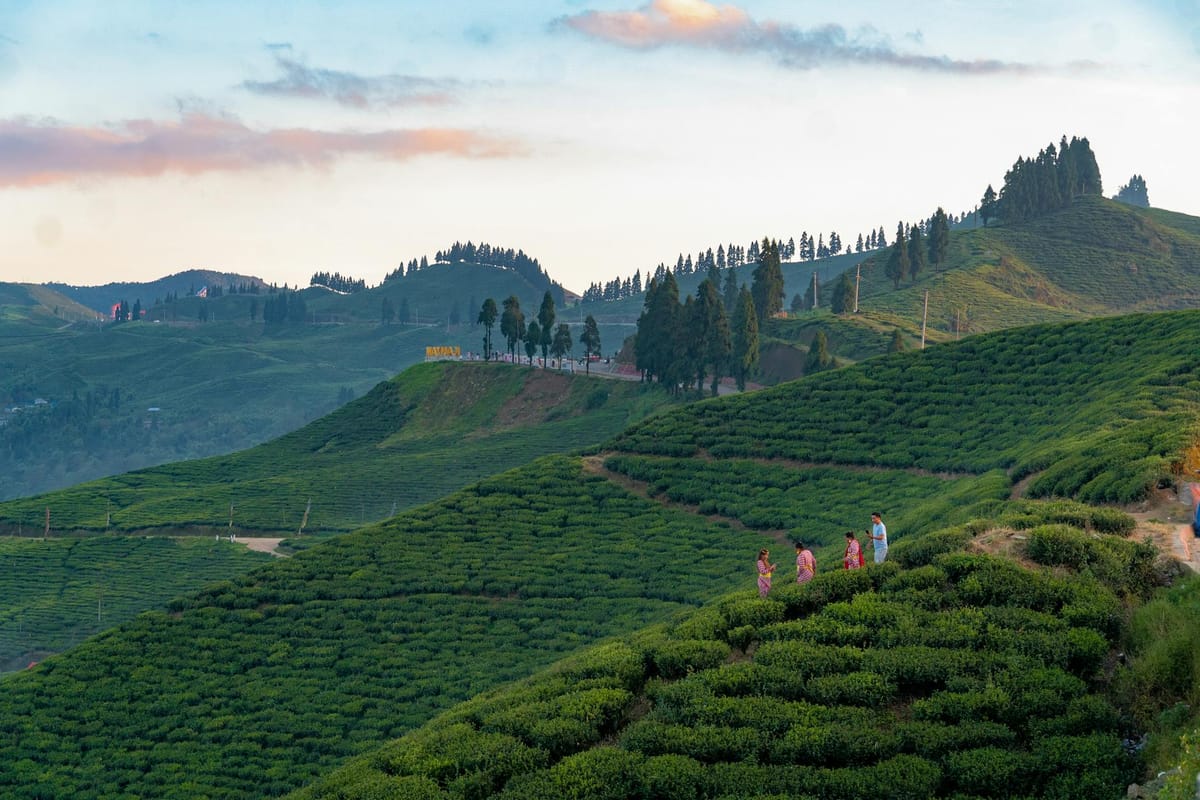
In March the tea bushes have been pruned back to knee height and the new growth is coming. The leaves are small and very green and if you pick one and fold it between your fingers the smell is direct and clean in a way that the finished tea does not quite replicate. This is the first flush, which is the harvest that the buyers pay most attention to and the one that tea writers describe as the most delicate expression of the plant. In Ilam, the first flush happens in March and April depending on the elevation of the garden and the specific conditions of the year.
I am a botanist by training and I grew up in a tea-growing family in the Ilam hills. I want to be clear about what that means for what I am about to tell you: I do not look at tea gardens the way a tourist looks at tea gardens. I look at them the way someone looks at a crop field. With interest in the biology, in the labour, in the economics. The view from outside is different from the view from inside, and I will try to give you both.
The Garden
The Ilam tea gardens are distributed across a range of elevation from around 900 to 2,200 metres in Ilam district, eastern Nepal. The variation in elevation produces a significant variation in character: the higher gardens produce a tea with more complexity and less yield, the lower gardens produce a heavier, more consistent character at greater volume. The finest Ilam teas, the ones that are exported to specialty markets in Japan and Germany and are occasionally mentioned in the same conversation as Darjeeling first flush, come from the higher elevations.

The garden you are most likely to visit as a visitor is Kanyam, which sits at around 1,400 metres and has the infrastructure for visitors: a viewpoint, a small museum, a path through the plantation. Kanyam is a real garden, not a constructed experience, and the visits happen around the actual work of the garden rather than being separated from it. If you come in March and the plucking has started, you will see the women moving through the rows, the leaves going into the baskets on their backs, the weight of the baskets increasing through the day.
The Plucking

Tea plucking in Ilam is done by hand, by women who are predominantly from the local Rai and Limbu communities and from the Tamang communities who have been involved in the garden economy since the British established commercial cultivation in the nineteenth century. The standard of plucking that produces the finest tea is the two-leaves-and-a-bud standard: the top two leaves and the bud of each growing shoot are taken, leaving the rest of the plant to continue growing.
A skilled plucker in a well-maintained garden can harvest around thirty to forty kilograms of green leaf in a day. The green leaf yield required to produce one kilogram of finished black tea is roughly four to five kilograms, depending on the processing method. The arithmetic of this, laid against the wages paid for the plucking work, is not comfortable if you think about it in detail. It is the arithmetic of most agricultural labour, which does not make it comfortable.
The women who do this work know the plant in a way that the people who write about the tea do not. They know which sections of the garden are producing well this season and which are struggling. They know the smell of a row that has been left too long. They know the weight of the basket before they feel it. This knowledge is not written down. It is carried in the body.
The Processing
The factory at a tea garden is where the green leaf becomes tea. The steps are withering, rolling, oxidation, and firing, in sequence, and each step has variables that the tea maker manages through observation and judgment rather than formula. A skilled tea maker can smell the progress of oxidation and know when to fire. The smell changes from the raw green of fresh leaf through something fermented and then floral and then, if you let it go too long, flat.
The first flush black teas of Ilam are fired at a lower temperature for longer than the later-season teas, which is one of the factors that produces the lighter, more complex character. The factory at Kanyam is operational and accessible to visitors during processing periods. The smell inside a functioning tea factory during firing is one of the more precisely evocative things I can offer you as a reason to go.
What Ilam is beyond the tea
Ilam is also the border district that faces Sikkim. The town of Ilam itself is a small hill town with a weekly market that draws communities from across the surrounding hills, a market where you can buy Darjeeling tea from the Indian side and Ilam tea from the Nepali side at the adjacent stalls and make your own comparisons.
The rhododendron forests above the tea gardens bloom in late March and early April in the same season as the first flush, which means that the light on the hills is simultaneously doing the things that the tea and the rhododendron require of it. I find this coordination of seasonal events, the bloom and the harvest happening together, to be one of the more precisely timed pleasures the eastern hills offer. Both of them will happen whether or not you are there. Come in March and they will happen while you are watching.