The Tharu People of Chitwan: A Culture That Survived by Adapting
The Tharu were here before the tigers, before the park, before the buffer zones. A culture that survived malaria, displacement, and the tourism economy built on top of it.

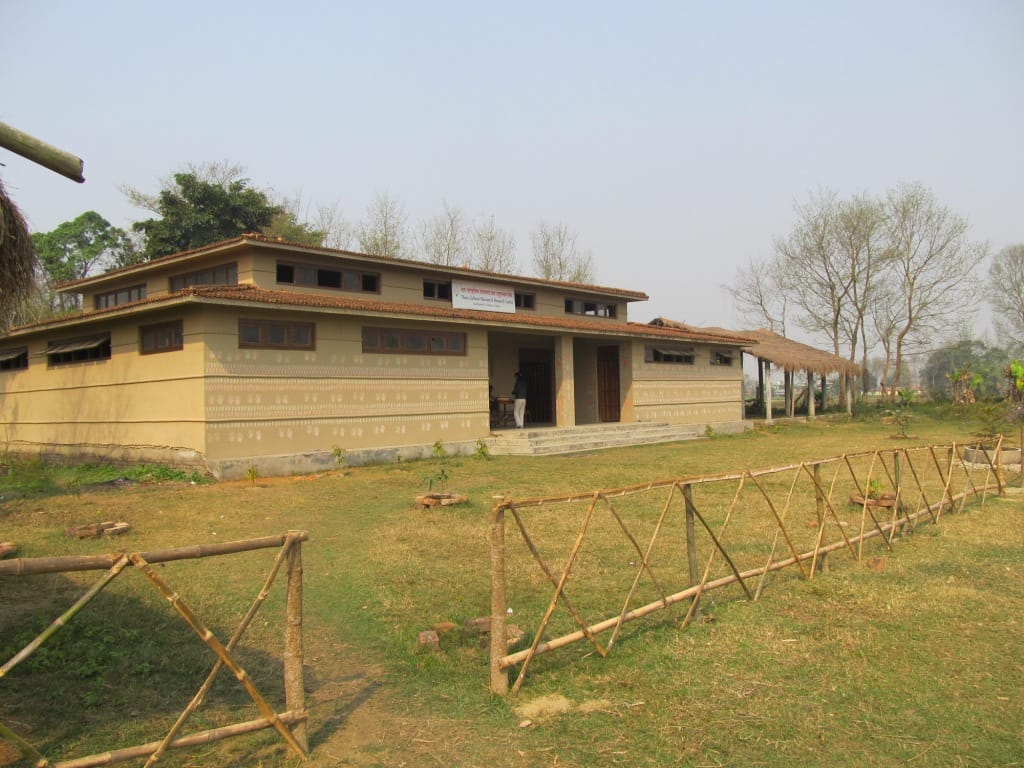
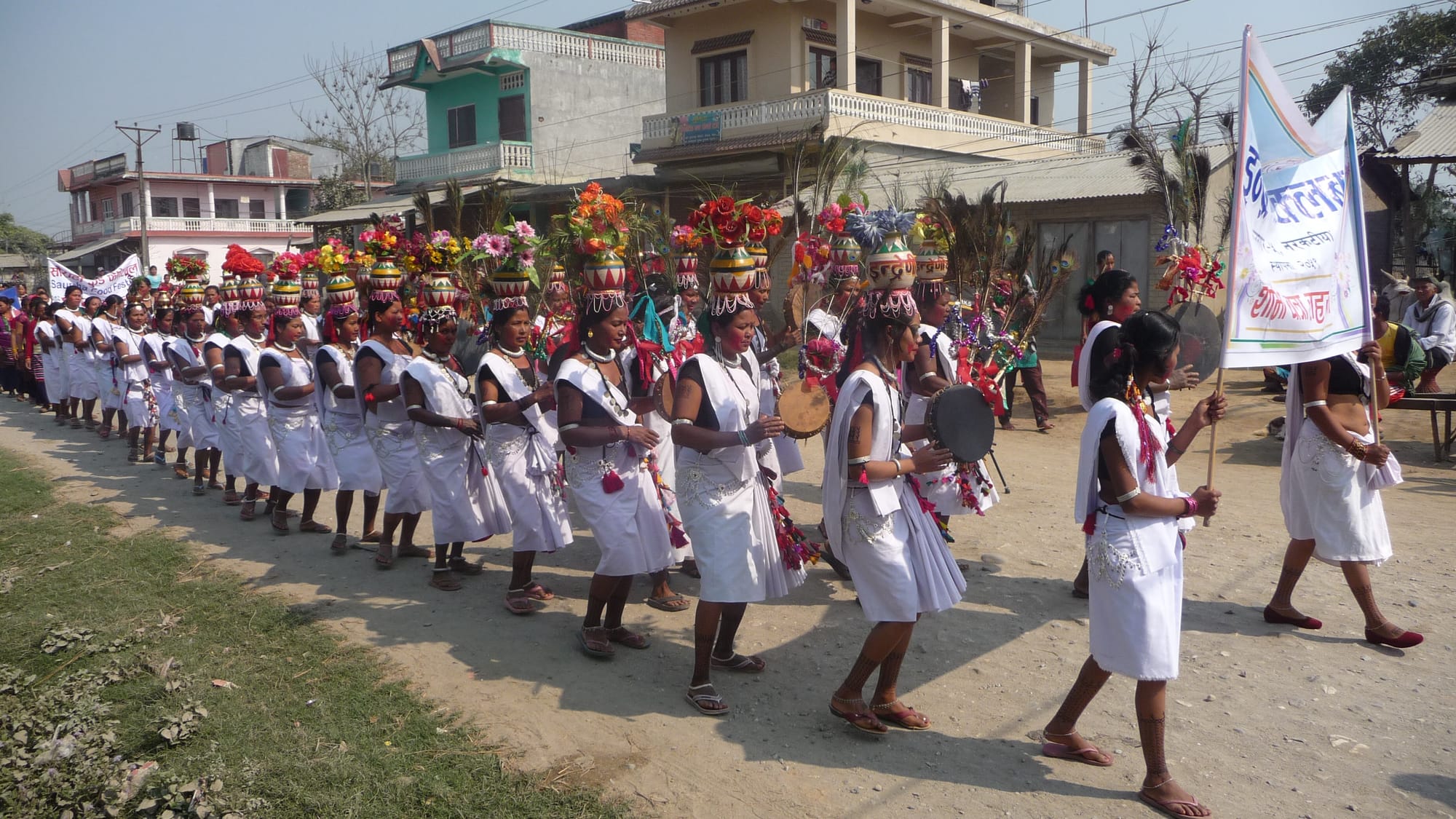
In January, the men in Chitwan's Tharu villages come out to dance. They carry thick sticks cut from the sal forest, and the patterns they move in look random until they do not. Danda Nach. Stick dance. The Tharu new year, which they call Maghi. The women stand at the edge of the courtyard. Their work is visible everywhere: the white mud walls decorated with figures of elephants and fish and geometric forms, the smooth floor swept before the dancing starts.
Most people visiting Chitwan go to see a tiger. The Tharu are here when they arrive, and here when they leave, and have been here considerably longer than the national park.
The Tharu are the indigenous people of Nepal's southern lowlands, and their first advantage was a biological one. For centuries, the Terai was malarial. It was green, humid, flood-prone, and fatal to most people who tried to settle it. The Tharu had developed, over generations, a degree of genetic resistance that allowed them to live where others could not. No one romanticised this as a power. It was a fact of geography. Nobody competed with them because nobody could survive long enough to compete.
The first disruption came in the 1950s, not from people but from chemistry. DDT spraying as part of the global malaria eradication campaign reached Nepal and worked. Within a decade, the Terai was accessible. Hill communities began moving south in numbers: Brahmin families, Chhetri families, people from the hills who had always understood that the land below was rich but had not been able to stay on it until now. The Tharu, who had farmed the same land for centuries, found themselves surrounded by arrivals with connections, with Nepali literacy, with access to courts and offices where land disputes were settled. Many Tharu became kamaiya, bonded labourers on land that had been their families' within living memory.
The second disruption arrived in 1973. Chitwan National Park. The boundaries were drawn through Tharu villages. Families were relocated with compensation that did not account for what was taken. The park, which the world would come to recognise as one of Asia's major conservation successes, was built partly through the displacement of the people who had lived inside its future boundaries.
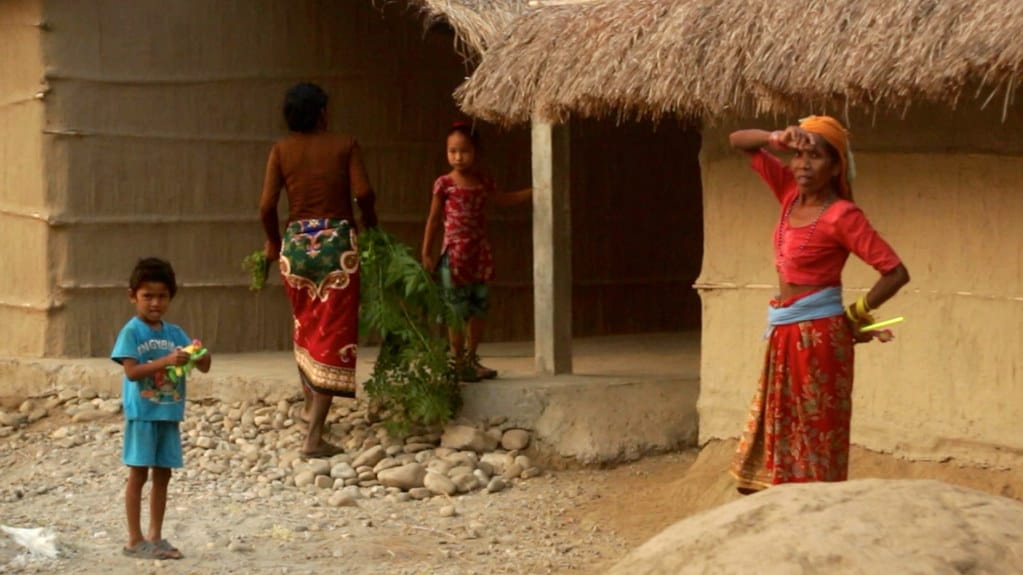
Tharu political organisations document this history in detail, and they are right to insist on it. Chitwan District is now more than 60 percent non-Tharu. The economic position of many Tharu families improved after the abolition of the kamaiya system in 2000, but land rights remain contested.
What holds my attention, though, is not the loss. It is the precision with which certain things have been maintained.
The Tharu dialects have not collapsed into a single language. Chitwan Tharu is distinct from Bardia Tharu, which is distinct from Saptari Tharu. These distinctions have been maintained in practice, in households, in the way a grandmother speaks to a grandchild and expects to be understood. There are debates about standardisation, and those debates are conducted in a language alive enough to have them.
The mud architecture is still being made in the villages closest to the forest edge. The women who decorate exterior walls still do so in the weeks before Maghi, using rice paste applied with a cloth-wrapped stick. The figures are not reproduced from a template. They are made fresh each year. A homeowner near Sauraha showed me the courtyard wall she had just finished, pointing out each figure without being asked. Her daughter was watching, learning the order.
There is a tourism economy in the villages now. Homestays near Sauraha have been running for some years. Visitors do cultural activities alongside safari trips. The total cost of a few days there, with everything included, runs well under what a few nights in Kathmandu costs. That this economy has arrived is not without complication. But the stick dance is not performed for visitors. It happens in the courtyard. Visitors watch from the edge. The dance continues the way it always has.
Adaptability, for the Tharu, is not a romance. It is a survival mechanism forced on them by displacement, by land law, by a citizenship that has never quite included them equally. But survival is not the same as loss. The people who confuse the two have usually not spent much time below 200 metres.
Nepal's indigenous communities have negotiated versions of this survival across every altitude. In the hills of Gandaki Province, the Gurung people of Lamjung are carrying forward a distinct language and ritual life in the shadow of a military identity the outside world has found easier to commodify.
The Narayani is wide in January. The land is flat, the sky enormous, and the sal forest comes to the edge of the villages. A woman in traditional Tharu dress carries a bundle on her head and walks the path between the fields in the early morning without looking north toward the mountains. The mountains are far away. They have always been.