Teahouse Trekking in Nepal: What the Price Covers
Teahouse trekking in Nepal is not cheap comfort. It is a specific economy - family-run lodges, dinner-for-a-room protocol, dal bhat at 4am, and rules that vary by region and altitude.


A teahouse trek Nepal is sold as convenience: you walk all day, and then a bed and a hot meal appear without you carrying a tent. People explain it as a cheaper alternative to camping, a softer way to trek.
That is true, but it is not the point.
A teahouse trek is an economy you move through on foot. Every cup of tea, every plate of dal bhat, every paid hot shower is a small transaction that keeps a high-country household running in a place where there are not many other ways to earn cash. If you want to understand what you are paying for, stop thinking like a customer and start thinking like someone entering a family business that happens to sit on a trail.
Who owns the teahouse, and where the money actually goes
Most teahouses are not “lodges” in the abstract. They are family property.
On routes like Annapurna, some families have hosted trekkers for three generations. In the hills above Beshishahar, many of those families are Gurung - an indigenous community whose presence in these hills long predates the trekking industry. The grandmother started with one room. The parents added a dining hall when the trail got busier. The current generation runs bookings through WhatsApp and worries about whether the road will reroute walkers away from their doorway.
Your payment does not disappear into a tourism company first. In many villages it goes straight into the household’s winter fuel, children’s school fees, loan repayments for expansion, and the constant maintenance a mountain building demands.
Guides and porters are part of the same system, but they are not the teahouse.
A guided group changes the economics because it arrives with a broker. The guide may steer business, negotiate rates, and control which lodges get guests. A porter is paid for labour that most trekkers only notice when it is absent. The family is paid for infrastructure that looks “simple” only because you are comparing it to a city hotel.
The unwritten protocol: dinner buys your room
A teahouse has one basic question: will you eat here?
The room is often a loss leader. The dining room is the margin.
That is why the old rule matters: if you want a room, order dinner. It is not courtesy. It is the business model.
It also explains why some trekkers feel “nickel-and-dimed” at altitude. A paid hot shower, a charging fee, a more expensive plate of noodles, the cost of Wi‑Fi that works badly. These are not punishments. They are how a lodge survives when everything has to be carried up by vehicle, mule, or person.
One traveller summarised the reality without drama: “Simple lodges with basic beds, limited electricity, and paid hot showers. Wi-Fi is unreliable.” That is the honest baseline.
And it is why expecting free hot water is naïve. Heating water in the mountains is not a courtesy, it is fuel.
“Dal bhat power 24 hour” means a kitchen that starts at 4am

Tourist jokes about dal bhat make it sound like a slogan. In the kitchen, it is a schedule.
Dal bhat on a trekking route is not one dish. It is an operating system: rice and lentils, seasonal vegetables, achar, sometimes meat, cooked early, replenished, served endlessly. It is the meal that matches the economics of teahouses because it can be scaled, repeated, and portioned without waste.
And it is labour.
Cooking at altitude is slow. Fuel is precious. Ingredients are inconsistent. One hiker noted, “Since everything gets cooked from scratch, meals tend to be a lengthy affair of one to two hours.” That is not a complaint, it is the truth of a place where speed costs more than time.
So when you hear “power 24 hour,” understand what it’s really describing: a household that wakes before you, lights the first fire, heats the water, starts the rice, and keeps doing it after you have gone to bed.
Your bed is not heated, and the blanket is not a promise
A teahouse room is a box with a bed. The warmth is in the dining room.
This surprises people who assume “lodge” means comfort. A seasoned ultralight trekker explained the reality plainly: “The rooms are not heated.” They added the useful detail that blankets exist, but they still used a 0°C down sleeping bag and “was never cold when sleeping.”
That comment is not just packing advice. It is another window into what you are paying for.
You are paying for a structure that stands up to weather and time, not for central heating. In villages where electricity is limited and fuel is expensive, heating bedrooms would be an extravagant use of resources.
The dining room stove is communal because the economics demand communal warmth.
Squat toilets, cold showers, and the price of convenience
There is a reason teahouse trekking is cheaper than camping: you are offloading the weight onto people and systems you do not see.
The toilet might be a squat toilet. The shower might be cold unless you pay. One traveller put it bluntly: “Only squatty potties and cold showers. Many have wifi.” Another expanded it into the reality most people discover slowly: “Wi-Fi is unreliable.”
These statements are not warnings. They are descriptions of a high-country service economy that is trying to satisfy trekkers without pretending it is a resort.
A camping trek can feel “cleaner” because you bring your own system. A teahouse trek is messier because you are entering someone else’s.
Everest in October versus Kanchenjunga in November
Not all teahouses are equal. The difference is not only comfort. It is volume.
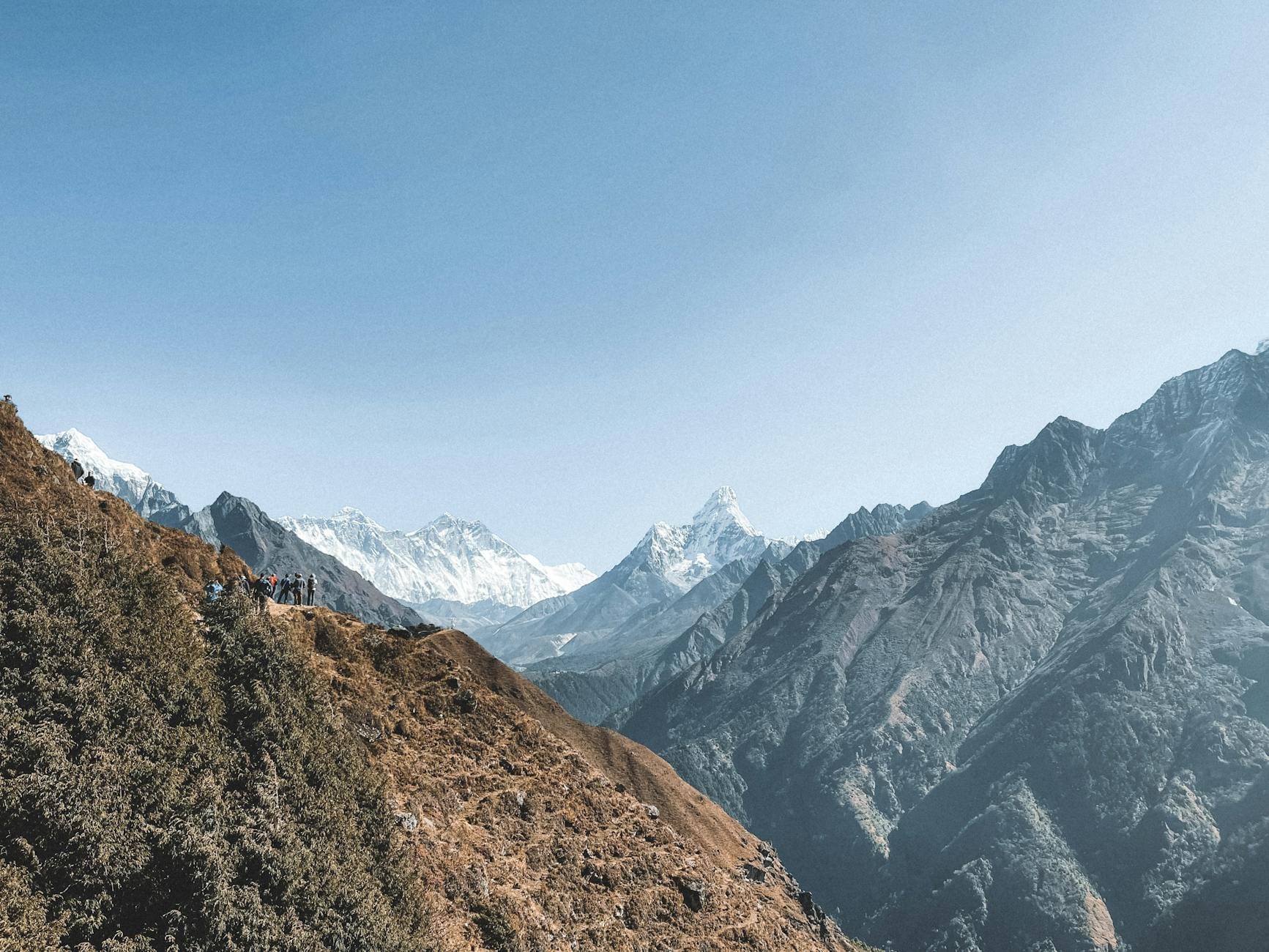
On the Everest Base Camp trail in October, demand is a tide. Lodges in places like Lobuche and Gorakshep are used to constant turnover. A traveller noted that at higher altitude, “there are few teahouses with mostly similar service. You can just walk into one without prior booking.” In peak season, that can be true because the whole route is optimised for flow.
On a quieter circuit like Kanchenjunga in November, the teahouse is not a machine. It is a household hosting a smaller, less predictable stream of walkers. The menu is shorter. The supply chain is thinner. The cold is sharper. The experience can be more intimate and more fragile at the same time.
When people say “teahouse trekking,” they often mean the busiest trails. The model changes as soon as the trail stops being crowded.
The dining room: the social product you didn’t pay for
Trekkers talk about costs as if the purchase is only food and bed. The teahouse sells something else, quietly: a room where strangers become temporary neighbours.
One person described the contrast perfectly: spending “the whole day walking in your own head,” then “suddenly you're in a warm dining room talking to strangers over dal bhat.” That shift is part of why teahouse trekking stays with people. It is not only the mountains. It is the sudden human closeness.
The family running the lodge makes that closeness possible by creating a space where everyone must sit together because there is only one stove.
What the nightly rate covers
On a teahouse trek Nepal, you are not paying for luxury. You are paying for an economy that has learned to hold you for a night.
You are paying for fuel hauled upward, for a kitchen that runs before dawn, for a bed in an unheated room that is still dry when the wind is not, for the thin line of electricity that keeps phones alive, for water heated only when it makes financial sense, and for the family attention that keeps the whole system from collapsing into chaos.
If you treat teahouses like cheap hotels, you will feel exploited.
If you treat them like what they are, mountain households running businesses on a trail, you will begin to see your money not as a fee for comfort, but as participation in a living, high-altitude social contract.