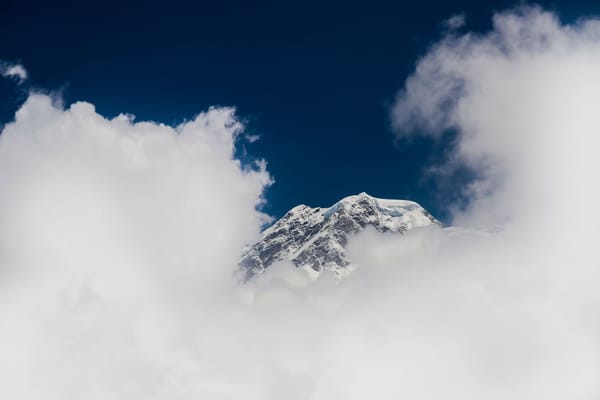
Rara Lake in October: The Long Walk to Nepal's Largest Lake
Nepal's largest lake sits at 2,990m in a district most travellers never reach. In October, Rara turns a colour that no photograph has ever accurately captured.

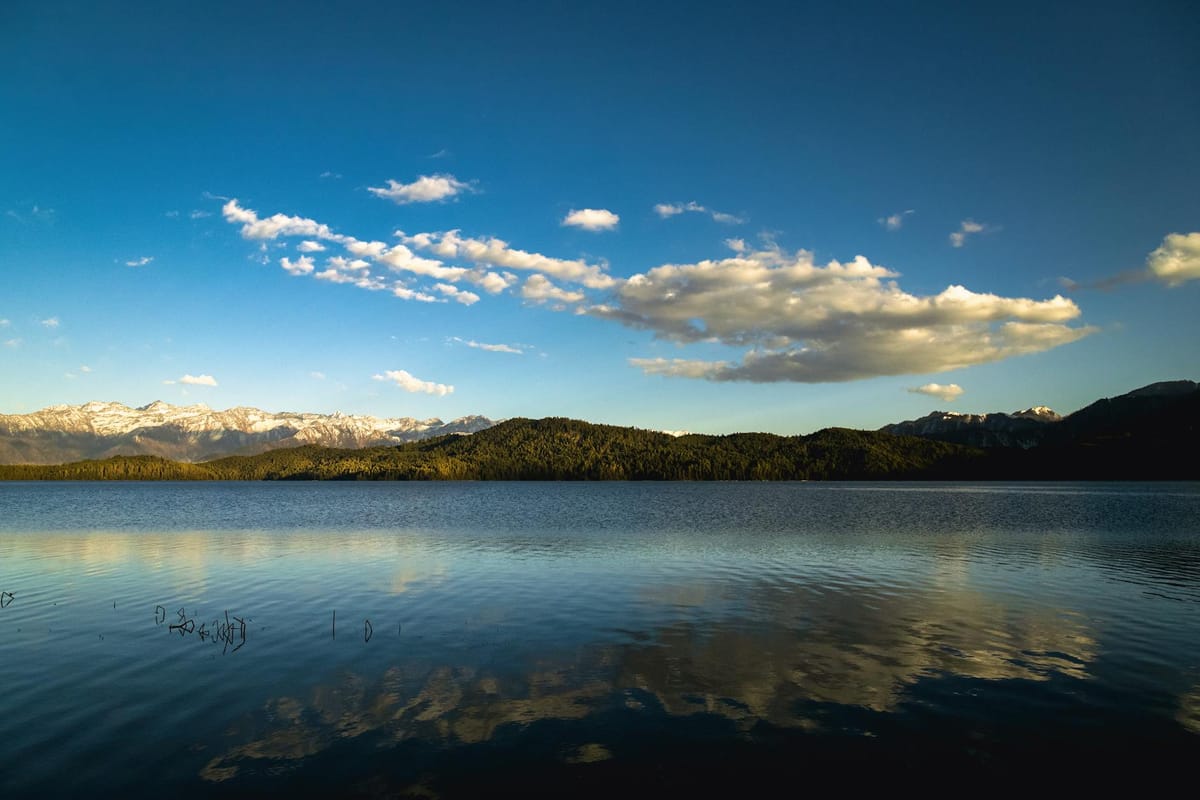
Everyone who has been to Rara Lake says the same thing when they get back. The photographs don't show it. They say this as if it is a comfort, as if the camera's failure to capture the lake's colour in October is a gift the lake reserves for people who make the effort to reach it. What they mean is that the lake is more blue than you expect. What they don't tell you is almost everything else.
I went in October. I want to give you the version the standard Rara articles left out.
The Talcha problem
You fly into Talcha airport from Nepalgunj, assuming you fly at all. This is the first thing to understand about Rara Lake in October. Tara Air and Summit Air operate the route with twin-otter aircraft that thread narrow mountain valleys. Mountain weather in October has its own schedule, unrelated to the season's general reputation. I budgeted one extra day in Nepalgunj. I needed three.
Nepalgunj is a transit city. Hot even in October, flat, and short on things to do while you wait for clearance that may or may not come. The lodge I stayed at had six other trekkers in the same situation. One of them had been waiting five days. Another had abandoned the trip entirely and booked a flight back to Kathmandu.
Budget the extra days. Budget them before you leave home, not after you arrive in Nepalgunj already anxious.
When your flight does get cleared, the approach to Talcha is its own thing. The valley narrows and the pilots know the turns. Forty minutes from Nepalgunj. You land on a short strip and then you are in Mugu district, which is one of the most isolated places in Nepal, and that is not a boast.
The walk in

The walk from Talcha to the lake takes five to seven hours depending on pace and altitude. The first section follows a river. The second climbs. Before you reach the lake, you cross a ridge at around 3,500 metres. From the ridge, you see Rara below you for the first time.
I had read about this moment. I had seen photographs taken from the ridge. Neither prepared me for what it actually looked like: a lake the colour of something that does not have a name in any language I speak. Clear and deep and absolutely still. The altitude and October light do something to the water, filtering everything except that blue. I stood on the ridge for a long time.
The national park entry fee is 3,000 rupees. You pay at the checkpoint before the ridge. There is a small settlement called Murma between Talcha and the ridge where you can stop for food. It is not a tourist facility. People live there year-round. The tea is real tea.
What to carry
The packing lists for Rara suggest the same things they suggest for any Himalayan trek: warm layers, a good sleeping bag, sunscreen. These are all correct and all insufficient.
Bring everything you might need that cannot be bought in Mugu. The lodges at the lake have beds and blankets but not much else. Medical supplies, your preferred snacks, a water filter, a power bank. Electricity is solar and unreliable. At night in October the temperature drops to around four or five degrees Celsius, sometimes lower when the wind comes off the lake. The wind comes off the lake.
One trekker I met on the trail had read online that he could buy trekking food at the lodges. He could, technically. The selection was limited to what the lodge-keeper families had carried in from Nepalgunj on supply flights that operate with the same reliability as passenger flights. He made it work. He was not entirely happy.
The lodge-keepers
The families who run the lodges at Rara live there year-round. In October they are preparing for winter. Summer visitors are mostly gone. The October groups are smaller, and in the lodge-keepers' experience more genuinely interested in being there rather than ticking a box.
I had dinner one evening with the woman who ran the lodge where I was staying. She had been at Rara Lake for eleven years. She could tell you what the lake looked like in every month of the year. She told me the October colour lasts for about three weeks. Before that, the summer runoff has not fully cleared. After that, the angle of the light changes. There is also a short window in April, she said, but October is more reliable.
She was not sentimental about the lake. She lives by it. For her it is a workplace and a home, and the blue that made me stand on the ridge catching my breath is the view from her kitchen.
On the trekkers who don't make it
Out of the ten or fifteen trekkers I encountered over three days at the lake, two had been evacuated before completing the circuit. One had altitude trouble. One twisted an ankle descending the ridge in fading light. Rara is not dangerous by Himalayan standards. It is not a technical climb. But it is remote in the way that counts: the nearest meaningful medical care is a weather-dependent flight away.
I am telling you this not to discourage you but because the standard articles don't mention it at all. They show you the blue lake and say to go in October, which is all true. What they leave out is that Rara in October requires a level of self-sufficiency that they assume you either already have or will somehow acquire on the way.
The lake itself
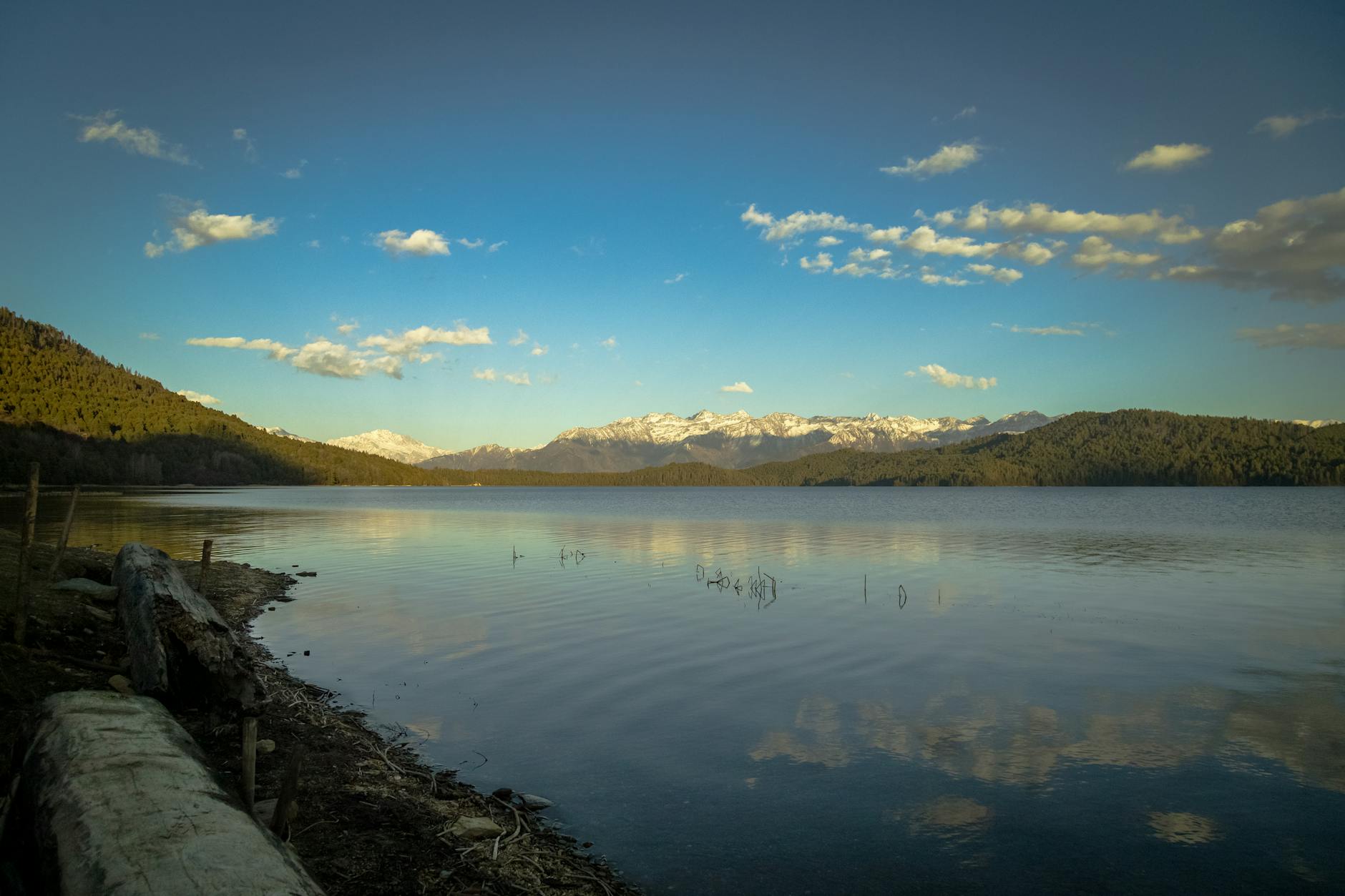
In the afternoons, after the wind picks up, the surface breaks into small waves that catch the light differently from the morning. Before anyone is awake, the lake is absolutely still and the mountains above it reflect as clearly as glass. Rara has no outflow except evaporation. The water holds what falls into it. Nothing sedimentary. Zero turbidity. The blue you see is the lake's actual depth and the sky above it.
I had been told the photographs don't show it. They don't. I also didn't fully understand what I was seeing until the second morning, standing at the water's edge at six in the morning in the cold, the light coming low from the east, the lake that colour again. There is no useful way to prepare for it.
Go in October if you can. Budget the extra days in Nepalgunj. Carry what you need. Don't expect anyone to rescue you from your own unpreparedness. That's not a warning. That's just what it means to be in Mugu.