
Momo: Nepal's Dumpling and the City That Made It
Momo arrived in Kathmandu with Tibetan refugees in the 1950s and never left. It is now the city's defining food, sold on every corner and made differently in every neighbourhood.


The momo you eat at the airport before you board a flight out of Kathmandu is not the momo you should have eaten. The airport momo is a useful baseline. It establishes the form. The skin is the right thickness, the filling is identifiable as meat or vegetable, the steaming process has done its job. But it is the momo that you eat when there is nowhere to be, sitting on a low stool in a place that does not have a menu posted on the wall, in a neighbourhood where the momo-maker's family has been in the business for three generations. That is the standard against which the airport version fails.
Momo is not native to the Kathmandu valley. It arrived from Tibet, through the Newar trading communities who moved along the Kuti and Kerung routes between Nepal and what is now the Tibet Autonomous Region. The exact timeline is contested, but the practical history is that by the mid-twentieth century momo had become the food that Kathmandu identifies with itself. The city adopted it and then made it its own, and the version that emerged from that adoption is now what the rest of the world means when it says momo.
The Skin
The standard momo skin is made from refined wheat flour and water. No egg. The dough is rested and then rolled into circles of consistent thickness, which experienced momo makers achieve through a combination of the rolling pin and the palm. The thickness matters: too thin and the skin tears under the filling's weight; too thick and it dominates the mouthful. The ideal is a skin that is present but not intrusive.
Some older establishments in Kathmandu still use a skin dough that includes a small amount of fat, which produces a slightly different texture on steaming. This style is less common now. The flour-and-water version is standard.
The Filling
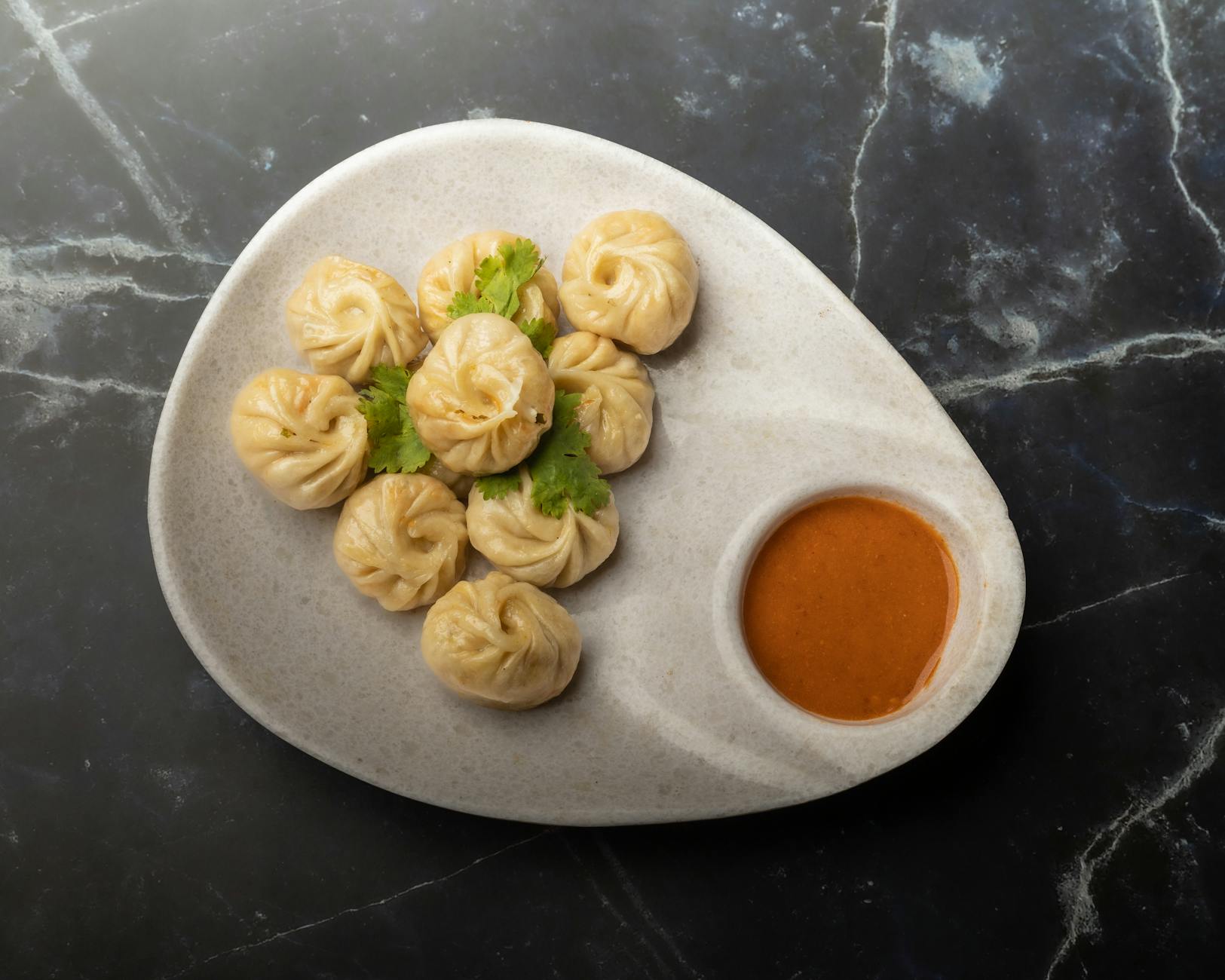
Buff momo is the version that has the longest history in Kathmandu. Buff means buffalo, and buffalo was the available and affordable meat in the valley for most of the city's modern history. The filling is minced buffalo meat mixed with onion, ginger, garlic, coriander, cumin, and in some recipes a small amount of Sichuan pepper. The proportions vary by family, by neighbourhood, by who taught the person making it.
Chicken momo emerged as the restaurant industry expanded in the 1990s and early 2000s and catering to visitors who did not eat buffalo became a commercial consideration. Chicken momo now accounts for the majority of what is sold in mid-range and tourist-facing establishments. Kabir, who writes about food, says chicken momo is the version that arrived at the point when momo stopped being what people ate and started being what people sold. That distinction is his and he makes it with the clarity of someone who grew up in Lalitpur when buff was still the standard.
The vegetable filling, typically cabbage and carrot and potato, exists for the vegetarian market. It is not the traditional version. It is a practical adaptation.
The cooking method
Steamed momo is the original. The dumplings are folded and crimped at the top and placed in a steaming basket over boiling water for twelve to fifteen minutes. The basket produces a uniform heat that cooks the filling without toughening the skin.
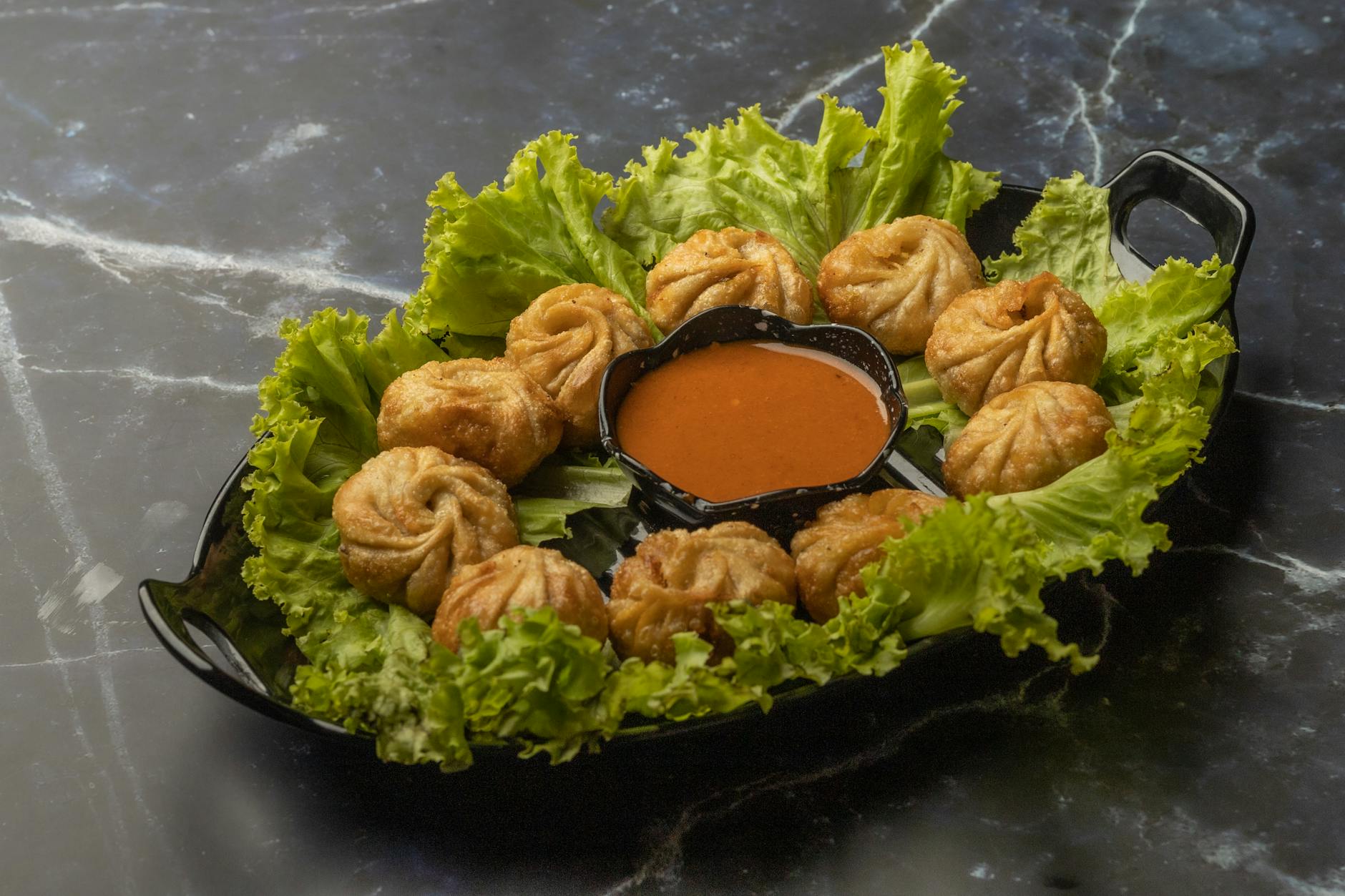
Fried momo is the steamed version that has been briefly fried after steaming, producing a bottom surface that is crisp. It appeared in Kathmandu's eating places somewhere in the 1980s and has never left. It requires more oil and more time but creates a textural contrast that the steamed version doesn't have.
Jhol momo, the version served in a thin spiced broth, is the more recent innovation that has moved fastest through Kathmandu in the past decade. The broth is typically tomato-based with sesame, dried red chillies, and spices. The version served in Thamel for tourists is thinner and milder. The version served in Newari neighbourhoods is darker and more assertive.
Where the standard is set
Momo quality in Kathmandu is determined by neighbourhood reputation and by word of mouth within specific communities. The places that are consistently discussed as references are not typically the places with the largest signage or the most tourist-friendly presentation. They are often stalls that operate from early morning to midday and close when the day's batch is finished.
Bouddha, in the eastern part of the city, has a concentration of Tibetan-run establishments that maintain a filling style closer to the original Tibetan version: more ginger, less processed, heavier hand with the seasoning. New Road and the areas around it contain older establishments that have been making buff momo to the same recipe for thirty years.
The quality indicator I use is the skin at the fold. A momo that has been assembled by someone who knows what they are doing will have a seal at the top that holds under steaming without becoming doughy. A momo that has been assembled quickly at volume will often have a top that is too thick relative to the body. You can feel the difference before you taste it.
The Chutney
A momo without its chutney is a momo eaten before it is finished. The standard accompaniment in Kathmandu is a tomato-sesame chutney, usually ground rather than blended, with dried red chillies and garlic and occasionally coriander. The heat level varies widely. The best chutneys are made fresh for the meal and have a bright, raw tomato presence that the bottled versions do not replicate.
Some establishments serve a separate achar, a pickled condiment, alongside the main chutney. The two are not the same thing and are not interchangeable. The achar is sharper and more acidic. The chutney is richer. Both have their function.