The Two Caves Most Pokhara Visitors Confuse

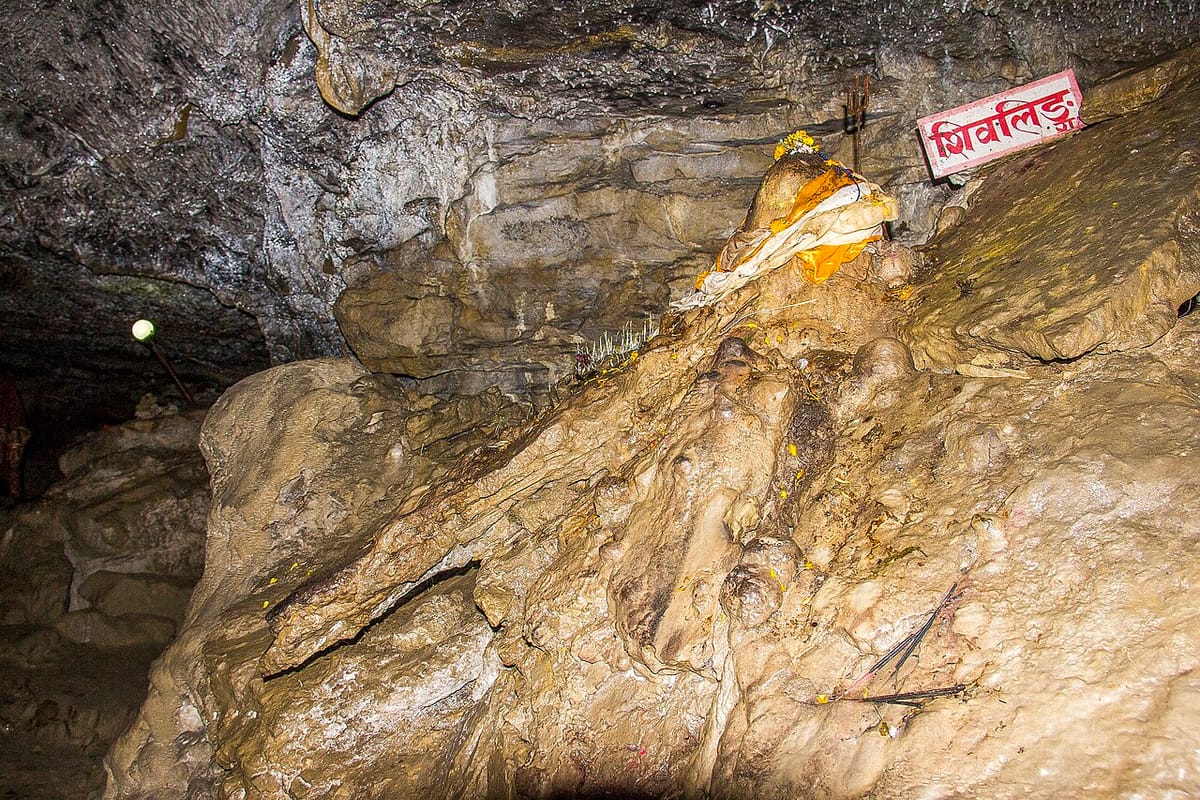
The limestone sparks when light strikes it. Not metaphorically. The rock carries a natural electrical charge, and under a headlamp the walls of Mahendra Cave scatter light back at you in a way that stone walls shouldn't.
Mahendra Cave Pokhara: What's Inside Nepal's Most Underrated Cave System
Mahendra Cave is a 200-metre limestone corridor in Batulechaur village, about 7 kilometres north of Pokhara Lakeside. It has stalactites, stalagmites, a Shiva shrine, a bat colony of four confirmed species, and a second section that most visitors never enter. It also has two blind springtail species found nowhere else in any cave system surveyed at the time of first discovery.
Most guides describe it in two sentences and move on. That's partly because most guides have only seen the lit half.
Quick facts - Mahendra Cave at a glance
Location: Batulechaur village, Kaski District, northern Pokhara
Altitude: Approx. 1,100m, near the Seti Gandaki River
Distance from Lakeside: ~7-8km north
Getting there: Taxi takes 20-25 minutes from Lakeside. Local bus or tempo from Pokhara bus park toward Batulechaur.
Entry fee: Nominal fee payable at the gate; confirm amount locally on arrival as it changes periodically.
Opening hours: Dawn to dusk (approximate); mornings recommended.
Duration: 5-10 minutes for the lit section; 30-45 minutes if you go past the crawl.
What to bring: Headlamp or torch, closed shoes with grip, older clothes.
Nearby: Chamaro Gufa (Bat Cave) is a 10-minute walk. Devi's Falls is on the same northern tourist circuit.
How the cave was found (and how it got its name)
Local shepherds found the cave in the 1950s. They called it Adhero Bhawan: Dark Habitat. The name is more accurate than what came after.
Coverage in a Nepali newspaper brought the cave to wider attention. King Mahendra visited, and the cave was renamed in his honour. The original name disappeared. The first formal survey came in 1976, conducted by Jane Wilson-Howarth, whose documentation established the geological and biological baseline the cave is still known by.
The rename is the kind of thing that happens to places in Nepal that get noticed by the wrong people at the wrong time.
What you'll see inside - the first 100 metres
The first section is well-lit and straightforward. The passage runs roughly horizontal, wide enough to move without crouching. Stalactites hang from the ceiling; stalagmites rise from the floor. These formations are rare for Nepal, where most cave systems don't have the right limestone conditions to produce them.
The electrical properties of the Pleistocene limestone are what produce the spark effect at the entrance. The rock holds a charge. When a headlamp beam catches the wall at a certain angle, it returns light in a way that looks like the stone is briefly alive. Visitors describe it without knowing what they're describing: the rocks sparkle when light strikes them.
There's a Shiva shrine partway through. It's used.
The floor is damp. In monsoon it's wet. TripAdvisor reviewers consistently note the uneven surface and poor lighting in the deeper passages: "very poorly lit in places with an uneven floor." A torch isn't optional. It changes what you see. With one, you find the bats. Without it, you hear them and see nothing.
The second section - going deeper (and the crawl)
After the first 100 metres, the passage lowers. The ceiling drops, the floor becomes less stable, and there's a collapsed section you pass through on hands and knees: roughly half a metre of crawl space.
Visitors who reached the second section describe it as "a daring side cave tunnel that comes out in a narrow slit on the other side." That's accurate: a tight passage through collapsed rock that opens into a continuation of the cave system.
Most tour guides don't take visitors here. Most visitors don't know it exists.
The temperature drops further in this section. The whole cave is cooler than outside air year-round, which is why the bats chose it. The second section is cooler still, darker, and the floor is less predictable. Going alone is inadvisable. Going in a group of fewer than three with only one light source is also inadvisable.
The bats (and what they actually are)
Four species. Not one. Most descriptions of Mahendra Cave say "bats" and leave it there.
The confirmed species are: Hipposideros armiger (Great Roundleaf Bat), Hipposideros bicolor (Bicolored Roundleaf Bat), Rhinolophus macrotis (Big-eared Horseshoe Bat), and Megaderma lyra (Greater False Vampire Bat). The last one has a wingspan that surprises people who weren't expecting something that large inside a cave this accessible.
The bat colony is why the cave's artificial lights were repositioned. Conservationists pushed back on the original placement: the lights were disturbing the roosting habitat. The current lighting is managed around that constraint, which is why the second section stays dark.
With a torch beam directed upward, the colony becomes visible. A TripAdvisor reviewer described the difference: with a torch, "you could see thousands of bats all around." Without it, the cave is just sound.
Beyond the bats, the cave has freshwater crabs and nine collembolan species (springtails). Two of those collembolans are blind. They were identified at this site for the first time and have not been found in any other cave system surveyed at the time of first discovery.
Mahendra Cave vs. Bat Cave - are they the same?
No. This is the question most online coverage either ignores or answers wrong.
Mahendra Cave and Chamaro Gufa are two separate caves. "Bat Cave Pokhara" and "Chamaro Gufa" both refer to Chamaro Gufa, not to Mahendra Cave, though Mahendra Cave also has bats. The naming has created genuine confusion.
The differences are structural, not just nominal. Mahendra Cave is a roughly horizontal 200-metre corridor. Chamaro Gufa is smaller, named specifically for its bat population, and has a vertical exit: visitors climb up through a narrow opening to leave. Reviewers describe it as having "a narrow and very small exit hole." The entry and exit routes are different, and the bat density is higher. The species at Chamaro Gufa are primarily Horseshoe Bats, hanging in large numbers from the ceiling.
There is also a third cave in the same area: Kumari Cave. Most visitors don't hear about it at all.
How to combine both caves in one trip
The walk between Mahendra Cave and Chamaro Gufa takes about ten minutes. Both visits can comfortably fit in a single morning.
The order that makes most sense: Mahendra Cave first (more space, easier orientation, lit sections help your eyes adjust to cave conditions), then walk to Chamaro Gufa. Chamaro Gufa is tighter, darker, and requires more physical confidence. Doing it second means your eyes are already adapted and you know what a cave visit here asks of you.
Devi's Falls is on the same northern tourist circuit, roughly the same direction from Lakeside. If you're making the trip to Batulechaur, combining all three makes sense. The falls are also near Gupteshwor Cave, which is Pokhara's other major cave system and a worthwhile comparison: Gupteshwor is larger, more formally managed, and connected to the falls. Mahendra is rougher, quieter, and scientifically more interesting.
Getting there from Pokhara Lakeside
Batulechaur is about 7 to 8 kilometres north of Lakeside. By taxi, the drive takes 20 to 25 minutes depending on traffic. Agree on a price before you get in.
Local buses and tempos run from Pokhara bus park toward Batulechaur. This is the cheaper option and adds time. The cave entrance is signposted from the road.
If you're combining with Devi's Falls and Gupteshwor Cave, a taxi hired for a half-day makes more practical sense than trying to coordinate buses between sites.
Practical tips
Bring a torch, not just the flashlight on your phone. The phone light is enough for the lit section. It is not enough for the bat colony, the second section, or Chamaro Gufa. A proper headlamp is better: it keeps your hands free for the crawl.
Wear closed shoes. The floor is uneven and damp throughout, worse in the second section and in monsoon. Sandals are a problem.
Morning visits are better. The cave sees fewer people in the first two hours after opening. "Dark and creepy inside but large and easy to move around if you make sure it is fairly empty before going inside" is how one visitor put it on TripAdvisor. The emptiness matters. Twelve people in the lit section at once changes what the space feels like.
The cave stays cold regardless of outside temperature. A light layer helps if you're going past the first section.
Check the entry fee at the gate. Posted figures online go out of date quickly.
FAQ
What is Mahendra Cave in Pokhara?
Mahendra Cave is a 200-metre limestone cave in Batulechaur village, northern Pokhara. It has stalactites, stalagmites, a Shiva shrine, a colony of four bat species, and a second section accessible through a crawl passage. Local shepherds discovered it in the 1950s. The first formal survey was conducted in 1976 by Jane Wilson-Howarth.
Where is Mahendra Cave located?
Batulechaur village, Kaski District, northern Pokhara. Approximately 7-8km from Lakeside, roughly 20-25 minutes by taxi.
What is the entry fee for Mahendra Cave?
A nominal entry fee applies. The amount changes periodically. Check at the gate on arrival rather than relying on figures posted online.
What is inside Mahendra Cave?
The first 100 metres contain stalactites, stalagmites, a Shiva shrine, and a bat colony of four species. A second section continues past a crawl passage through collapsed rock. The cave also contains freshwater crabs and nine collembolan species, including two blind species first identified at this site.
Is Bat Cave (Chamaro Gufa) the same as Mahendra Cave?
No. They are two separate caves, approximately 10 minutes apart on foot. Mahendra Cave is the larger, horizontal cave with a lit section. Chamaro Gufa is smaller, named specifically for its bat population, and requires climbing to exit through a narrow opening. Most visitors who know about both do them in a single trip.
What is the best time to visit Mahendra Cave?
Early morning, when the cave is least crowded. The cave is open roughly dawn to dusk. Avoid monsoon if you want a drier floor, though the cave is accessible year-round.
What should I bring to Mahendra Cave?
A headlamp or proper torch (not just a phone light), closed shoes with grip, and a light layer. The cave stays cold year-round regardless of outside temperature.
How does Mahendra Cave compare to Gupteshwor Cave?
Gupteshwor Cave is larger, more formally managed, and connects underground to Devi's Falls. Mahendra Cave is rougher and quieter. Visiting both gives a fuller picture of what Pokhara's cave systems offer.