What the Mountain Museum in Pokhara Actually Contains

The Yeti exhibit comes with a disclaimer. A mounted specimen, fur worn thin at the shoulders, sits behind glass in the Mountain Activities Gallery with a small card identifying it as a Tibetan Brown Bear. Someone at the Nepal Mountaineering Association decided the folklore needed correcting more than it needed protecting.
International Mountain Museum Pokhara: What's Inside Nepal's Mountaineering Archive
The International Mountain Museum in Pokhara is the most authoritative mountaineering archive in Nepal. It holds original gear from the 1953 Everest expedition, a pollution exhibit quantifying what the climbing industry leaves on Nepal's peaks, and five galleries covering geology, ethnography, equipment history, and the biographies of the people who built Himalayan climbing as a global pursuit. It is open 365 days a year, sits on 12.5 acres in Ratopairo about 5 kilometres from Lakeside Pokhara, and most visitors underestimate it badly.
What the Museum Is (and Why It Exists)
The Nepal Mountaineering Association was founded in November 1973, more than two decades after Tenzing Norgay and Edmund Hillary summited Everest and set off a global wave of Himalayan climbing interest. For most of those years, the institutional memory of that history existed in expedition reports, private collections, and the memories of ageing climbers. The NMA laid the foundation stone for this museum on December 1, 1995. It opened partially on May 29, 2002 - the 49th anniversary of the first Everest summit - and was officially inaugurated on February 5, 2004.
The building covers 4,242 square metres of floor area. By 2019, it had received 2.1 million visitors. Annual footfall now runs at over 100,000. These are significant numbers for a city like Pokhara (thegoreto.com/pokhara-nepal/), which draws trekkers and paragliders but is not generally thought of as a museum city.
What the museum actually does is make an argument: that the history of Himalayan mountaineering belongs to Nepal. Not to the expedition nations, not to the European and American climbers who became famous on these routes, but to the geography, the communities, and the institution that has administered access to those peaks for fifty years. That argument is visible in how the galleries are arranged.
The Five Galleries: What's Actually in Each
The museum is organised thematically, not chronologically. This creates a navigation problem that TripAdvisor reviewers describe consistently: the layout is confusing, and without a guide there is no obvious sequence to follow. Allow at least three hours. The building is larger than the entrance suggests.
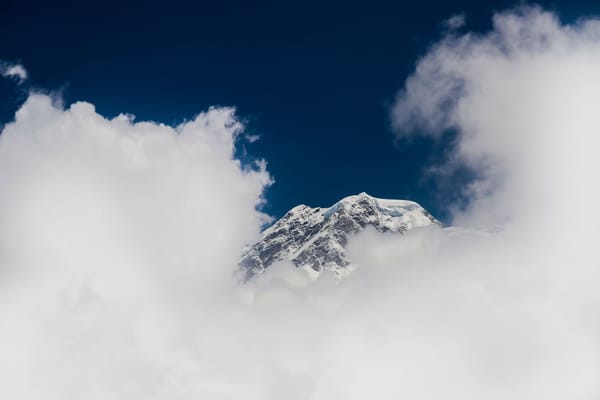
The Hall of Great Himalayas covers all 14 eight-thousanders with geological context. From the upper floors on a clear day, you can see Machhapuchhre (thegoreto.com/machhapuchhre-nepal/), the peak the gallery documents, standing above the museum grounds. Rarely does a museum exhibit and its subject share the same skyline.
The Hall of World Mountains moves the frame outward to global mountain geography. It is the most academic of the five galleries and, for most visitors, the one they move through fastest.
The Hall of Fame holds the legendary mountaineers: busts, photographs, brief biographies, and in several cases personal effects and donated gear. Reinhold Messner has a significant presence here. So does Pasang Lhamu Sherpa, the first Nepali woman to summit Everest, who died on the descent in 1993. Her inclusion is not incidental. The museum made a choice about whose story gets told.
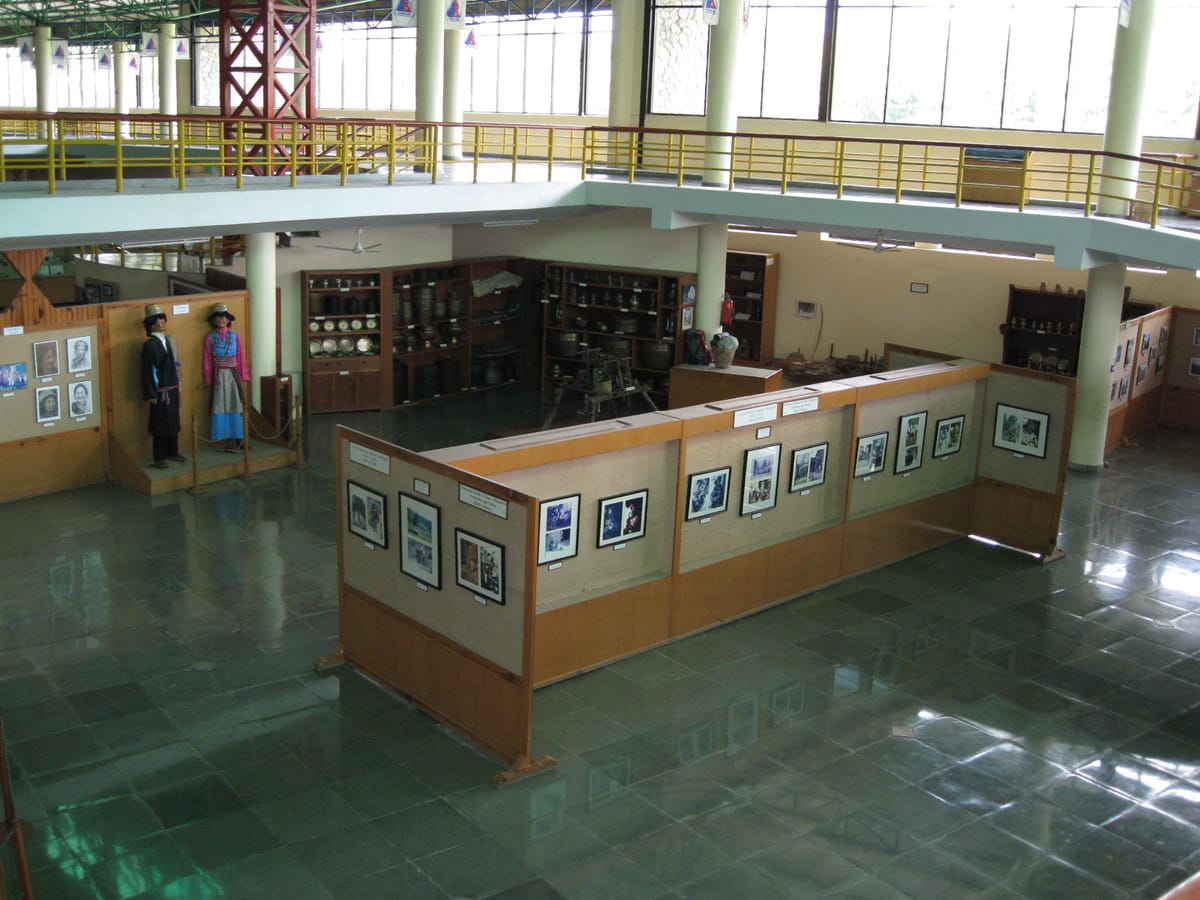
The Mountain People Gallery documents the indigenous communities of the Himalayan region. It has a video hall focused on life in the Khumbu region. Most visitors move through it quickly on the way to the gear exhibits.
The Mountain Activities Gallery covers equipment through the decades, the Yeti exhibit with its corrective note, and the mountain pollution display. It tends to hold people longest.
The Exhibits That Stop You
The 1953 Everest section in the Hall of Fame is where the museum earns its reputation. Life-size models of Edmund Hillary and Tenzing Norgay stand alongside original gear from the expedition: photographs, personal effects, equipment that was actually used on that summit. A TripAdvisor reviewer described it as the kind of display that makes the history suddenly not abstract. The models work in the way that historical reconstructions rarely do.
The equipment evolution in the Mountain Activities Gallery tells a different kind of story. Ice axes, oxygen cylinders, and down jackets dating back sixty and seventy years sit alongside modern equivalents. The compression in weight and volume across that span is striking. What climbers carried in 1953 to do what modern ultralight expeditions do with half the weight, in a third of the time, is a history of material science as much as mountaineering.
Outside, a 31-foot replica of Manaslu anchors the garden grounds. The Maurice Herzog Climbing Wall, named after the French mountaineer who made the first ascent of Annapurna in 1950 - the first 8,000-metre peak ever summited, four years before Everest - sits alongside it. For anyone planning or returning from the Annapurna Base Camp trek (thegoreto.com/annapurna-base-camp-trek/), the wall is a physical connection to what Herzog did in 1950 on the mountain they walked toward.
The Mountain People Gallery: The Part Most Visitors Rush Past
The Mountain People Gallery is where the museum stops being about climbers.
The Hall of Fame documents the people who came to Nepal's mountains from outside, performed, and became famous. The Mountain People Gallery documents the people who were already there. Tamang, Rai, Gurung, Sherpa communities; their agricultural practices, trade routes, and seasonal rhythms in high-altitude terrain that has nothing to do with summit records. The video hall's focus on the Khumbu region shows life in the villages that serve as base for the world's busiest high-altitude climbing industry.
Foreign visitors move through it quickly. This is understandable. The display style is not interactive. The information density is high and the presentation is text-heavy in a way that most modern museums have moved away from. A TripAdvisor reviewer noted that the style of display is old-fashioned, but the information contained is well curated - a distinction that matters here. What this gallery knows, you will not find assembled in this form anywhere else.
For a Nepali visitor, the gallery produces a different reaction. The mountain communities represented here are not exotic. They are recognisable as neighbours, as relatives, as people whose lives look completely ordinary until you are standing in a museum in their own country and realising that their ordinary life is what made every major Himalayan expedition of the twentieth century possible. The Sherpas in the Hall of Fame summited peaks and received recognition. The people in this gallery carried the loads, maintained the routes, and built the tea houses. They got a gallery.
The Trash Exhibit: Mountaineering's Environmental Reckoning
In 2003, a cleanup operation removed 1.5 tons of garbage from Nepal's mountains. The museum quantified this and put it on display.
No major travel publication covers the mountain pollution exhibit. Most coverage of this museum focuses on the 1953 gear and the Yeti. The trash exhibit is in the Mountain Activities Gallery, sits alongside the equipment displays, and represents something the others do not: a record of what the climbing industry has cost the environment of the country that permits it.
1.5 tons is an abstract figure until you consider the altitude at which it was collected, the people hired to carry it down, and the fact that 2003 cleanup figure represents one year of coordinated effort, not the full accumulated deposit. The climbing permit system that the NMA administers - the same institution that built this museum - has since introduced mandatory waste deposit requirements per expedition. The exhibit predates those reforms. It was, in its way, an argument.
Practical Information
Entry fees (2026):
International visitors: NPR 750 | SAARC nationals: NPR 350 | Nepali citizens: NPR 100 | Garden only: NPR 10
Hours: 8:30 AM to 5:00 PM, open 365 days a year including public holidays.
Location: Ratopairo, approximately 1.5 kilometres south of Pokhara Airport and 5 kilometres from Lakeside Pokhara.
Getting there: Taxis from Lakeside take 15-20 minutes. The road is straightforward. Auto-rickshaws are an option from the airport end. There is no regular direct bus service from the tourist strip, though local microbuses pass within walking distance of the gate.
Time required: Plan for three hours minimum to move through all five galleries without rushing. Add time if you intend to use the library, walk the garden grounds, or eat at the Gorkha Village Restaurant on-site. Visitors who spend less than ninety minutes have missed at least two galleries.
On-site facilities: Library with mountaineering reference materials. Souvenir shop. Gorkha Village Restaurant. Maurice Herzog Climbing Wall (outdoor, suitable for beginners under supervision). Large garden with seating areas and mountain views on clear days.
The museum grounds are worth time on their own. The garden is large, well-maintained, and quiet in a way that Lakeside Pokhara is not. Several reviewers noted stopping there to sit after the galleries, with the Himalayan range visible in the background depending on cloud conditions. It fits naturally into a broader Pokhara itinerary as a half-day stop that requires no particular prior interest in mountaineering to find absorbing.
Is It Worth It?
It depends on what you are bringing to it.
If you arrive expecting an interactive experience with modern interpretive design, you will find the display style dated and the layout confusing. The museum does not lead you through a narrative. It assembles evidence and expects you to draw conclusions. Not all visitors want that, and the ones who do not will find three hours long.
If you are a trekker who has just come off a Himalayan route, or is about to go onto one, the museum works differently. The gear you used and the peaks you walked toward acquire a history here. The equipment that preceded yours, the climbers who established the routes you followed, the communities who built the infrastructure you depended on - they are all present. The museum is not context for the trek. The trek is context for the museum.
For non-trekkers, the pollution exhibit and the Mountain People Gallery are the reason to go. Both sections are under-documented in travel coverage and contain information that is not easily assembled elsewhere. Entry at NPR 750 for international visitors is modest for what is here.
Frequently Asked Questions
How much is the entry fee for the International Mountain Museum Pokhara?
Entry fees as of 2026: international visitors pay NPR 750, SAARC nationals pay NPR 350, and Nepali citizens pay NPR 100. Garden-only entry without museum access costs NPR 10.
What are the opening hours of the International Mountain Museum?
The museum is open from 8:30 AM to 5:00 PM every day of the year, including public holidays and national festivals. There is no weekly closing day.
How do I get to the International Mountain Museum from Lakeside Pokhara?
The museum is about 5 kilometres from Lakeside, in the Ratopairo area roughly 1.5 kilometres south of Pokhara Airport. A taxi from Lakeside takes 15-20 minutes. Auto-rickshaws are available for a lower fare.
How long does it take to visit the International Mountain Museum?
Allow a minimum of three hours to move through all five galleries at a reasonable pace. Visitors who want to use the library, spend time in the garden, or eat at the Gorkha Village Restaurant on-site should plan for a half-day. The building is considerably larger than it appears from the entrance.
Is the International Mountain Museum worth visiting?
Yes, with the caveat that the display style is traditional rather than interactive. The museum holds original 1953 Everest expedition gear, a mountain pollution exhibit documenting 1.5 tons of waste removed in 2003, five distinct galleries, and the most complete account of Himalayan mountaineering history assembled in Nepal. At NPR 750 entry for international visitors, it offers substantial content for the price.
What exhibits are inside the International Mountain Museum Pokhara?
The museum has five galleries: Hall of Great Himalayas (all 14 eight-thousanders, geology), Hall of World Mountains (global mountain geography), Hall of Fame (legendary mountaineers with personal effects including Hillary and Tenzing's 1953 Everest gear), Mountain People Gallery (indigenous Himalayan communities, Khumbu video hall), and Mountain Activities Gallery (equipment evolution, Yeti exhibit with debunking note, mountain pollution display). Outdoors: 31-foot Manaslu replica and the Maurice Herzog Climbing Wall.