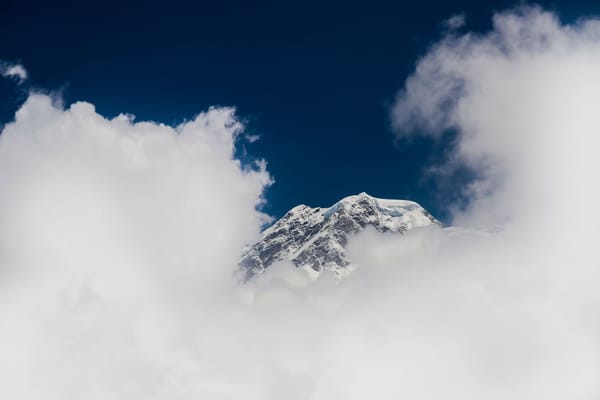
The Trek Nepal Made Illegal to Do Alone

Nepal made solo trekking illegal in 2025. The Poon Hill trail was already one of the safest routes in the Annapurna region. That is not why the law changed.
The ban came after a series of incidents: solo trekkers going missing in remote areas, search-and-rescue operations stretching into weeks, families left without answers. The government's response was a blanket rule covering national parks and conservation areas. Guides are now mandatory. The Ghorepani Poon Hill trek, which runs through the Annapurna Conservation Area, falls under this regulation.
What that means in practice, and what this trail actually delivers before and after the law changed, is what this guide covers.
Poon Hill Trek at a Glance
Duration: 4-5 days | Start point: Nayapul (1 hour from Pokhara) | Highest point: Poon Hill, 3,210m | Difficulty: Moderate | Permits required: ACAP + TIMS | Best season: October-November, March-April | Guide: Mandatory since 2025 | Daily teahouse cost: USD 10-20 per person | Guide hire rate: USD 25-30 per day
What This Trek Actually Is
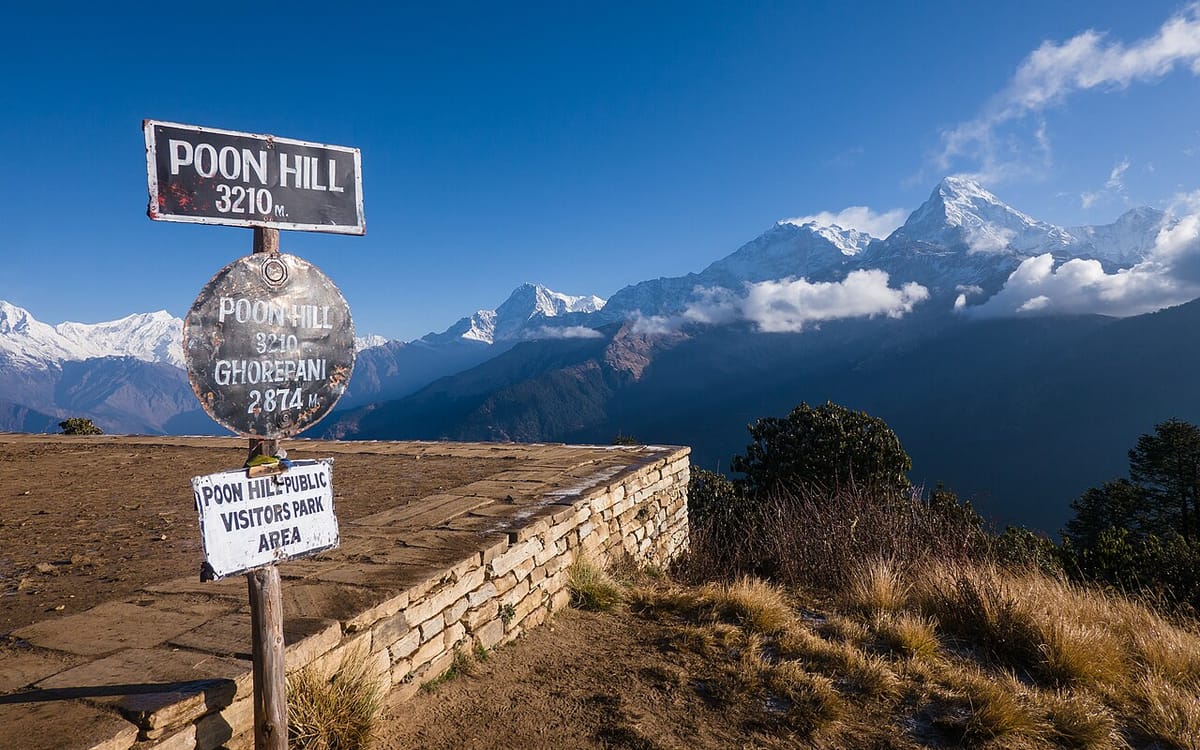
The Ghorepani Poon Hill trek is a 4-to-5-day loop through the lower Annapurna hills, starting and ending near Pokhara. It reaches a maximum elevation of 3,210 metres at Poon Hill itself, which is not a summit so much as a viewpoint ridge: a platform above the treeline where, on a clear morning, you can see Dhaulagiri (8,167m), Annapurna South (7,219m), Hiunchuli (6,441m), Machhapuchhre (6,993m), and the Annapurna massif stretching across the horizon.
The trail passes through Gurung and Magar villages, dense rhododendron and oak forests, and stone-paved routes that have been trade paths for generations. It is not a wilderness route. Villages are frequent, teahouses serve hot meals, and the infrastructure is well-established. For trekkers based in Pokhara wondering what to do in three to five days, this is the answer. For trekkers who have done this route and want something longer, Annapurna Base Camp is the natural next step.
What it is not: high altitude. What it is not: technically demanding. What it requires is consistent daily walking of 5-7 hours, most of it on stone steps, across several days.
The Guide Rule: What Changed in 2025
In 2025, Nepal's government banned solo trekking in national parks and conservation areas. The regulation was triggered by a pattern of incidents: trekkers going missing, dying in remote terrain, and, in several cases, simply not being found. The Annapurna Conservation Area, which covers the Poon Hill route, is under this rule. You cannot legally complete this trek without a licensed guide.
Licensed guides on the Ghorepani Poon Hill route cost USD 25-30 per day. For a 4-day trek, that is USD 100-120 total, which is one of the better-value commitments on any Annapurna circuit. This is not the high-altitude guiding fee structure of Everest or Manaslu. The cost is low partly because the route is accessible, and partly because it is training ground for many guides early in their careers.
What has changed on the ground is the feel of the experience itself. A review on TripAdvisor from a solo female trekker described her guide Kumar as making her feel "completely safe, comfortable, and supported throughout." That kind of reassurance matters differently now than it did when guides were optional. The mandatory system has effectively reframed the guide relationship from upsell to standard service.
Porters remain optional. A porter can carry your main bag for a similar daily rate, freeing you to walk with a daypack only. For a 4-day route with guesthouse accommodation, many trekkers find this transforms the experience physically. Whether you need one depends on how much you're carrying.
Guides must be licensed by the Nepal Tourism Board. When hiring in Pokhara, ask for the guide's NTB license card. Agencies in the Lakeside area of Pokhara can arrange guides the day before departure; this is normal and not a cause for concern about quality.
Loop or Out-and-Back? The Route Options Compared
Most guides online describe the Poon Hill trek as an out-and-back from Nayapul: Nayapul to Tikhedhunga to Ulleri to Ghorepani to Poon Hill, then the same route reversed. That version works. But it is not the route most experienced trekkers prefer.
The Ghandruk loop exits through one of the oldest Gurung villages in the Annapurna region. The out-and-back misses it entirely. The loop route takes an additional half-day but replaces repetition with new terrain: after Poon Hill, you descend through Tadapani and down into Ghandruk village before walking out to Kimche and driving back to Pokhara. The trail variation is significant. Where the out-and-back returns through the same stone-staircase ascent, the loop route takes you through rhododendron forest on the Tadapani section that is, in March and April, a completely different kind of walking.
A trekker on TripAdvisor noted: "Entire route was a descent with a mix of flat surface plus stone steps. Trail amidst dense hills, multiple streams and few small waterfalls along the way. Was a little muddy though due to rain." That description fits the loop's lower section, exiting through Ghandruk, better than any portion of the out-and-back.
Route comparison in brief:
- Out-and-back (Nayapul loop): 4 days, simpler logistics, same scenery twice on the return
- Ghandruk loop: 5 days, exits through Ghandruk village, rhododendron forest section on the Tadapani descent, no repeated terrain
If you are doing this trek once, do the loop.
Poon Hill Trek Itinerary (4-Day and 5-Day Options)
Both itineraries start with a drive from Pokhara to Nayapul, approximately one hour. Jeeps and local buses both run this route. Most trekkers leave Pokhara by 7am.
4-Day Itinerary (Out-and-Back):
- Day 1: Nayapul to Ghorepani (5-6 hours). The day climbs through Tikhedhunga and Ulleri. Ulleri is the step section: approximately 3,381 stone steps from the valley floor. Experienced trekkers reference this count not as a warning but as a benchmark. Ghorepani sits at 2,860m.
- Day 2: Poon Hill sunrise, then Ghorepani to Tadapani (5-6 hours). The 4:30am start for Poon Hill is fixed by the mountain, not the teahouse. After sunrise, breakfast at Ghorepani, then continue to Tadapani through forest.
- Day 3: Tadapani to Ghorepani (4-5 hours, reverse). Return via same route.
- Day 4: Ghorepani to Nayapul (4-5 hours, descent). Drive back to Pokhara.
5-Day Itinerary (Ghandruk Loop):
- Day 1: Nayapul to Ghorepani (5-6 hours). As above.
- Day 2: Poon Hill sunrise, then Ghorepani to Tadapani (5-6 hours). Rhododendron and oak forest from Ghorepani. The trees at this altitude are older, the canopy thicker, the path through them narrower.
- Day 3: Tadapani to Ghandruk (3-4 hours). The descent through the Tadapani-Ghandruk section has the densest rhododendron forest on the entire route. In March and April, this is the bloom corridor.
- Day 4: Ghandruk rest day or exploration of the village. Optional.
- Day 4/5: Ghandruk to Kimche (2 hours), then drive to Pokhara.
On teahouse logistics: rooms are basic, bathrooms shared. One reviewer on TripAdvisor noted you have to share toilets and showers with other groups. Hot showers are available at most teahouses but charged separately, typically NPR 200-400. Meals are taken at the teahouse you sleep at; this is expected and keeps the village economy intact.
Fitness and Preparation: Honest Benchmarks
Every guide online calls this trek "moderate." That descriptor is accurate and useless. Here is what moderate means on this specific route.
The Ulleri staircase on Day 1 is the hardest single section. Approximately 3,381 stone steps over roughly 2 hours. If you have not been walking regularly for at least 4 weeks before the trek, this section will be painful the next morning. Not dangerous. Painful.
A practical fitness test: if you can walk uphill for 2 hours on consecutive days without knee or ankle problems, you are fit enough for this trek. Cardio level matters less than joint resilience. Stone steps are hard on knees on the descent; trekking poles help significantly and are available for hire in Pokhara.
Altitude is not a concern on this route. 3,210m is high enough to feel at first breath, but it is not the threshold where acclimatisation schedules are required. If you come from sea level, drink more water than usual and sleep well. That covers it.
Footwear matters more than the guides suggest. Trail runners or light hiking boots with ankle support work. Flip-flops do not work on the Ulleri steps, whatever you may have read. The trail surface is variable: paved stone on the main approaches, muddy earth on forest sections, especially after rain.
Best Time to Go: Month by Month
The Ghorepani Poon Hill trek runs year-round, but conditions vary significantly. For a deeper look at seasonal patterns in the wider region, the guide to the best time to visit Pokhara covers the monsoon windows in more detail.
- October-November: Clear skies, dry trail, sharp mountain views. Peak season. Busiest teahouses. The views from Poon Hill are consistently excellent. This is the benchmark window.
- March-April: Second peak season, specifically for rhododendron bloom. Views can be hazy late April. The bloom more than compensates for reduced visibility. March is the stronger month of the two.
- December-February: Cold. Ghorepani gets snow in January and February. The trail is walkable, quieter, and the rhododendrons are bare. Mountain views are often very clear. If you are comfortable in cold, this is underrated.
- May-September (monsoon): Heavy rain, leeches on the lower trail, poor visibility. Not recommended unless your specific purpose is solitude and you are prepared for wet conditions.
Rhododendron Season: When, Where, and Which Sections
The rhododendron forest above Ghorepani smells of wet bark and cold stone. In March the ground underneath is red with fallen petals. This is not a figure of speech.
Nepal has over 30 species of rhododendron, and the Annapurna region has some of the densest concentration in the country. The trees at Ghorepani (3,210m) are older than the ones lower on the trail. The bloom at altitude peaks in late February to early March. By mid-April at Ghorepani elevation, the bloom is fading.
The densest forest on the route is the Tadapani-to-Ghandruk descent section. These trees are at lower elevation (roughly 2,520m to 1,940m) and bloom later: mid-March to mid-April is the window here. If you are planning around the rhododendrons specifically, this is the section that delivers.
A trekker who completed the route told us: "Sunrise was unforgettable, but the scenery from Ghorepani and Tadapani was just as amazing." The forest walking between those two villages in bloom season is a separate experience from the summit view, not a lesser one.
Month-by-month rhododendron status:
- Late February: Bloom starting at Ghorepani level. Lower sections bare.
- March: Peak at Ghorepani. Mid-month peak beginning on Tadapani-Ghandruk descent. Best overall window.
- Early April: Peak at Tadapani-Ghandruk descent. Ghorepani starting to fade.
- Late April: All sections fading. Some lower trees still in bloom. Views often hazy.
Permits and Cost: Full Breakdown
Two permits are required for the Ghorepani Poon Hill trek. Both are obtained at the TIMS and permit checkpoint in Pokhara's Damside area, or at the trailhead office in Nayapul.
- ACAP (Annapurna Conservation Area Permit): NPR 3,000 for foreign nationals (approximately USD 22). NPR 1,000 for SAARC nationals.
- TIMS Card (Trekker's Information Management System): NPR 2,000 for individual trekkers, NPR 1,000 for trekkers in an organised group.
Total permit cost for a solo foreign national with guide: approximately USD 36-38.
Daily costs on the trail:
- Teahouse room: USD 5-10 per night (basic). Some teahouses charge less or free if you eat all meals there.
- Meals: USD 4-8 per meal. Dal bhat is the best-value option at any teahouse and includes unlimited refills.
- Hot shower: NPR 200-400 (approximately USD 1.50-3) charged separately.
- Water: USD 1-2 per bottle, or bring a filter/purification tablets.
- Guide: USD 25-30 per day (licensed). A 4-day trek = USD 100-120 total.
- Porter (optional): USD 20-25 per day.
Total budget estimate for a 4-day trek (foreign national, with guide, without porter): USD 280-380. This includes permits, guide, food, accommodation, and the Pokhara-Nayapul transport. It does not include the Pokhara-Kathmandu leg or gear hire.
Gurung Village Life Along the Route
Ghandruk is the largest Gurung village on this route and one of the most significant in the Annapurna region. The Gurung people are one of the hill communities of central Nepal, with a distinct language, agricultural tradition, and history of military service in the Gurkha regiments. Many households in Ghandruk still have family members who served in the British or Indian Army. The money that came back built the stone houses you see now.
The trail between Ghorepani and Ghandruk passes through smaller settlements: Tadapani, Banthanti, Deurali. These are not photo opportunities. They are working villages where tea houses are a secondary income to farming. The women running most of the teahouses on this route manage the kitchen, the guests, and the logistics while the men are often working in Pokhara or abroad.
Ghorepani itself sits at 2,860m and is almost entirely organised around the trekking economy now. The older village culture is more intact in Ghandruk, where the Gurung Cultural Museum sits near the lower village square and is worth thirty minutes if you have them. The museum covers Gurung shamanic tradition, traditional dress, and the military history of the community. Admission is nominal.
One note on behaviour in villages: remove shoes before entering homes if invited in. This applies regardless of how casual the setting appears. Ask before photographing people, particularly women and children. These are not complicated rules. They are the same rules that apply in any home.
Poon Hill Sunrise vs. Sarangkot Sunrise: Which Is Worth It?
Both are Pokhara-area sunrise viewpoints. Both offer views of the Annapurna range at dawn. The comparison matters because many trekkers staying in Pokhara do Sarangkot as a day trip and wonder if Poon Hill adds anything different.
Sarangkot sits at 1,592m. The view from there is wide and includes Machhapuchhre, Annapurna South, and the Pokhara valley below. It is reached in 45 minutes from Lakeside, either on foot or by road. The sunrise from Sarangkot is a Pokhara experience: you can be back for breakfast by 8am.
Poon Hill sits at 3,210m. The view from there adds Dhaulagiri (8,167m) to the south and provides a closer, higher vantage on the Annapurna massif than Sarangkot. The difference in elevation is visible: at Poon Hill, you are above the valley haze. The mountains fill a larger portion of the sky. The 4:30am walk up in cold dark air, with headlamp and the trail to yourself before the first group arrives, is not something Sarangkot can replicate.
They are not competing experiences. Sarangkot is accessible and useful. Poon Hill is what you earn by doing the trek. The trekkers who do both rarely say the Sarangkot view was better.
FAQ
Can I do the Poon Hill trek without a guide?
No. Since 2025, Nepal's government requires a licensed guide for all trekking in national parks and conservation areas, including the Annapurna Conservation Area. The Poon Hill route falls under this regulation. Solo trekking is no longer permitted. Guides cost USD 25-30 per day and can be arranged through agencies in Pokhara's Lakeside area. Ask for the guide's Nepal Tourism Board license card before hiring.
How difficult is the Poon Hill trek for beginners?
The Poon Hill trek is graded moderate. The hardest single section is the Ulleri staircase on Day 1: approximately 3,381 stone steps over 2 hours. If you can walk uphill for 2 consecutive hours without joint problems, you are fit enough. Cardio fitness matters less than knee and ankle resilience. Trekking poles help significantly on the descents. Maximum elevation is 3,210m, which is not high enough to require acclimatisation planning.
What is the best time of year for the Ghorepani Poon Hill trek?
October and November offer the clearest skies and sharpest mountain views. March is the best month for rhododendron bloom combined with good visibility. April is the second-choice rhododendron month but views can be hazy. December and January are cold and quiet with excellent clarity. Avoid May through September (monsoon season): heavy rain, leeches on the lower trail, and poor visibility.
How many days does the Poon Hill trek take?
The standard out-and-back takes 4 days. The Ghandruk loop takes 5 days and adds the descent through the densest rhododendron forest on the route. Both start from Nayapul, one hour from Pokhara. The 5-day loop is the preferred version for trekkers who want to cover new terrain on the return.
What permits do I need for the Poon Hill trek?
Two permits are required. The ACAP (Annapurna Conservation Area Permit) costs NPR 3,000 for foreign nationals (approximately USD 22). The TIMS Card (Trekker's Information Management System) costs NPR 2,000 for individual trekkers. Both can be obtained in Pokhara's Damside area or at the Nayapul trailhead. Bring passport photos and copies of your passport identification page.
What mountains can you see from Poon Hill?
From Poon Hill (3,210m) on a clear morning, you can see Dhaulagiri (8,167m), Annapurna South (7,219m), Hiunchuli (6,441m), Machhapuchhre (6,993m, also called Fishtail), Annapurna I (8,091m), and the full Annapurna Himalayan range stretching across the horizon. The view includes both Dhaulagiri and the Annapurna massif simultaneously, which is not possible from Sarangkot.