What Kanchenjunga Looks Like from the Nepal Side
Kanchenjunga does not reveal itself quickly. From Taplejung to base camp, the mountain appears in stages - and the trek is cold, remote, and quietly exacting in a way that Everest and Annapurna are not.

On the map, the Kanchenjunga trek Nepal looks like an afterthought, a long arm of trail reaching east while everyone else piles into the centre. On the ground, the first lesson is simpler: the journey to Taplejung is not an inconvenient preface, it is the price of admission. You trade the clean arithmetic of a flight for the slow counting of hours, switchbacks, and road-edge tea stops, and by the time you finally step off the last vehicle the country already feels wider than the brochures allow.
One trekkers’ note captures the mood without trying to sell it: “Logistics: Kanchenjunga requires a long drive/flight to Taplejung which can be tricky... Transport to the start is a nightmare but once you're there, you're golden.” The sentence is messy because the experience is. You cannot smooth it out. You can only decide whether that roughness is what you came for.
The road to Taplejung is half the story
There are treks where the trail begins when your boots meet stone. Kanchenjunga begins earlier, while you are still bargaining with timetables and weather. Taplejung sits far enough from Kathmandu that distance stops behaving like a number and starts behaving like friction. Every transfer adds a new variable: a delayed flight, a river swollen from rain you did not see, a vehicle that decides it will go no farther.
This is not a complaint. It is the first filter. A redditor, writing with the bluntness of someone who has already paid for their choices, said, “There are landslides everywhere and you must be alert and extremely careful at all times. This trek is for those who thrive on solitude and are comfortable with the unpredictable.” The landslide warning is literal, but the real message is about temperament. If you need the trail to behave, you are in the wrong district.
By the time you reach the starting point, you have already been taught what Kanchenjunga demands: patience that is not performative, and an appetite for days that do not offer much entertainment besides their own passing.
North and south: two base camps, two kinds of looking
People say “base camp” as if it is a single destination, a badge you earn. Kanchenjunga is not that tidy. The trek is shaped by two base camp options, north and south, and the difference is not just direction. It is what the mountain agrees to show you, and when.
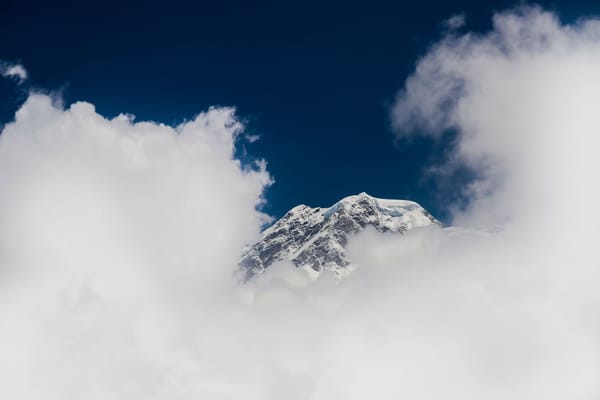
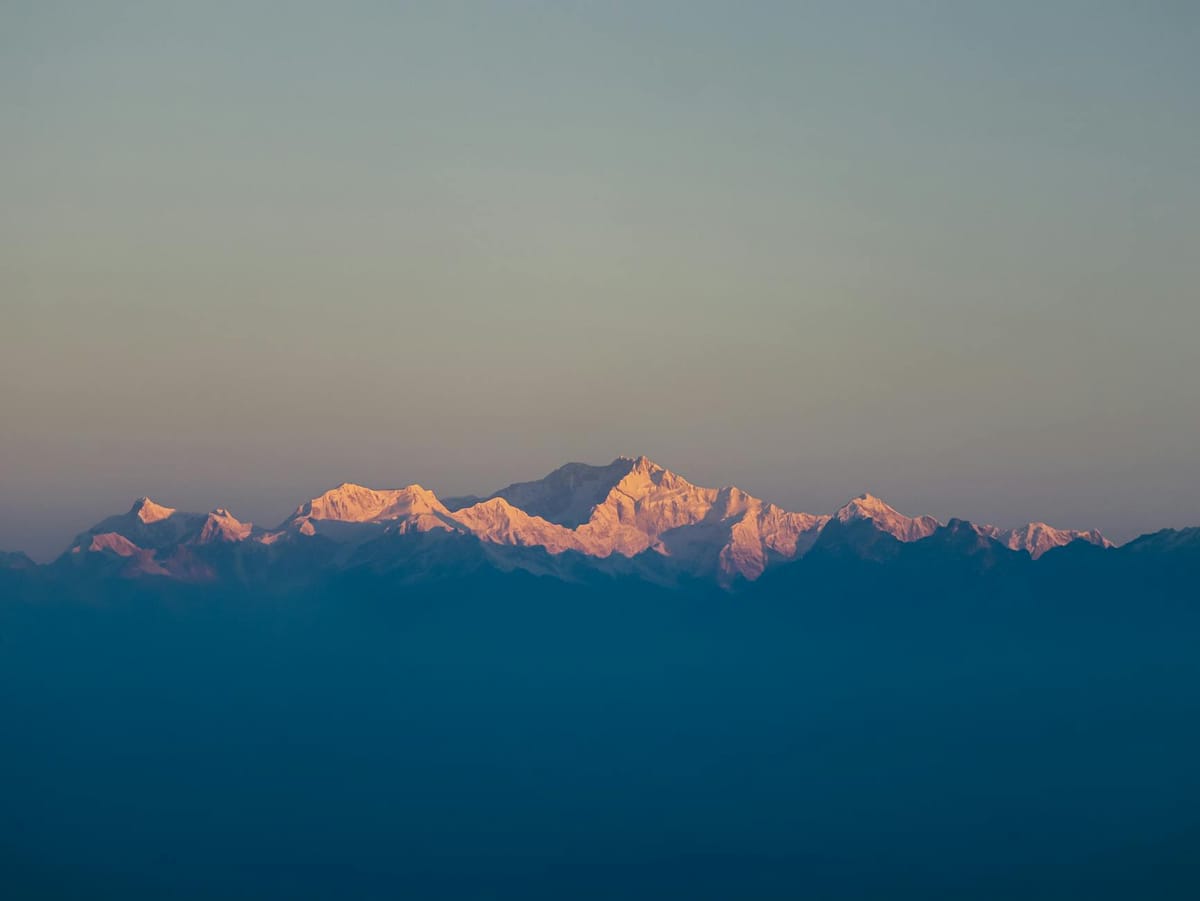
One hiker described it with an accuracy that feels almost unfair: “Kanchenjunga doesn't constantly put its best views in front of you; instead, the scenery builds slowly, and the mountain reveals itself in stages.” That is the Nepal side in one sentence. You do not get a dramatic unveiling on day two. You get a sequence: ridges, forests, a shoulder of snow far off, then another bend, and another. The mountain teaches you to stop expecting a climax.
The north side tends to feel colder and more austere, a terrain where the days are long enough to make you conservative with your energy. The south carries a different texture, often greener in the lower sections, with a sense of gradual ascent rather than a sudden tightening. Neither is “better”. They are different routes into the same remoteness, and they ask different questions of the body.
Villages that are functional, and therefore honest
Along the main trekking circuits, villages have learned how to perform welcome. On Kanchenjunga, the villages do not bother. They exist to live, not to be photographed, and that changes how you move through them.
A mountaineering subreddit user wrote, “Villages are few and functional rather than tourist-friendly, and interactions feels genuine rather than transactional.” The grammar slips, but the point lands. You are not being upsold a version of authenticity. You are meeting people who have other priorities: animals to feed, wood to cut, a roof that has to hold through winter. The “service industry” veneer is thin here because the volume of visitors does not justify it.
This is where the idea of “least trafficked” stops being a marketing phrase and becomes a social fact. A lodge might not have a menu. It might have what the household is cooking. The room might be a room because there is a spare room, not because someone built a business around it. The trail is not a stage, it is a passage.
Solitude is not romantic, it is measurable
Solitude is sold as spiritual currency. On Kanchenjunga, it is closer to a number you can count, and the number is small.
One trekker wrote, “I saw about 10-15 other tourists in 3 weeks and there were many that couldn't not complete the trek because of altitude issues or injuries.” The double negative is almost comic, but the rest is serious. Ten to fifteen people in three weeks is not a vibe. It means you will have stretches where you are responsible for your own mood. It also means that when something goes wrong, there are fewer spare hands nearby.
That scarcity changes behaviour. You become more deliberate with risk. You do not charge at an exposed section just because you are eager to be done. You look at the slope. You listen. You wait. Kanchenjunga asks for that kind of quiet competence.
It also changes what “company” looks like. Another hiker described their setup: “We started the trek as a group of five independent trekkers together with one local guide. This setup worked well socially and helped keep costs down.” That sentence contains its own strategy. Socially, you get a small community. Financially, you share fixed costs. Practically, you have more eyes on the trail, more redundancy if someone’s knee turns wrong.
Cold, long days, and the economics of comfort
The romance of remote trekking collapses quickly when your fingers are numb and the room has no heat. Kanchenjunga does not coddle. It does not even pretend to.
“Be prepared to be very cold, have quite long days and don't count on a warm dining room each night. Bring more Snickers than you need for bartering and a spare battery bank as most tea houses don't have power,” a mountaineering user warned. The advice is specific, and therefore trustworthy. “Snickers” is not poetry. It is a small, portable currency. The battery bank is not a gadget, it is the difference between having a light and listening to your own thoughts in a dark room.
The cold changes the daily schedule. You start earlier because you know the afternoon will harden into wind. You stop earlier if you can, because moving in the late hours is not heroic, it is just expensive in calories. “Long days” here are not just distance, but the time it takes to complete distance when the terrain does not let you walk at your preferred pace.
Comfort becomes an economy. A warm drink is worth more because it is harder to produce. A charged phone is worth more because electricity is not assumed. The trail strips your expectations down to what you can carry and what a small village can realistically offer.
Landslides, unpredictability, and the habit of watching
In more popular regions, the trail can feel like an agreement: the ground will hold, the weather will be broadly legible, and if something goes wrong someone will have already fixed it. Kanchenjunga is a different contract.
“There are landslides everywhere and you must be alert and extremely careful at all times,” that same user wrote, and it is worth repeating because it is not metaphor. You learn to read the slope for fresh scars. You learn to notice the sound of water under rock. You learn that “trail” can mean a line that disappears after a storm and reappears slightly lower.
Unpredictability becomes a constant, not a surprise. When you meet it repeatedly, it stops being drama and starts being routine. You pack differently. You plan differently. You stop believing that a timetable is a promise.
If you thrive on control, this will irritate you. If you thrive on attention, it will sharpen you.
The mountain that reveals itself slowly
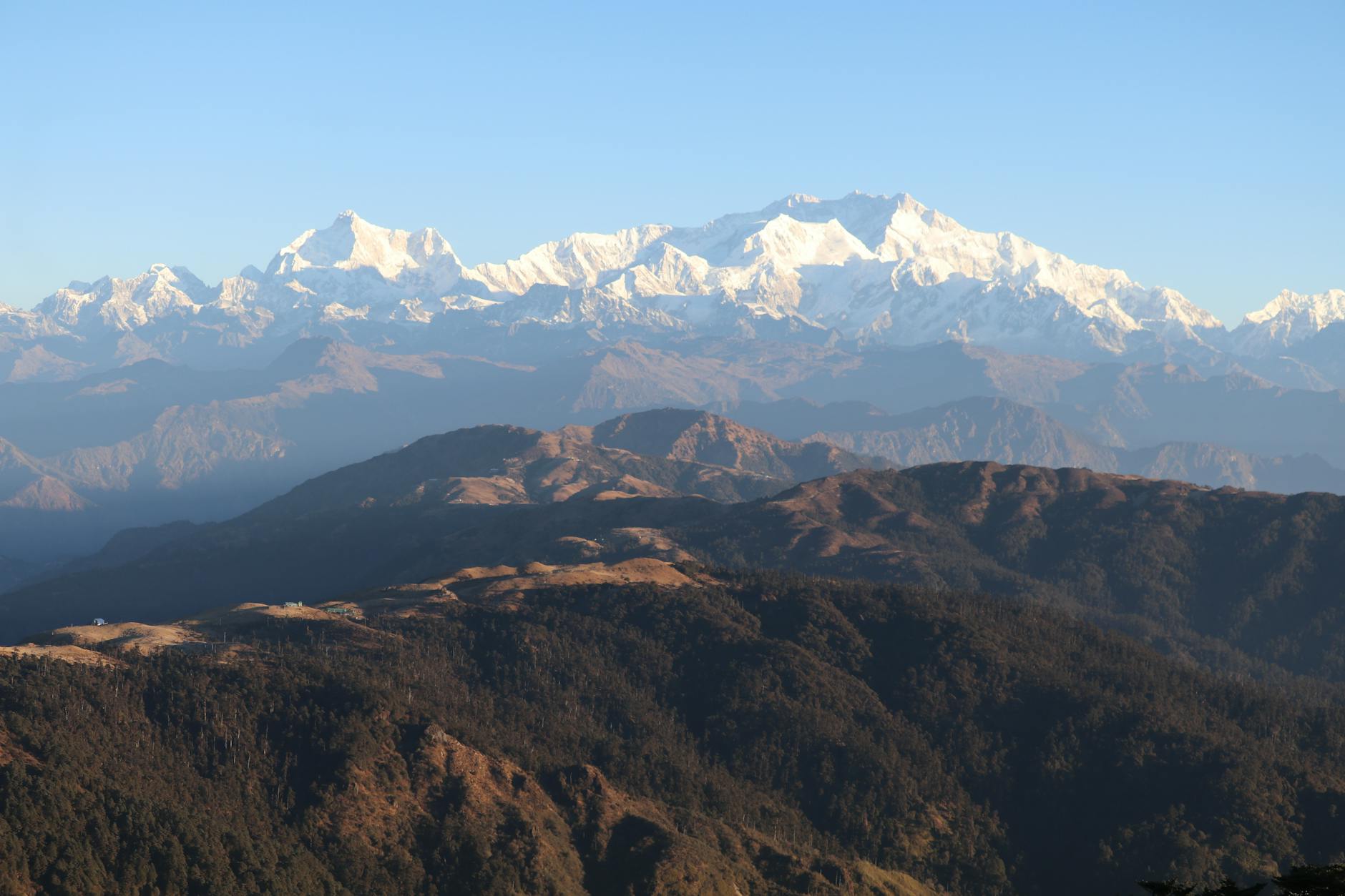
There is a particular kind of mountain-view disappointment that comes from expecting a postcard and getting a shoulder. Kanchenjunga does that to you at first. It offers fragments. It makes you earn the whole.
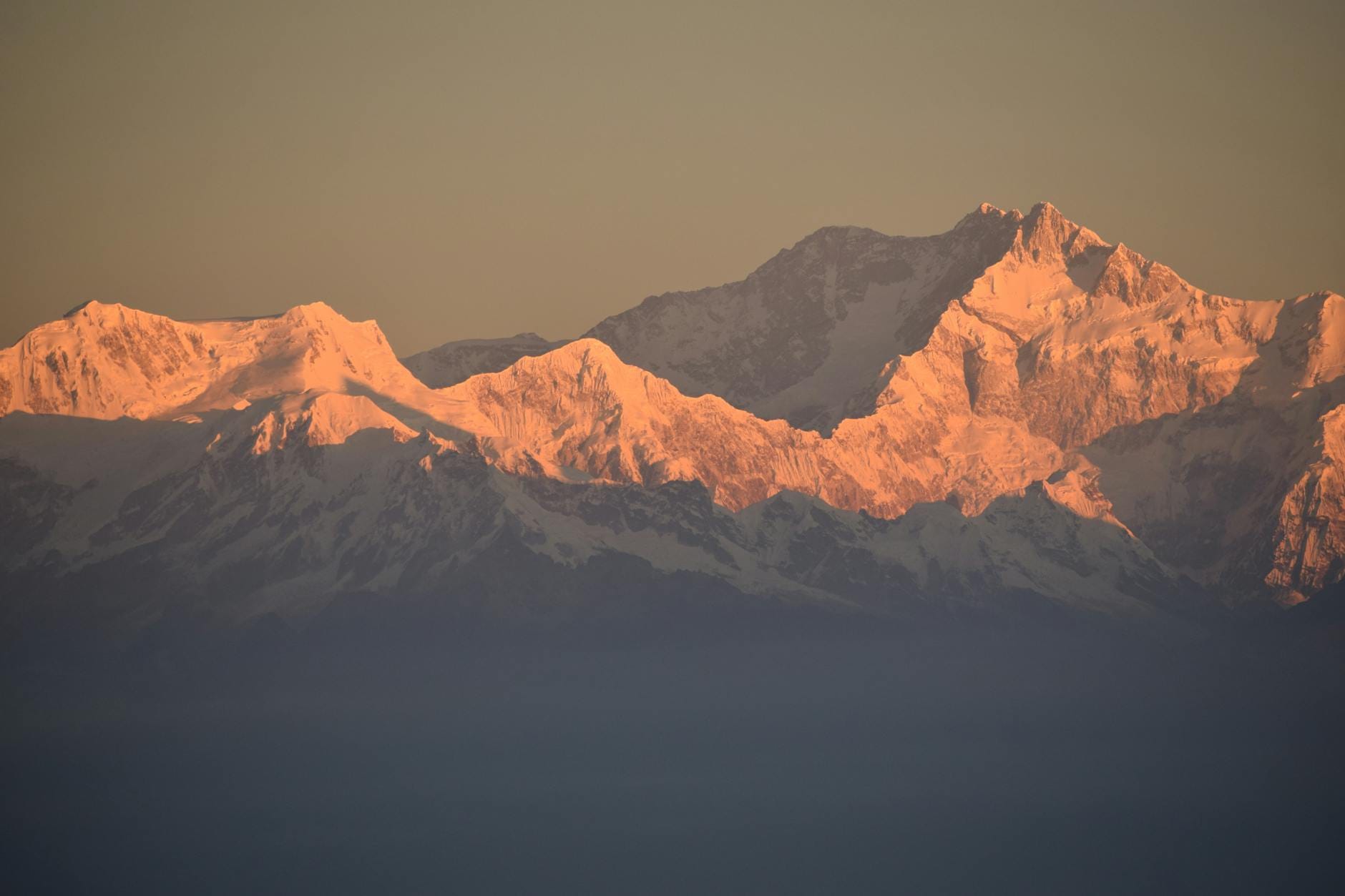
“Kanchenjunga doesn't constantly put its best views in front of you,” the quote said, and it is true in a way that feels deliberate. The Nepal side gives you staged exposure. A ridge offers a hint of white. A clearing shows a different angle. Then the trail folds again, and for hours you are back in trees, your world reduced to moss and root.
This slow reveal changes your relationship with the landscape. You stop treating views as the only valuable moments. You notice the details that would be filler on another trek: seed pods on rhododendron branches in November, the pattern of old snow holding in shaded gullies, the way the air thins not suddenly but in increments you can feel only when you stop.
The mountain becomes less of an object and more of a presence, something you are moving toward without being allowed to possess.
What remoteness does to the mind
After enough repetitive days, the mind runs out of easy distractions. That is when the trek begins to feel like a mirror.
“The long, repetitive days and the lack of distraction slowly turn your attention inward, making you aware of your own limits, habits, and expectations,” one mountaineering user wrote. This is the most honest description of “solitude” I have read. It is not enlightenment. It is self-contact, sometimes welcome, sometimes not.
In places with constant novelty, you can outrun yourself. On Kanchenjunga, you walk at the pace of the terrain, and the terrain has no interest in your narratives. It will not reward you for being dramatic. It will not comfort you when you are bored. It will, however, keep going, which means you keep going too.
This inward attention is not only psychological. It shows up as discipline: noticing how much water you have left, how your appetite changes with altitude, how your sleep turns shallow, how a small ache becomes a decision point. You become less romantic about your body and more practical. That practicality is what allows the trek to remain safe.
The Nepal side, seen clearly
The Kanchenjunga trek Nepal is not famous because it does not lend itself to shortcuts. The logistics are heavy. The days can be cold and long. The villages are not built to flatter you. The views are not handed over on demand. Even the rewards arrive in stages, as if the landscape is teaching you to be patient enough to deserve it.
The best reason to come is not to claim you did something hard. The best reason is that the trek changes your calibration. It reminds you what a trail looks like when it is not designed around visitor satisfaction. It shows you a mountain that is not trying to be liked. It gives you a kind of quiet that cannot be purchased in more crowded valleys, because it is produced by distance, effort, and the simple fact that most people do not come here.
If you accept those terms, Kanchenjunga gives you something rarer than a highlight: it gives you continuity, a long line of days where the country is not performing, and neither are you.