Upper Mustang Without a Guide: What the Permit Allows in 2026
The restricted area permit for Upper Mustang is non-negotiable. A licensed guide used to be. In 2026, the regulations have shifted and the ground rules are different from what most trekking agencies will tell you.

The permit office is in Kathmandu. It is small and the paperwork goes quickly. A form: your name, nationality, itinerary. The officer does not ask why you are going without a guide. The requirement came off in 2023. He stamps the permit and passes it across the desk. Five hundred US dollars per person, for ten days. You can extend.
Obtain the permit in Kathmandu or Pokhara. Not Jomsom, and not anywhere on the route. This matters if you are planning to fly directly to Jomsom and begin walking north. The permit exists before the flight.
You need the ACAP card too, 3,000 rupees, standard Annapurna. At the Kagbeni checkpoint and at checkpoints further north, you present both. The officers record your permit number. They are methodical about it.
The route from Kagbeni to Lo Manthang is roughly 180 kilometres return - twelve days if you are moving comfortably, fourteen if you stop along the way. The path goes north through Chele, Syangboche, Ghami, Charang, gaining altitude steadily until it reaches 4,200 metres on the ridge above Ghami. Not the heights of the high Himalayan routes, but enough that a rest day earns its keep.
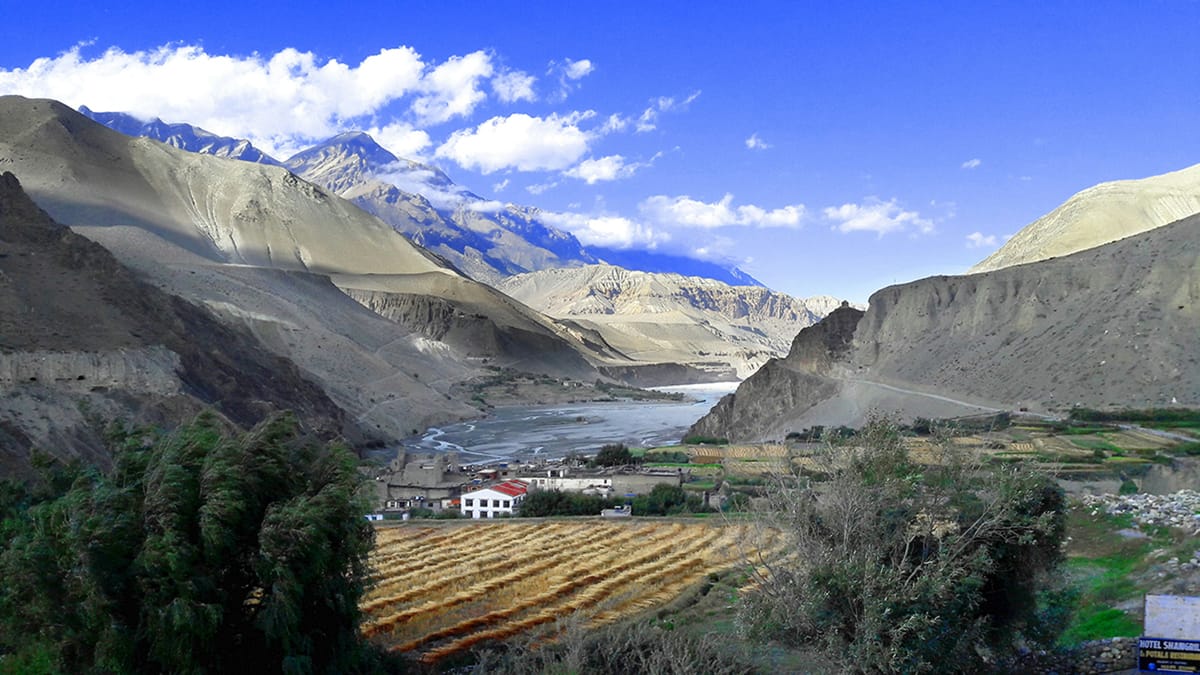
The main trail from Kagbeni to Lo Manthang is findable without a guide. It is marked, it is walked regularly, GPS and offline maps work in these valleys. The trail in October and April is reliable. Winter closes the passes. Spring brings the Tiji festival crowds to Lo Manthang and the alleys fill differently than at other times.
What you give up:
At Lo Gekar, a monastery sits on a cliff about two hours south of Lo Manthang. It is old. The paintings inside come from a tradition that predates the kingdom of Lo. The signage is in Tibetan. A guide from Mustang can read the signs. He knows which figures are which and why they face the directions they face. He knows what is expected of you when the lama is present. Without that, you are in a room of extraordinary things and you cannot tell them apart from ordinary things.
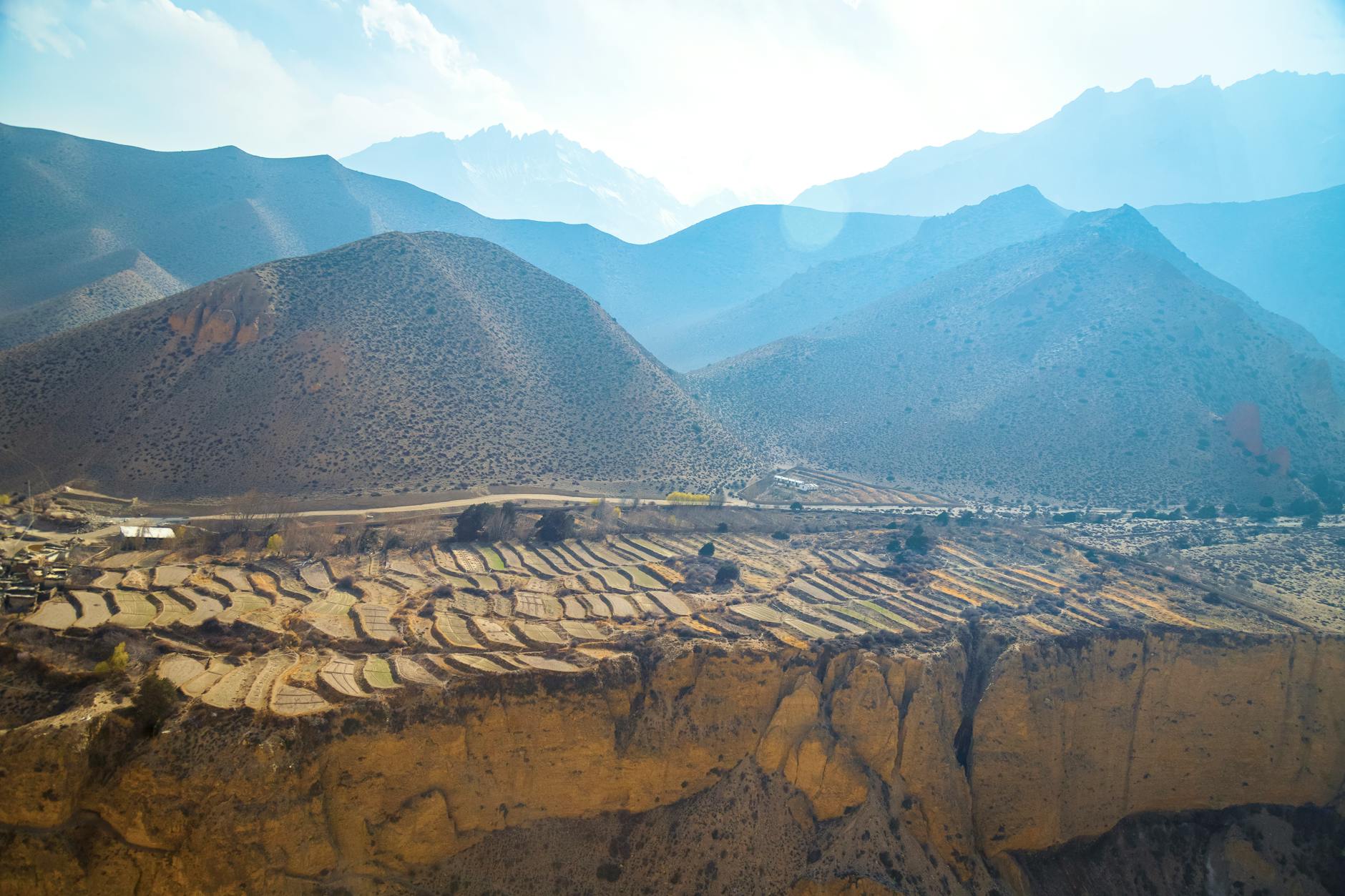
Above Ghami, paths leave the main trail and lead up to cave dwellings cut into the cliff faces. Some are on downloaded maps. Others are not. A guide from the village knows which are accessible, which are used for storage or prayer, which you should not enter without asking. Without him, you find the ones that are already found.
The Tiji festival, in May, is why many people time their visit to Lo Manthang. Three days. The rituals have a sequence and each day is distinct. Without knowing what you are watching, you are watching men in costumes. That description would offend anyone who understands what it is. A guide from Lo Manthang knows the sequence the way people know things that have been part of their year since they were children.
None of this is an argument against going without a guide. It is a description of what you are choosing.

A guide from a Kathmandu agency and a guide born in Mustang are not the same person, and the distinction matters more on this route than on most. One knows the logistics; the other knows the place - the families, the seasons, the things that do not appear on maps. If you go without a guide, the path gives you what it gives you. If you hire someone from Lo Manthang directly, you see something else. The permit system does not distinguish between them. You make that choice yourself.
Lo Manthang, when you arrive, is a walled city. The walls are thick mud. Inside the walls, the alleys are narrow and smell of yak dung and smoke. There is a monastery. There is a palace. A woman sells buckwheat bread near the north gate in the mornings. You arrive tired, probably on day five or six, and you find the place exactly as it is. Not different from what you expected, not what you imagined either. Just itself. That is enough.