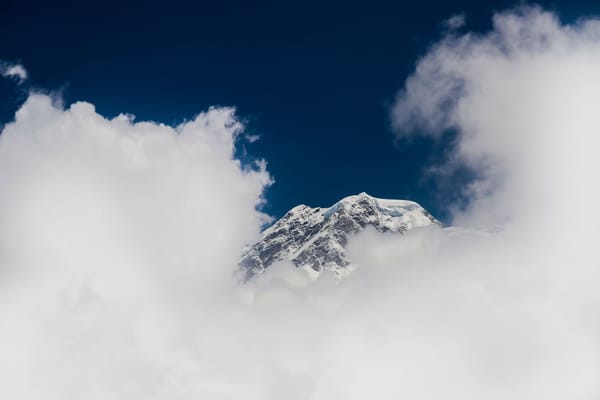
What Flying into Lukla Asks of You
Lukla's runway is 527 metres long, set on a 12 percent gradient, and closes for days when cloud rolls in from the east. What the approach actually asks of you before the Everest trek begins.

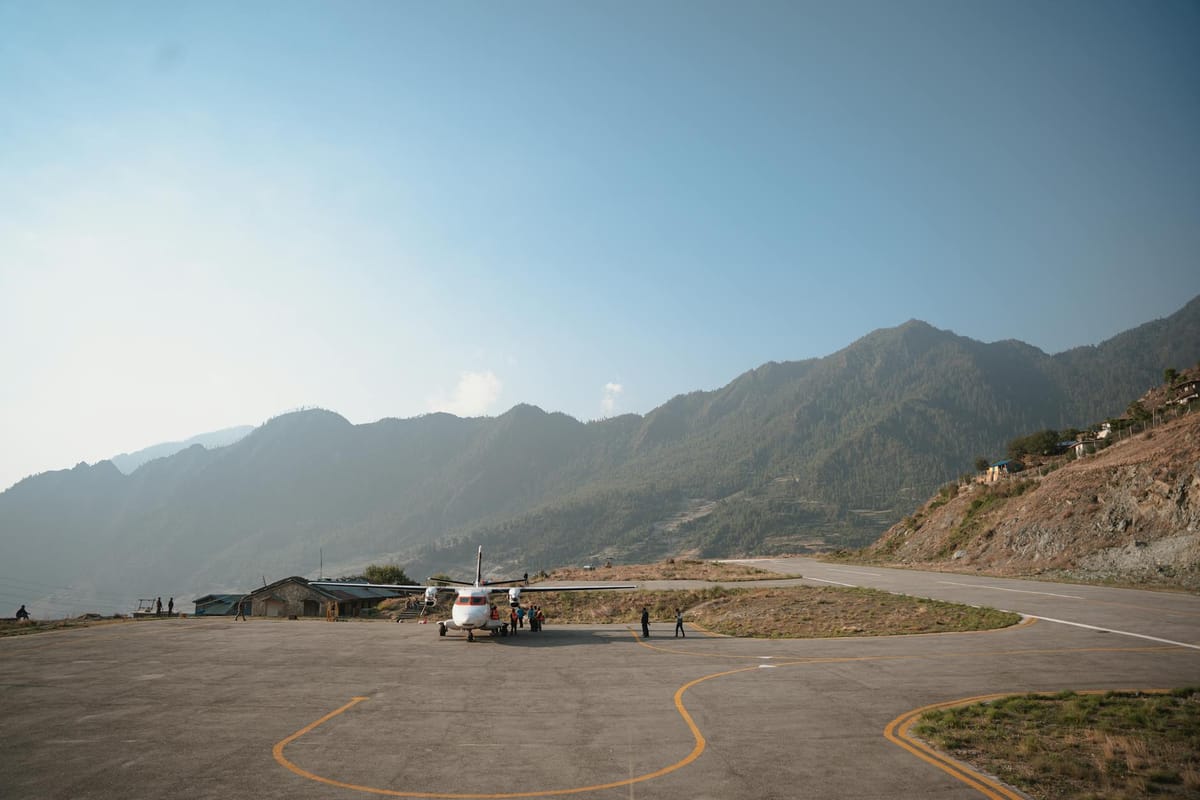
The runway at Tenzing-Hillary Airport in Lukla is 527 metres long. It slopes upward at a twelve-degree gradient toward a stone wall at its upper end, and drops at the lower end into a valley. Incoming aircraft land uphill; departing aircraft take off downhill. There is no go-around procedure available on the approach because the terrain surrounding the airport does not permit one. If something goes wrong on final, the options narrow quickly.
This is the fact that aviation content and adventure tourism content have both decided to make the story. One treats it as danger to be assessed; the other treats it as thrill to be marketed. Both are responding to the runway's metrics rather than to what the experience of flying there actually involves.
The flight itself
The aircraft that operate this route are primarily Twin Otters and, increasingly, helicopters as demand has shifted. The Twin Otter flight from Tribhuvan International in Kathmandu takes about forty-five minutes and is entirely dependent on weather. At Lukla, the weather window is real: morning flights go; afternoon flights frequently do not, because cloud builds over the valley and the visual approach that the airport requires becomes impossible.
The approach itself is what people mean when they say the flight is dramatic. The aircraft descends through a narrow mountain valley with terrain on both sides and ahead. The runway appears very late in the approach and appears to be aimed at a wall. This is accurate. The gradient, the terrain, and the brevity of the strip create a visual sequence that reads as more extreme than the actual execution when performed by pilots who fly this route daily.
The pilots who fly Lukla routes are among the most experienced mountain aviators in the world. The route requires a specific type rating and substantial time logged in mountain conditions. The accident rate, often cited without context in the adventure media, needs that context: a significant proportion of Lukla accidents involve non-scheduled operators, poor weather decisions, aircraft not appropriate for the conditions, or pilot error at the margins of the system. The scheduled operators who run the route with proper certification and weather discipline have a substantially different record.
None of this makes it a routine flight. What makes it not routine is not primarily the runway or the approach. It is the weather.
The weather is the real variable
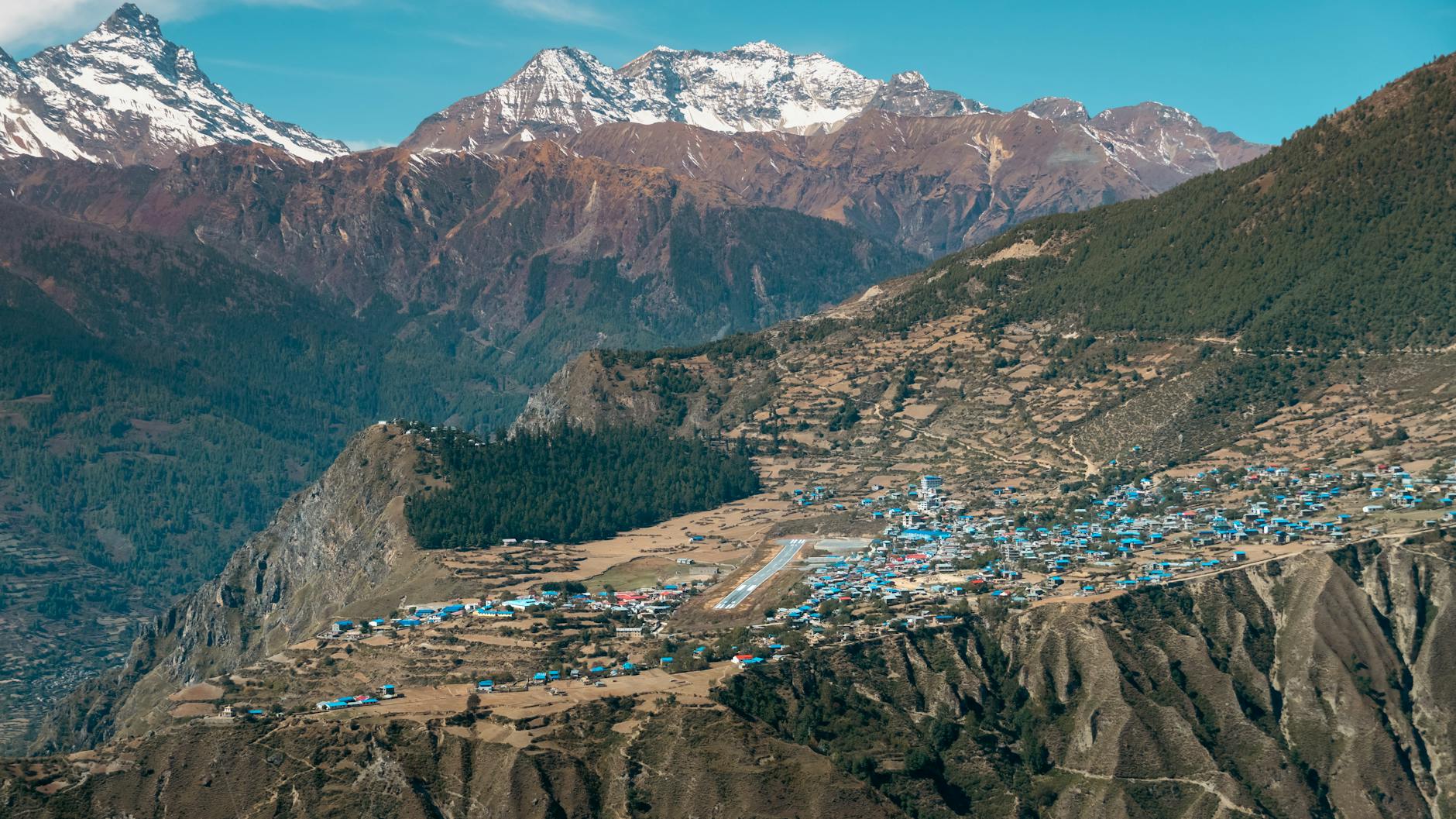
Lukla operates on a system that most airports do not: the departure airport can be open while the destination is closed, and you will not find out until the aircraft reaches the point where visual confirmation is required. Passengers are booked, loaded, and sometimes airborne before the final viability of the landing is confirmed.
This means cancellations are endemic. Trekkers with fixed itineraries and non-refundable international flights spend a disproportionate amount of their mental energy managing the Lukla variable. The standard advice, add two extra days in Kathmandu on return for weather buffer, is not overcautious. Several times each season, Lukla is closed for three or four consecutive days while weather systems sit over the Khumbu.
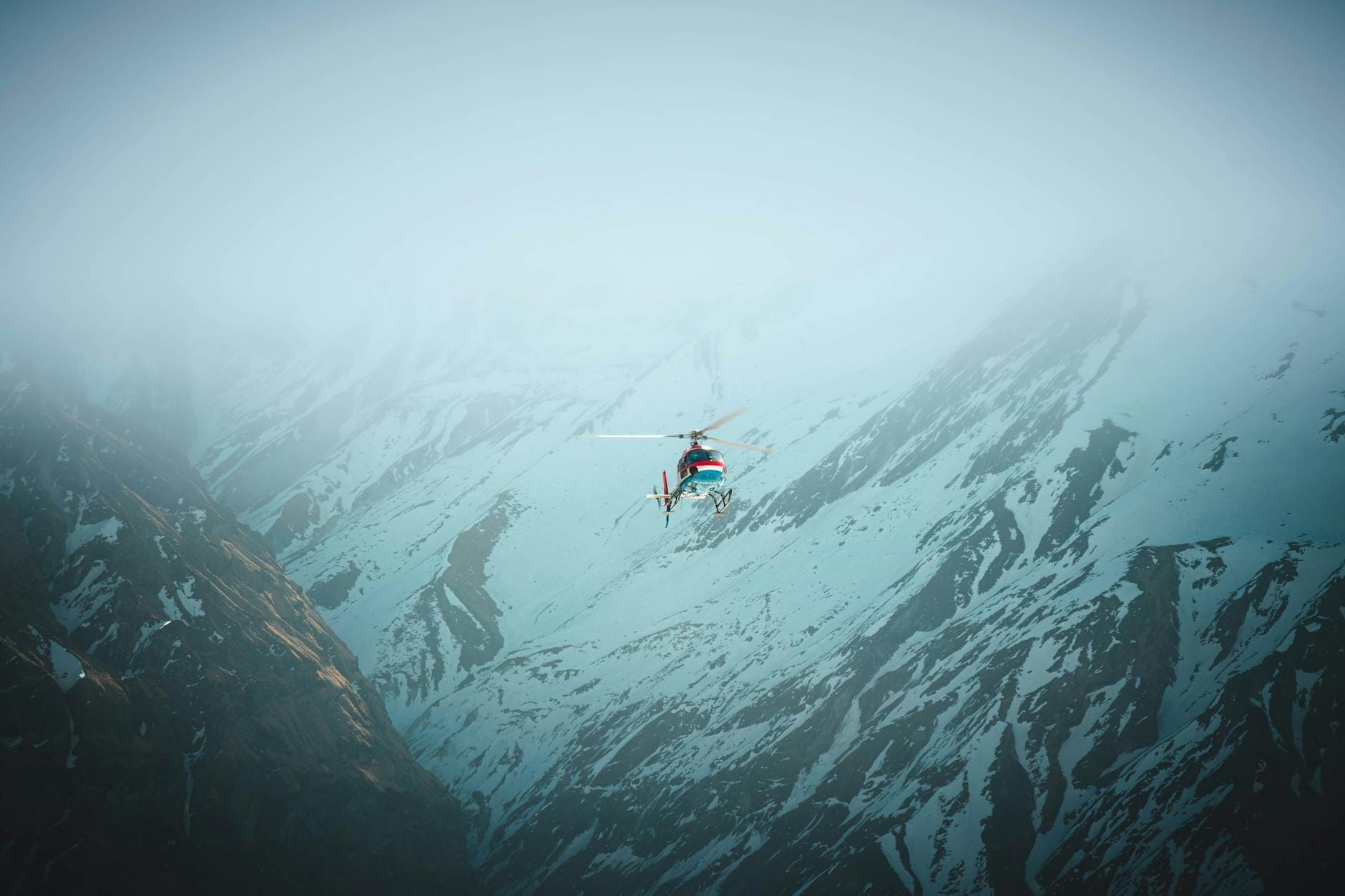
The helicopter option exists but has its own weather constraints and costs approximately four times the fixed-wing fare. It is faster, uses a helipad rather than the runway, and has access to different weather windows in some conditions - though not reliably enough to count on as an alternative.
What the moment costs
I flew Lukla twice in the same season, once each way. On the inbound flight, I was seated in the co-pilot's row with an unobstructed view forward. The approach through the valley is genuinely unlike anything in normal air travel: the terrain fills the windscreen, the aircraft banks into the valley, and then the runway appears and you understand immediately why the slope exists and what it is for.
The landing is hard and brief. The aircraft stops well within the available runway. Everyone exhales.
The cost of this moment is not the physical risk, which the structure of the system contains to the extent that any mountain aviation route can be contained. The cost is the surrender of control. You cannot know if you will fly tomorrow. You cannot plan past the weather window. You cannot optimise your schedule around Lukla the way you can optimise a bus connection or a road transfer.
Trekkers who have difficulty with this, and many do, spend their time in the Khumbu monitoring weather apps and airport updates rather than being in the place they came to be in. The mountains are indifferent to this.
Before and after
What the flight is really asking of you, in its honest form, is whether you can operate on the mountain's timeline rather than your own. This is also what the trek will ask of you, repeatedly, for however many days you are in the Khumbu. Altitude, route conditions, permit requirements, the pace of the people you are with: none of it bends to schedules.
The Lukla flight is the entry point to that logic. It is shorter and more legible than the rest of the trek's demands, but it is the same demand: your plans are contingent on conditions you do not control, and the correct response to this is to stop treating that as a problem.
Most people figure this out somewhere around Namche Bazaar. A few figure it out in the departure lounge at Kathmandu's domestic terminal, watching the departures board cycle through delays, while the mountains are clear on the northern horizon.